
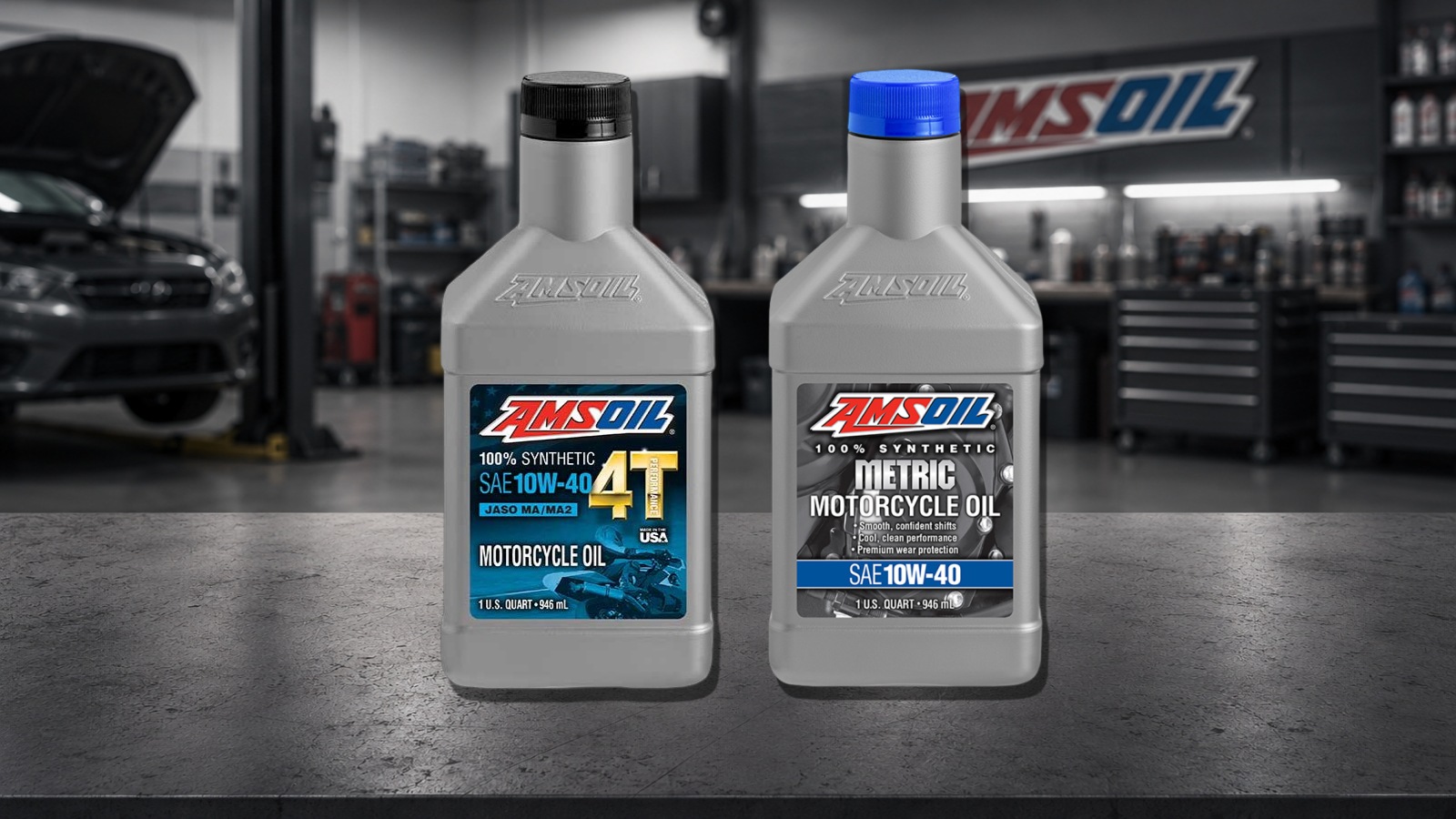
Choosing the best motorcycle oil involves more than selecting the correct viscosity. Motorcycle engines can operate at high temperatures and extreme engine speeds, while many motorcycles also require the same lubricant to protect the engine, transmission and wet clutch.
The best oil for a particular motorcycle is therefore one that meets the specifications required by the manufacturer while providing strong protection against heat, wear, viscosity loss and deposits under the conditions in which the motorcycle is actually used.
There is no single motorcycle oil that is correct for every bike. Start with the viscosity and specification required by the motorcycle manufacturer, then consider the demands placed on the oil by engine temperature, rpm, transmission design and riding conditions.
Why Motorcycle Oil Has a Difficult Job
A motorcycle lubricant can face operating conditions quite different from those encountered by engine oil in a typical passenger vehicle. High engine speeds, compact engine designs and high power output can generate considerable heat and mechanical stress.
In many motorcycles, the engine oil also lubricates the gearbox and operates with a wet clutch. This means a single lubricant may be required to protect bearings, pistons and camshafts while resisting the shearing forces of transmission gears and maintaining the friction characteristics required for correct clutch operation.
Other motorcycles, including many V-twin designs, use separate lubricants for the engine, transmission and primary drive. In these applications each lubricant can be selected specifically for the component it protects.
Protection Against Extreme Heat
Heat is one of the major challenges faced by motorcycle engine oil. This is particularly important in powerful air-cooled and air/oil-cooled engines, where operating temperature can be strongly affected by vehicle speed, ambient temperature and engine load.
As lubricant temperature increases, its viscosity decreases. The oil must retain sufficient viscosity and film strength to keep loaded metal surfaces separated, particularly around bearings, pistons, camshafts and other highly stressed components.
High temperatures also accelerate oxidation. As oil oxidises, its chemical composition changes and deposits can form. A high-quality synthetic motorcycle oil is formulated to resist oxidation and maintain its protective properties when exposed to elevated temperatures.
High-RPM Engine Protection
Many motorcycle engines routinely operate at engine speeds far beyond those experienced by conventional passenger-car engines. Performance motorcycles can spend significant periods operating at several thousand rpm, with some engines capable of exceeding 10,000 rpm.
High engine speed increases the demands placed on bearings, piston assemblies, camshafts and valvetrain components. Combined with high power density and elevated operating temperatures, this makes maintaining a strong lubricating film particularly important.
A suitable motorcycle oil must maintain viscosity and film strength throughout the service interval rather than simply meeting the required viscosity when the oil is new.
Motorcycle Transmissions Can Shear Oil
In motorcycles where the engine and transmission share the same lubricant, the oil must also pass through the gearbox. Meshing gear teeth subject the lubricant to intense mechanical shearing forces.
These forces can cause some multigrade oils to lose viscosity during service. If a lubricant shears significantly out of its intended viscosity grade, the oil film protecting engine and transmission components can become thinner.
Shear stability is therefore an important characteristic of motorcycle oils used in combined engine-and-transmission applications.
Wet Clutches Require the Correct Oil
Many motorcycles use a wet clutch that operates in the same oil as the engine and transmission. The lubricant must provide engine and gearbox protection without adversely affecting the friction characteristics required by the clutch.
This is one reason a motorcycle manufacturer's lubricant specification is just as important as viscosity. An engine oil that appears suitable based on viscosity alone may not necessarily be appropriate for a motorcycle with a wet clutch.
The JASO T 903 motorcycle oil standard includes classifications designed to identify oils with suitable friction characteristics for different motorcycle applications.
JASO MA, MA1, MA2 and MB classifications describe important friction-performance characteristics of four-stroke motorcycle oils. See our JASO Motorcycle Oil Standards Guide for a detailed explanation of the classifications.
Protection During Storage
Motorcycles are also more likely than many passenger vehicles to spend extended periods in storage. Changes in temperature and humidity can encourage condensation inside an engine, increasing the potential for corrosion on unprotected metal surfaces.
A quality motorcycle oil should contain additives that help protect internal components against rust and corrosion during periods when the motorcycle is not being regularly operated.
Why Synthetic Motorcycle Oil?
Synthetic base oils can provide advantages in demanding motorcycle applications because they offer excellent resistance to high-temperature oxidation and can maintain their physical properties across a wide operating-temperature range.
The finished lubricant is more than its base oil, however. Its additive system must also provide wear protection, control deposits, resist corrosion and, where required, provide suitable wet-clutch performance.
For this reason, simply choosing a product labelled synthetic is not enough. The oil must still have the correct viscosity and meet the performance requirements of the motorcycle.
AMSOIL Synthetic Motorcycle Oil
AMSOIL formulates dedicated synthetic motorcycle oils for a range of motorcycle applications, including V-twin, metric, dirt-bike and other high-performance engines.
AMSOIL motorcycle oils are designed to resist extreme heat and viscosity loss while providing strong wear protection and deposit control. Products intended for shared engine, transmission and wet-clutch applications are formulated for the frictional requirements of those systems.
Extreme-Heat V-Twin Testing
To demonstrate the performance of AMSOIL 20W-50 Synthetic V-Twin Motorcycle Oil under extreme conditions, AMSOIL conducted a 1,000-mile (1,609 km) dynamometer test using a Harley-Davidson Street Bob equipped with a Milwaukee-Eight 107 engine.
The test was designed to simulate severe low-speed operation with very little cooling airflow passing over the engine. During testing, oil temperature reached approximately 149°C, while rear-cylinder temperature reached approximately 216°C.
These deliberately severe conditions provided a demanding test of the lubricant's ability to resist heat and continue protecting the engine.
So, What Is the Best Motorcycle Oil?
The best motorcycle oil is not simply the most expensive oil or the product with the highest advertised performance. It is an oil with the correct viscosity and specifications for the motorcycle that can maintain protection under the temperatures, engine speeds and mechanical stresses the motorcycle produces.
For motorcycles with a shared engine, gearbox and wet clutch, shear stability and suitable clutch friction characteristics are particularly important. For high-output V-twins and other hot-running engines, resistance to oxidation and viscosity loss becomes especially valuable.
AMSOIL Synthetic Motorcycle Oils are engineered specifically around these demands, making them an excellent choice for riders seeking a high-performance synthetic lubricant rather than simply using an automotive engine oil of the same viscosity.
Choose motorcycle oil by specification and viscosity first. From the oils suitable for your motorcycle, look for strong resistance to heat, viscosity loss and wear, together with the correct wet-clutch performance where required.
Oil Information & Technical Guides
Explore our oil knowledge base with practical guides covering oil standards, viscosity, base-oil technology and application-specific specifications.