
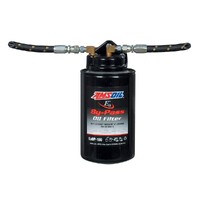
AMSOIL bypass filtration systems provide an additional level of oil filtration beyond a conventional full-flow filter, continuously filtering a portion of the lubricating oil to remove very small contaminants. The range includes complete bypass filtration systems, installation components and replacement bypass filter elements.
Browse AMSOIL bypass filtration products below to find systems, components and replacement filters for compatible automotive, diesel, commercial and equipment applications.
Our AMSOIL Bypass Oil Filtration Guide explains how bypass filtration works, the differences between AMSOIL systems and how to choose the right setup for your vehicle or equipment.
Read the Bypass Oil Filtration Guide →
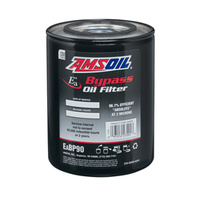

Conventional full-flow oil filters must process enough oil to continuously supply the engine, which places practical limits on how restrictive their filtration media can be. AMSOIL Bypass Filtration adds a second, high-efficiency filtration circuit designed to remove much smaller contaminants without restricting the engine's primary oil supply.
A bypass filtration system does not replace the engine's normal full-flow oil filter. Instead, the two systems work together: the full-flow filter handles the engine's main oil supply while the bypass filter continuously processes a smaller quantity of oil through much finer filtration media.
| Full-Flow Oil Filter | Bypass Oil Filter |
|---|---|
| Filters the oil supplying the engine | Filters a small proportion of the oil at a time |
| Designed around the high flow rate required by the lubrication system | Uses slower oil flow through more restrictive, high-efficiency filtration media |
| Removes contaminants while maintaining sufficient engine oil flow | Targets much smaller particles that can pass through conventional full-flow filtration |
| Essential part of the engine lubrication system | Additional filtration system used alongside the full-flow filter |
An AMSOIL bypass system diverts a small portion of pressurised engine oil away from the normal lubrication circuit and passes it slowly through a high-efficiency bypass filter. The filtered oil is then returned to the engine's oil supply.
Because the bypass filter does not have to carry the engine's entire oil flow, its filtration media can be considerably more restrictive than the media used in a full-flow filter. This allows it to capture much smaller contaminants without starving the engine of the oil flow required for lubrication.
Only part of the engine oil passes through the bypass filter during any single circulation, but the process occurs continuously while the engine operates. Over time, the oil repeatedly passes through the bypass filtration circuit.
An engine's full-flow oil filter has an important limitation: all of the oil required by the engine must be able to pass through it quickly enough to maintain lubrication.
Making the full-flow media excessively restrictive could create an unacceptable pressure differential across the filter, particularly when the oil is cold or the engine is operating at high speed. The engine therefore needs a balance between filtration efficiency and sufficient oil flow.
Bypass filtration separates these two jobs. The full-flow filter continues supplying the volume of oil required by the engine, while the secondary bypass filter can process oil much more slowly through finer filtration media.
Very small contaminants can circulate through an engine even when a conventional full-flow filter is functioning correctly. These particles can originate from airborne contamination, combustion by-products and normal internal engine wear.
AMSOIL Bypass Filters are designed for extremely fine filtration and can remove contaminants down to approximately 2 microns. Removing this fine contamination reduces the concentration of abrasive material circulating through lubricated engine components.
This does not mean a bypass system eliminates every possible cause of engine wear. Correct lubrication, air filtration, cooling-system performance, maintenance and mechanical condition remain important. Bypass filtration specifically addresses the problem of very fine contamination remaining suspended in the engine oil.
Diesel engines are a particularly relevant application for bypass filtration because combustion soot can enter the crankcase and become suspended within the engine oil.
Individual soot particles are extremely small, but soot can agglomerate into larger abrasive particles as contamination accumulates. AMSOIL Bypass Filters are designed to provide effective fine-particle and soot removal, helping control this source of lubricant contamination.
This makes bypass filtration particularly attractive for diesel engines operating high annual kilometres or hours, commercial vehicles and equipment where engine life and oil cleanliness have significant economic value.
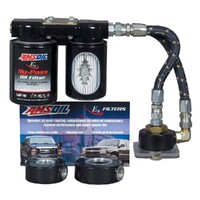
A single-remote bypass system adds a remotely mounted bypass filter while leaving the engine's existing full-flow oil filter in its original location.
Pressurised oil is supplied to the bypass filter through an appropriate connection to the lubrication system. After passing through the bypass filter, the oil is returned to the engine.
This arrangement can require less mounting space than a dual-remote system and allows the original full-flow filter location to remain unchanged.
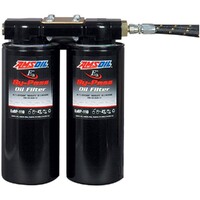
A dual-remote bypass system relocates filtration to a remote mounting assembly containing both a full-flow filter and a bypass filter.
This can provide convenient access for servicing and allows both filters to be located together, but installation requires sufficient space and the correct application-specific adapters, hoses and fittings.
Single-remote and dual-remote systems use the same fundamental bypass-filtration principle. The major difference is how the full-flow filter is incorporated into the installation.
AMSOIL offers both universal bypass filtration hardware and systems designed around particular engines. Application-specific kits can simplify installation by providing hardware intended for compatible engines, while universal systems provide greater flexibility for applications where a dedicated kit is unavailable.
Bypass filtration should not be selected by engine displacement or filter thread alone. Installation requires suitable oil supply and return points, appropriate filter mounting, correct hose routing and sufficient clearance from heat, moving components and potential physical damage.
AMSOIL bypass filters have substantial contaminant-holding capacity and can provide considerably longer service than conventional full-flow filters in appropriate applications.
Service interval depends on the bypass filter used, engine application, operating conditions and maintenance program. AMSOIL specifies maximum mileage, operating-hour and time limits for its bypass filter elements, and the applicable service recommendation should be followed rather than assuming the filter can remain installed indefinitely.
Oil analysis can also be valuable in commercial, high-hour and extended-service applications by providing information about lubricant condition, contamination and wear trends.
Bypass filtration can help extend lubricant service life by continuously removing fine contaminants from the oil, but filtration does not make engine oil permanent.
Engine oil is also affected by oxidation, fuel dilution, moisture, additive depletion, viscosity change and other forms of degradation that cannot be corrected simply by filtering particles from the lubricant.
Extended oil-change intervals should therefore be based on the lubricant manufacturer's recommendations, operating conditions and, where appropriate, used-oil analysis rather than the presence of a bypass filter alone.
Installing a remote bypass filtration system also increases the total amount of oil contained within the lubrication system. The additional filter, housing and oil lines add lubricant volume beyond the engine's original sump capacity.
Additional oil capacity can help distribute contaminants and thermal load across a greater quantity of lubricant, although the actual increase depends on the particular bypass system and installation.
Bypass filtration makes the strongest economic case where engines are expensive, expected to remain in service for a long time or accumulate substantial operating hours or kilometres.
Applications can include diesel four-wheel drives and tow vehicles, commercial trucks, fleet vehicles, agricultural machinery, construction equipment, generators and other engines where long-term wear, oil cleanliness and maintenance costs are important considerations.
For a lightly used vehicle that receives frequent conventional oil changes, the cost and complexity of installing a bypass system may provide less practical benefit. Like premium lubricants, bypass filtration should be considered against the value, workload and expected service life of the equipment being protected.
A bypass filter cannot compensate for poor air filtration, coolant contamination, excessive fuel dilution, mechanical faults or neglected servicing. It is an additional contamination-control system rather than a substitute for maintaining the engine correctly.
The engine's full-flow filter must still be maintained, the correct engine oil must still be used and the condition of the lubrication system should still be monitored according to the application.
Unlike a conventional replacement oil filter, bypass filtration involves selecting an entire system. The correct installation depends on the engine, available mounting space, oil supply and return arrangements and whether a single-remote, dual-remote or application-specific system is most appropriate.
If you are considering AMSOIL Bypass Filtration, contact AMSOIL Australia with the vehicle or equipment make, model, year, engine and intended use. We can then determine which available system, bypass filter and installation hardware are appropriate for the application.


Add your favourites to cart

Select Afterpay at checkout

Log into or create your Afterpay account, with instant approval decision

Your purchase will be split into 4 payments, payable every 2 weeks
All you need to apply is to have a debit or credit card, to be over 18 years of age, and to be a resident of country offering Afterpay
Late fees and additional eligibility criteria apply. The first payment may be due at the time of purchase
For complete terms visit afterpay.com/terms