
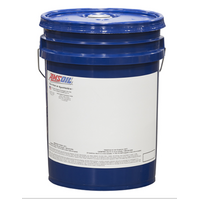
AMSOIL synthetic compressor oils are engineered to provide dependable lubrication and protection in demanding commercial and industrial compressor applications. Advanced synthetic formulations help reduce wear, resist oxidation and deposit formation, and maintain lubricant performance under high operating temperatures and extended service.
Browse the AMSOIL compressor oil range below for high-performance synthetic lubricants designed for reciprocating, rotary screw and other compatible compressor applications.
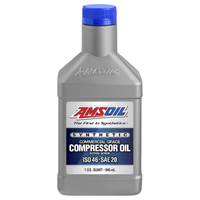
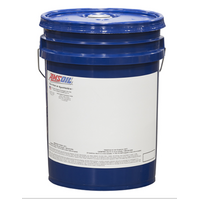
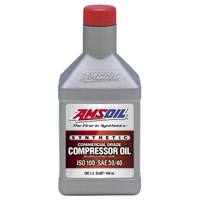
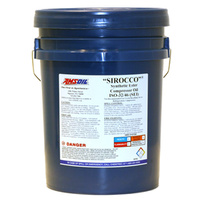
Air compressors place very different demands on their lubricants from engines, hydraulic systems and conventional gearboxes. Compressor oil must lubricate bearings and other moving components while resisting heat, oxidation, deposits and foaming, often during long periods of continuous operation.
AMSOIL synthetic compressor oils are available in several ISO viscosity grades for different compressor designs and operating requirements. Choosing the correct product starts with identifying the compressor type and the viscosity or lubricant specification required by the equipment manufacturer.
| AMSOIL Product | Viscosity | Typical Selection |
|---|---|---|
| PCH Synthetic Compressor Oil | ISO 32 / SAE 10W | Compressors specifying an ISO VG 32 compressor lubricant |
| PCI Synthetic Compressor Oil | ISO 46 / SAE 20 | Compressors specifying an ISO VG 46 compressor lubricant |
| PCJ Synthetic Compressor Oil | ISO 68 / SAE 30 | Compressors specifying an ISO VG 68 compressor lubricant |
| PCK Synthetic Compressor Oil | ISO 100 / SAE 40 | Compressors specifying an ISO VG 100 compressor lubricant |
| SIROCCO Synthetic Compressor Oil (SEI) | ISO 32/46 | Rotary screw compressors and vacuum pumps where an appropriate ISO 32/46 synthetic compressor oil is required |
This table is a general selection guide. Always confirm the compressor manufacturer's required lubricant type, viscosity and service recommendations before selecting a replacement oil.
Industrial compressor oils are commonly identified using an ISO viscosity grade rather than the SAE viscosity system familiar from automotive engine oils. ISO VG 32, 46, 68 and 100 describe different viscosity ranges measured at 40°C.
A larger ISO number indicates a more viscous oil, but it does not indicate that the oil is higher quality or provides greater protection. The correct viscosity depends on the compressor design, operating temperature and manufacturer's requirements.
For example, a compressor designed for ISO 46 oil should not automatically be filled with ISO 68 or ISO 100 in the belief that a thicker lubricant will provide better protection. Excessive viscosity can increase fluid resistance and reduce operating efficiency, while insufficient viscosity may compromise lubricant film strength.
The AMSOIL PC Series is labelled with both industrial ISO viscosity grades and corresponding SAE monograde descriptions, including SAE 10W/ISO 32, SAE 20W/ISO 46, SAE 30W/ISO 68 and SAE 40W/ISO 100.
For compressor applications, the ISO viscosity grade is generally the more useful reference. The SAE designation should not be taken to mean that ordinary SAE engine oil is an equivalent substitute.
Although some compressor oils carry familiar SAE viscosity descriptions, their formulation and operating requirements differ from automotive engine oils. AMSOIL PC Series Synthetic Compressor Oils use a non-detergent additive system specifically developed for compressor lubrication.
Engine oils are formulated around the demands of internal-combustion engines, including combustion by-products, contaminants and engine-specific performance standards. Compressor oils instead place particular emphasis on oxidation resistance, deposit control, water separation, foam control and dependable lubrication during prolonged operation.
Always use the lubricant type specified for the compressor rather than substituting an automotive engine oil simply because the viscosity designation appears similar.
Different compressor designs place different demands on their lubricant. Reciprocating compressors use pistons moving within cylinders, while rotary screw and rotary vane compressors use continuously rotating compression elements.
The AMSOIL PC Series provides a range of viscosity options suitable for rotary screw, rotary vane, reciprocating and other compressor applications where the corresponding lubricant type and viscosity are specified.
Compressor design alone does not determine the required viscosity. Two compressors using similar operating principles may specify different lubricant grades, so the manufacturer's recommendation should remain the starting point.
AMSOIL SIROCCO Synthetic Compressor Oil (SEI) is a specialised long-life lubricant designed for rotary screw compressors and vacuum pumps. It should not simply be considered another viscosity within the standard PC Series.
SIROCCO is formulated to reduce friction, transfer heat away from critical components and resist oxidation, foam, sludge, carbon and varnish deposits. It also readily separates from water, helping prevent the formation of damaging oil-and-water emulsions.
Where SIROCCO is being considered as a replacement for an existing compressor lubricant, confirm that its viscosity and formulation are appropriate for the particular compressor and existing lubricant system.
Compressor oils can spend long periods exposed to elevated temperatures and continuous circulation. Heat and oxygen progressively degrade lubricants through oxidation, which can increase viscosity and contribute to acids, sludge, varnish and carbon deposits.
Deposits can interfere with valves, oil passages, separators and other compressor components, while increasing lubricant viscosity can reduce efficiency and contribute to additional heat generation.
AMSOIL synthetic compressor oils are designed to resist oxidation and deposit formation, helping maintain lubricant performance during extended operation and reducing maintenance associated with degraded oil.
Compressing air can produce substantial amounts of condensation. Depending on the compressor design and operating environment, some of this moisture can find its way into the lubrication system.
A good compressor oil should separate readily from water rather than forming a persistent emulsion. This property, known as demulsibility, allows water to separate so it can be removed from the system and helps reduce the risk of corrosion and lubricant degradation.
Foaming can interfere with effective lubrication, heat transfer and oil separation within a compressor. Entrained air can also reduce the strength of the lubricating film and contribute to inconsistent system operation.
Purpose-designed compressor oils contain additives and base oils selected to resist excessive foam and release entrained air efficiently during operation.
Synthetic compressor oil can provide substantial advantages in oxidation resistance, deposit control, temperature stability and service life compared with conventional mineral compressor oils. However, changing lubricant type should not be treated as simply draining one product and pouring another into every compressor.
The existing lubricant chemistry, compressor manufacturer's requirements and condition of the system should be considered before conversion. Where compatibility is uncertain, the old lubricant should be thoroughly drained and the manufacturer's changeover or flushing procedure followed.
AMSOIL states that its PC Series Synthetic Compressor Oils and SIROCCO Synthetic Compressor Oil can provide service life of up to 8,000 hours in appropriate applications. Actual service life depends on the compressor design, operating temperature, duty cycle, contamination, environment and equipment manufacturer's maintenance requirements.
An extended-drain-capable lubricant should therefore not be interpreted as an automatic 8,000-hour service interval for every compressor. Follow the equipment manufacturer's requirements and use oil analysis where appropriate for critical or extended-service industrial equipment.
If you are unsure which AMSOIL compressor oil you require, identify the compressor make and model, compressor type and specified oil viscosity. Check the equipment manual or existing lubricant specification for an ISO viscosity grade such as ISO 32, ISO 46, ISO 68 or ISO 100.
Do not select compressor oil solely by SAE grade, colour or the assumption that a thicker oil provides greater protection. Matching the lubricant to the compressor's actual requirements is the best starting point for reliable operation and long equipment life.


Add your favourites to cart

Select Afterpay at checkout

Log into or create your Afterpay account, with instant approval decision

Your purchase will be split into 4 payments, payable every 2 weeks
All you need to apply is to have a debit or credit card, to be over 18 years of age, and to be a resident of country offering Afterpay
Late fees and additional eligibility criteria apply. The first payment may be due at the time of purchase
For complete terms visit afterpay.com/terms