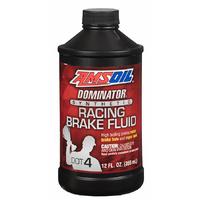
AMSOIL brake fluid is engineered to provide dependable hydraulic performance and consistent braking across a wide range of operating conditions. High-temperature performance helps resist fluid degradation and maintain reliable brake system operation during demanding street, towing and performance use.
Browse the AMSOIL brake fluid range below for high-performance fluid designed to protect braking-system components and provide dependable performance under severe operating conditions.
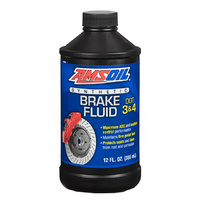
Brake fluid is a critical part of a vehicle's hydraulic braking system, transferring force from the brake pedal to the calipers or wheel cylinders. It must operate reliably across a wide temperature range while maintaining the hydraulic characteristics required for consistent braking performance.
AMSOIL synthetic brake fluid is formulated for demanding automotive and powersports applications where dependable hydraulic performance, high-temperature capability and protection against moisture-related deterioration are important.
Brake fluids are commonly identified by classifications such as DOT 3, DOT 4 and DOT 5.1. These standards define performance requirements including minimum dry and wet boiling points, viscosity and other characteristics important to hydraulic braking systems.
A higher DOT number should not automatically be interpreted as a simple upgrade path. Always use a brake fluid compatible with the braking system and meeting the specification required by the vehicle manufacturer.
Brake fluid can become extremely hot during repeated or heavy braking. If the fluid reaches its boiling point, vapour can form within the hydraulic system. Unlike liquid brake fluid, vapour is compressible, which can result in a soft pedal and reduced braking performance.
The dry boiling point describes the performance of new brake fluid, while the wet boiling point represents fluid after it has absorbed a defined amount of moisture. Both figures are useful when evaluating brake fluid, particularly for vehicles subjected to demanding braking conditions.
Common glycol-based brake fluids are hygroscopic, meaning they absorb moisture over time. As moisture content increases, the boiling point of the fluid decreases and corrosion protection within the braking system can also be affected.
This is why brake fluid should be serviced according to the vehicle manufacturer's recommended interval rather than simply topped up indefinitely. Fluid that still looks clean may have absorbed moisture and lost some of its original performance.
Silicone-based DOT 5 brake fluid is fundamentally different from the glycol-based DOT 3, DOT 4 and DOT 5.1 fluids used in many modern braking systems. DOT 5 should not be confused with DOT 5.1 simply because the names appear similar, and the two should not be treated as interchangeable.
Always identify the brake fluid specification required by the vehicle before servicing the system or mixing fluids.
Brake temperatures can rise substantially during mountain driving, towing, repeated heavy braking and motorsport. A brake fluid with appropriate high-temperature performance provides additional resistance to vapour formation as braking-system temperatures increase.
For competition vehicles, brake fluid condition can be just as important as the product selected. Motorsport applications may require substantially more frequent fluid changes than normal road use due to repeated exposure to high temperatures.
Check the DOT classification and any additional requirements specified by the vehicle, motorcycle or brake-system manufacturer before selecting a brake fluid. Use the AMSOIL Vehicle Product Finder to identify suitable AMSOIL products for your application.


Add your favourites to cart

Select Afterpay at checkout

Log into or create your Afterpay account, with instant approval decision

Your purchase will be split into 4 payments, payable every 2 weeks
All you need to apply is to have a debit or credit card, to be over 18 years of age, and to be a resident of country offering Afterpay
Late fees and additional eligibility criteria apply. The first payment may be due at the time of purchase
For complete terms visit afterpay.com/terms