

Compare two bottles of synthetic engine oil and the price difference can be substantial. Both may say synthetic, both may carry the same SAE viscosity grade and both may appear suitable for the same engine.
So what are you actually paying for?
Part of the answer can lie much deeper in the formulation: the base oils used to make the lubricant. Terms such as Group III, Group IV and PAO are common in lubricant discussions, but they are not especially useful unless you understand what the five base oil groups actually mean.
What Is a Base Oil?
Base oils form the foundation of most lubricants. They provide the fluid component that separates moving surfaces, carries additives and helps control properties such as viscosity, volatility and low-temperature behaviour.
A finished engine oil is not simply one base oil poured into a bottle. It is a carefully developed formulation using one or more base stocks together with an additive system designed to provide wear protection, detergency, oxidation resistance, corrosion protection, viscosity control and other required characteristics.
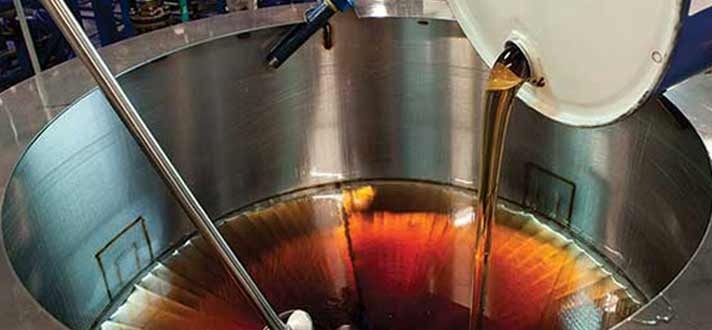
Base stocks are blended with carefully selected additive chemistry to produce the finished lubricant.
This distinction matters because the base oil group can tell you something useful about the starting materials used in a lubricant, but it cannot tell you everything about how the finished product will perform.
What Are the Five Base Oil Groups?
The American Petroleum Institute classifies lubricant base stocks into five broad groups. Groups I, II and III are primarily distinguished by their level of saturates, sulphur content and viscosity index. Group IV is reserved for polyalphaolefins, or PAOs, while Group V covers base stocks that do not fit into Groups I through IV.
| Group | General Description | Key Characteristics |
|---|---|---|
| Group I | Traditionally refined petroleum base stocks | Viscosity index 80-120, lower saturates and/or higher sulphur |
| Group II | Hydroprocessed petroleum base stocks | At least 90% saturates, no more than 0.03% sulphur, VI 80-120 |
| Group III | Highly hydroprocessed base stocks | At least 90% saturates, no more than 0.03% sulphur, VI of at least 120 |
| Group IV | Polyalphaolefins (PAO) | Fully synthetic base stocks defined by their chemistry rather than the Group I-III limits |
| Group V | Other base stocks | Includes esters, PAGs, naphthenic stocks and other base stocks outside Groups I-IV |
Group IV does not mean "Grade 4 oil", and Group V does not automatically mean better than Group IV. The groups classify different types of base stock rather than ranking complete lubricants from worst to best.
What Is Group III Base Oil?
Group III base stocks are highly processed base oils with a viscosity index of at least 120, at least 90% saturates and no more than 0.03% sulphur. They are generally produced using extensive hydrogen processing and can offer very good oxidation stability, low-temperature behaviour and volatility characteristics.
Modern Group III base oils are capable of excellent performance and are widely used in high-quality synthetic lubricants. They should not be dismissed as poor simply because they are not PAO.
For large lubricant manufacturers, Group III can also provide an effective way to formulate high-performing products at the scale and price points required for mass-market applications.
What Is Group IV Base Oil?
Group IV base oils are polyalphaolefins, commonly shortened to PAO.
Unlike Groups I through III, PAOs are chemically synthesised base stocks. Their controlled molecular structure can provide excellent low-temperature performance, strong oxidation resistance, high viscosity index and favourable volatility characteristics. ExxonMobil notes that Group IV base stocks are generally very oxidatively stable and provide excellent low-temperature performance.
These characteristics make PAO particularly attractive where very high performance, temperature stability or extended service capability is required.
PAO is also generally a more expensive base-stock technology than conventional or hydroprocessed petroleum-derived stocks, which is one reason it tends to appear more frequently in premium lubricant formulations.
Group III vs Group IV: What Is the Practical Difference?
The easiest way to think about the difference is that Group III starts with a feedstock that is heavily processed and refined to produce highly desirable lubricant molecules, while Group IV PAO is chemically synthesised to produce a more controlled molecular structure.
That does not mean a finished Group IV-based oil will automatically outperform every Group III-based lubricant.
AMSOIL itself makes this point clearly: base-oil group alone does not determine finished-oil performance. A Group III formulation with an excellent additive system can outperform a poorly formulated Group IV product. The complete formulation matters.
Why Doesn't Every Synthetic Oil Use PAO?
Because lubricant formulation is an engineering exercise, not a competition to use the most expensive raw material available.
If a manufacturer can achieve the required wear protection, oxidation stability, volatility, cold-start performance and specification targets using Group III base stocks, then PAO may not be necessary for that product.
Conversely, a lubricant designed for extreme temperatures, long drain intervals, demanding competition use or unusually high performance margins may benefit from more extensive use of premium synthetic base stocks such as PAO or selected Group V components.
The words "100% synthetic" do not, by themselves, tell you that a lubricant is made entirely from Group IV PAO. Synthetic formulations may use different combinations of Group III, Group IV and Group V base stocks depending on the product and the performance required.
What About Group V?
Group V is sometimes misunderstood as the next step above Group IV. It is not.
Group V is essentially the category for base stocks that do not fit into Groups I through IV. It includes technologies such as esters, polyglycols, certain naphthenic stocks and other specialty base stocks.
Some Group V base stocks can provide valuable properties when blended into a formulation, while others may be unsuitable for a particular automotive application. The fact that something is Group V does not automatically make it superior.
Why Can Premium Synthetic Oils Cost More?
One of the most common questions we hear is why AMSOIL can cost more than a comparable-looking oil from a much larger mass-market brand.
There is no single answer. Manufacturing scale, distribution, additive chemistry, testing, application targets and formulation choices can all influence the cost of a finished lubricant.
Base-stock selection can also be part of the equation. Premium synthetic base stocks such as PAO can cost more than widely produced Group III stocks, particularly where the formulation is designed around demanding performance targets rather than simply meeting the minimum requirement for a specification.
AMSOIL states that it uses premium synthetic base oils and high-quality additive chemistry, but it does not disclose the exact base-stock composition of most current products. The company treats that information as proprietary and selects whichever combination of synthetic base stocks delivers the desired performance for the application.
That means it is not accurate to assume that every AMSOIL product labelled 100% synthetic is exclusively Group IV PAO. Where AMSOIL specifically identifies PAO as part of a formulation, that claim can be made directly. Where it does not, the base-stock blend should not be guessed.
Why Can't You Just Compare the Labels?
Both can be SAE 5W-30. Both can be marketed as synthetic. Both can meet the minimum specification required by the engine.
That does not mean they use the same base stocks, the same additive chemistry or cost the same amount to formulate.
This is why looking only at viscosity grade or the word "synthetic" tells you surprisingly little about what is actually inside the bottle.
Can You Judge an Oil by Its Base-Oil Group?
No.
Base oil provides the foundation, but the finished lubricant is what your engine actually uses. Base-stock selection, additive chemistry and the complete formulation work together to determine wear protection, oxidation resistance, cleanliness, volatility, cold-temperature behaviour and viscosity control.
AMSOIL notes that passenger-car motor oil typically contains approximately 70-80% base oil, with the remainder made up of additive chemistry. Even an excellent base stock therefore represents only part of the finished formulation.
A better way to judge a lubricant is to look at the performance of the finished product: the specifications it meets, the testing behind it and whether it is appropriate for the application.
Oil Information & Technical Guides
Explore our oil knowledge base with practical guides covering oil standards, viscosity, base-oil technology and application-specific specifications.