
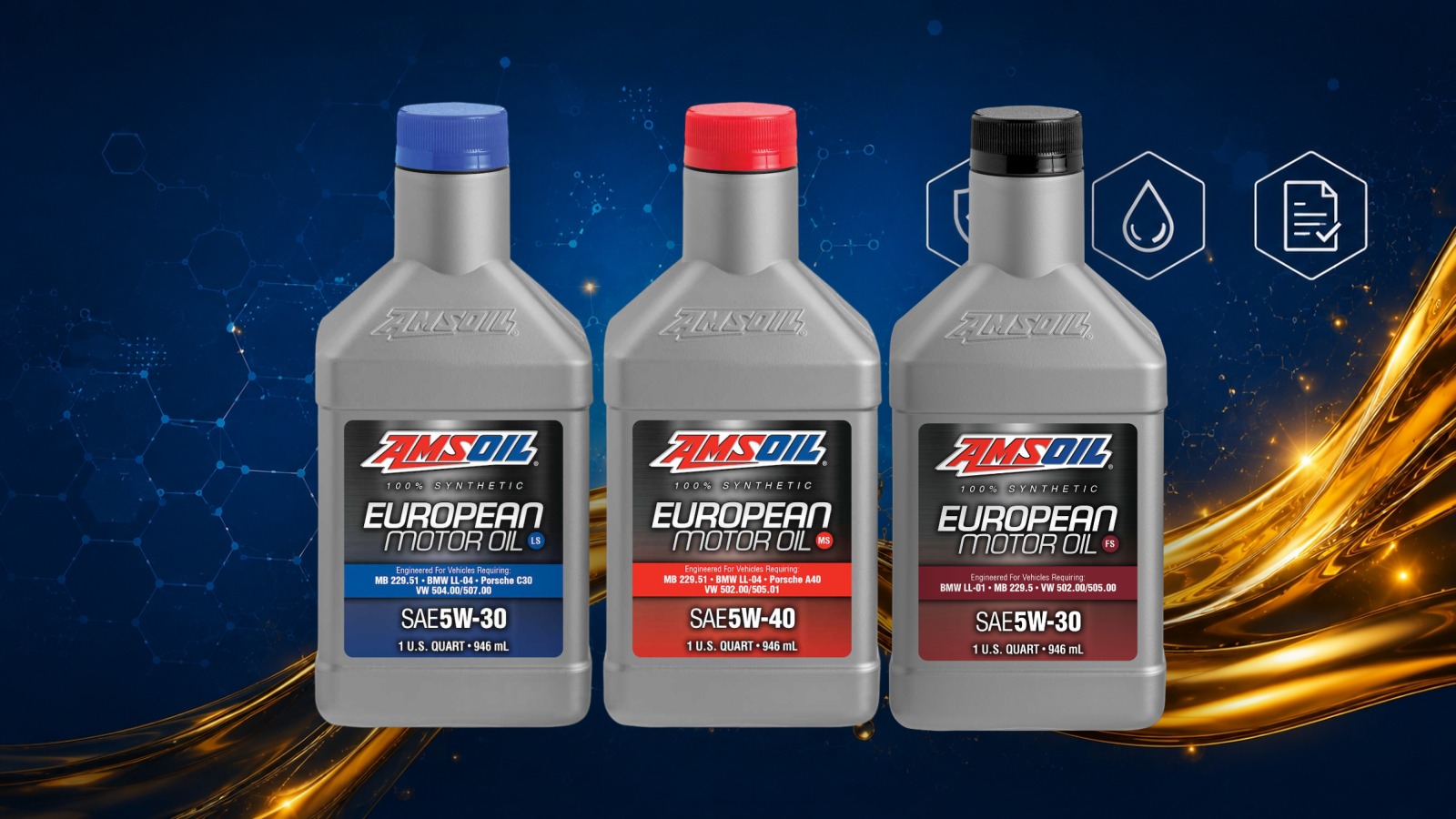
Read the specifications for a modern European engine oil and there is a good chance you will encounter terms such as low SAPS, mid SAPS or reduced SAPS.
It sounds like SAPS must be some undesirable contaminant that oil manufacturers are trying to remove. In reality, the story is considerably more interesting.
SAPS stands for Sulphated Ash, Phosphorus and Sulphur. These aren't simply unwanted impurities. Their presence is closely related to additive chemistry that can provide valuable protection inside an engine. The problem is that some of the same chemistry that helps protect the engine can create problems for modern exhaust after-treatment systems.
Modern engine-oil formulation therefore involves a balancing act: protect the engine while also protecting catalytic converters, diesel particulate filters and other emissions equipment.
European Oil Specifications & Technology
Explore the oil specifications, chemistry and viscosity requirements commonly used in modern European engines.


What Does SAPS Stand For?
SAPS combines three different measurements or chemical elements that are important when formulating and specifying engine oils:
- SA - Sulphated Ash: a laboratory measurement associated with the inorganic residue that can remain after the oil and its additives are burned under specified test conditions.
- P - Phosphorus: commonly associated with anti-wear additive chemistry used to protect heavily loaded engine components.
- S - Sulphur: present in varying amounts through base oils and additive chemistry and controlled in many modern lubricant specifications.
These three characteristics became particularly important as vehicle manufacturers introduced increasingly sophisticated exhaust emissions systems.
Why Are SAPS in Engine Oil in the First Place?
Because some extremely useful engine-oil additives contribute to them.
Engine oil is much more than a base oil of the correct viscosity. A finished lubricant contains an additive system designed to control wear, deposits, oxidation, corrosion, foam and other problems encountered during engine operation.
For example, metallic detergent additives can help keep hot engine surfaces clean and contribute to the oil's ability to neutralise acidic combustion by-products. Anti-wear additives containing phosphorus can form protective films on highly loaded surfaces. Other components of the formulation can contribute sulphur.
Remove or severely restrict that chemistry without replacing its function and you can compromise engine protection.
So the objective of a modern low- or mid-SAPS formulation isn't simply to remove additives. Lubricant formulators have to achieve the required engine protection while operating within tighter chemical limits.
What Is Sulphated Ash?
The word ash can be misleading because there isn't normally a pile of ash floating around inside a bottle of engine oil.
Sulphated ash is determined using a laboratory test. The oil sample is burned and treated according to a defined test procedure, leaving a residue that can be measured as a percentage of the original sample.
The result provides an indication of the quantity of certain non-combustible, inorganic material associated primarily with metallic additive components in the lubricant.
This means sulphated ash is not a measurement of how dirty an engine oil is. Nor is it a direct measurement of sludge, varnish or the deposits you might find underneath a neglected rocker cover.
An oil can have tightly controlled sulphated ash while still containing a sophisticated detergent and anti-wear additive package designed specifically for that application.
Why Does Ash Matter to a DPF?
A diesel particulate filter (DPF) is designed to capture particulate matter in the exhaust rather than allowing it to leave the tailpipe.
During regeneration, accumulated combustible soot can be burned away. Ash is different.
Small quantities of engine oil are inevitably consumed during normal engine operation. When oil-derived material passes through the combustion process, non-combustible inorganic residue can eventually reach the exhaust system and become trapped in the particulate filter.
That ash cannot simply be burned away during normal DPF regeneration.
Over a long service life, accumulated ash occupies part of the filter's available capacity. Controlling the ash-producing components of the lubricant therefore helps manufacturers manage particulate-filter durability.
What About Phosphorus?
Phosphorus is particularly interesting because it illustrates the compromise involved in lubricant formulation.
One of the most established anti-wear additive families used in engine oil is zinc dialkyldithiophosphate, usually shortened to ZDDP. ZDDP contains both zinc and phosphorus and can form protective anti-wear films when highly loaded metal surfaces interact.
That's useful inside the engine.
But phosphorus reaching the exhaust can interfere with the operation and long-term effectiveness of catalytic converters. Modern lubricant specifications therefore control phosphorus concentration to balance anti-wear performance with emissions-system durability.
This is one reason simply judging an engine oil by how much zinc or phosphorus it contains is misleading. More anti-wear additive is not automatically better. The complete formulation needs to suit the engine and emissions system for which the lubricant is intended.
And What Does Sulphur Do?
Sulphur can enter the finished lubricant through both base-oil and additive chemistry. Like phosphorus and sulphated ash, its concentration may be controlled by specifications intended for engines with sensitive exhaust after-treatment systems.
Again, the objective isn't based on the assumption that every sulphur-containing component is inherently bad. It is about controlling the complete chemical formulation so the lubricant can satisfy both engine-performance and emissions-system requirements.
What Are Full-SAPS, Mid-SAPS and Low-SAPS Oils?
The terms full SAPS, mid SAPS and low SAPS are useful shorthand for describing oils with different levels of sulphated ash, phosphorus and sulphur.
They should not, however, be treated as universal quality grades.
Full-SAPS oils generally allow greater freedom in the use of traditional metallic detergent and anti-wear chemistry. They may be appropriate for engines and specifications that do not impose the tighter chemical restrictions required by certain modern exhaust after-treatment systems.
Mid-SAPS oils place tighter limits on these components while retaining an additive system designed to provide the required engine protection. Many modern European petrol and diesel applications fall into this broad area.
Low-SAPS oils operate under still tighter chemical restrictions and are used where the engine and emissions system require them.
The important point is that lower SAPS does not mean higher quality. Neither does full SAPS mean an old-fashioned or inferior lubricant. They describe different formulation requirements.
How Does This Relate to ACEA Oil Specifications?
For many Australian motorists, SAPS requirements are most likely to appear when dealing with European vehicle specifications.
ACEA engine-oil sequences include chemical limits alongside physical and performance requirements. The ACEA C categories are particularly associated with catalyst and particulate-filter-compatible oils, but the categories are not interchangeable simply because they all control SAPS.
Different ACEA categories can specify different limits for sulphated ash and other chemical properties while also having different viscosity, fuel-economy and engine-performance requirements.
That means seeing the words "low SAPS" on a bottle isn't enough to determine whether the oil is correct for your engine. The lubricant still needs to meet the appropriate ACEA category and any manufacturer specification required by the vehicle.
Does Low SAPS Mean Less Engine Protection?
Not when the oil is correctly formulated for the application.
This is one of the easiest misconceptions to develop from looking at an oil's chemical composition. If an older formulation achieved wear protection using a particular concentration of one additive, it does not follow that every modern oil requires the same concentration to achieve equivalent protection.
Lubricant formulation is a system. Base-oil selection, detergents, dispersants, antioxidants, anti-wear additives, friction modifiers and other components interact with one another.
A modern low-SAPS oil designed to meet a demanding manufacturer specification still has to pass the wear, deposit, oxidation and other performance tests required by that specification.
The chemistry used to achieve those results may simply be different.
Should I Use Low-SAPS Oil in Everything?
No.
Low SAPS is a formulation requirement, not an automatic upgrade.
An engine designed around a particular lubricant specification should use an oil meeting that specification. Substituting another oil solely because it is described as low SAPS ignores the rest of the lubricant's performance requirements.
The opposite is equally important. If a vehicle requires an emissions-system-compatible lubricant with controlled SAPS levels, using an unrelated full-SAPS oil simply because it has the same SAE viscosity can be the wrong choice.
A 5W-30 is not necessarily interchangeable with another 5W-30. The viscosity grade tells you about viscosity. The specification tells you what the oil is expected to do.
Are SAPS Only Important in Diesel Engines?
No. Diesel particulate filters made SAPS terminology particularly visible, but petrol engines also use exhaust after-treatment systems that can be affected by lubricant chemistry.
Catalytic converters have long influenced engine-oil formulation, and modern petrol engines may also use gasoline particulate filters (GPFs).
As emissions systems have become more sophisticated, lubricant and engine development have become increasingly interconnected. The engine oil is no longer specified solely around what happens between the sump, bearings, pistons and valvetrain; engineers also have to consider what happens to the small quantity of lubricant that eventually reaches the combustion chamber and exhaust.
Does My Car Need a Low-SAPS Oil?
Don't determine this from the presence of a DPF alone, and don't choose an oil simply because its marketing describes it as low or mid SAPS.
Check the lubricant specification required by the vehicle manufacturer. Depending on the vehicle, this might be an ACEA category, an API or ILSAC category, a manufacturer-specific approval or a combination of requirements.
The correct viscosity is also important, but viscosity and lubricant specification answer different questions.
If you're selecting an AMSOIL product for a particular vehicle, the AMSOIL Vehicle Finder can help identify the appropriate lubricant recommendation.
The Bottom Line
SAPS stands for Sulphated Ash, Phosphorus and Sulphur, but these aren't simply three unwanted ingredients that should be removed from every engine oil.
They are closely connected with lubricant chemistry that can perform valuable jobs inside an engine. At the same time, oil-derived ash and certain chemical components can affect catalytic converters, particulate filters and other exhaust after-treatment equipment.
Low- and mid-SAPS oils are therefore an engineering compromise in the best sense of the word: lubricant formulators must provide the wear protection, cleanliness, oxidation resistance and other performance the engine requires while remaining within chemical limits designed to protect its emissions equipment.
So don't choose an oil because it has the most additives, the least ash or the biggest zinc number. Choose the oil that meets the specification the engine was designed to use.
Oil Information & Technical Guides
Explore our oil knowledge base with practical guides covering oil standards, viscosity, base-oil technology and application-specific specifications.