
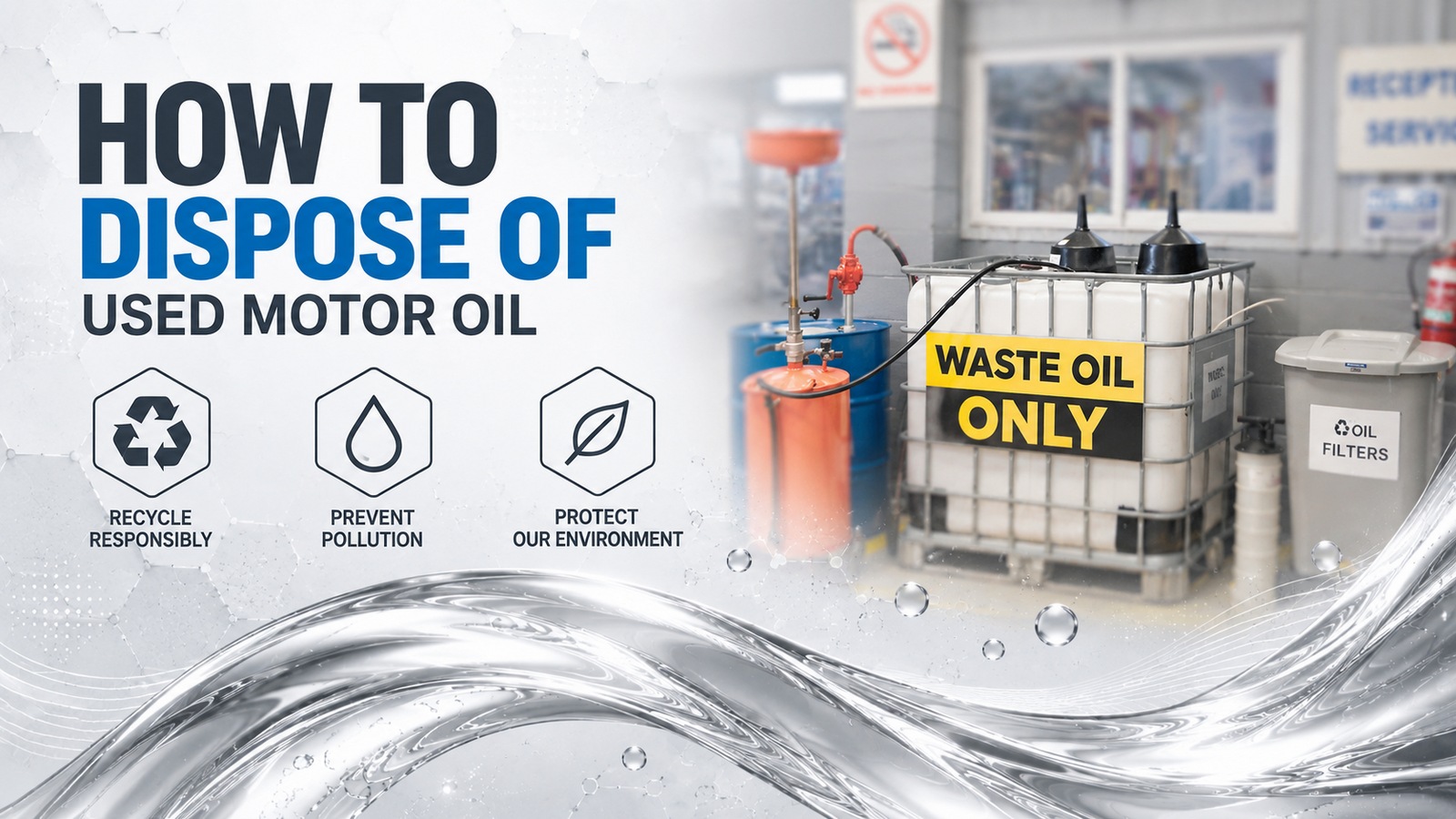
Changing your own engine oil is a straightforward maintenance job. Working out what to do with five or more litres of dirty oil afterwards can be less obvious.
Used engine oil should never be poured onto the ground, tipped into a drain or placed loose in household rubbish. It contains contaminants accumulated during service and should be collected and sent through an appropriate waste-oil recycling or disposal facility.
Fortunately, recycling relatively small quantities of used engine oil is straightforward in most parts of Australia.
Store used engine oil in a clean, sealed container and take it to a facility that accepts waste oil. Many council recycling centres, waste transfer stations and other collection facilities accept household quantities of used engine oil. Check with your local council or facility before travelling, as accepted materials and quantity limits can vary.
Why Does Used Engine Oil Need to Be Recycled?
Engine oil spends its service life circulating through an environment containing heat, combustion by-products, wear particles and other contaminants.
Once drained from an engine, it remains a valuable recyclable material, but it isn't something that should simply be released into the environment.
Improper disposal can contaminate soil and waterways. Sending used oil through an appropriate collection system allows it to be recovered and processed rather than becoming an environmental contaminant.
Where Can I Take Used Engine Oil in Australia?
For motorists carrying out their own servicing, the first place to check is your local council's waste and recycling service.
Depending on your area, used engine oil may be accepted at a council recycling centre, community recycling facility, waste transfer station, resource recovery centre or another designated collection point.
Some facilities accept household quantities of used oil without charge, while others may have quantity limits or different conditions.
Check your local council's website or contact the facility before travelling to confirm that used engine oil is accepted and whether any limits or packaging requirements apply.
Never dispose of engine oil through stormwater drains, sinks, toilets or onto the ground. Keep it contained and take it to an appropriate waste-oil collection facility.
How Should I Store Used Oil for Recycling?
After draining the engine, transfer the used oil into a clean container with a secure lid.
The empty container from your new engine oil can be a convenient option if it is suitable for storage and can be securely sealed. Clearly identify the container as used oil and keep it upright during storage and transport.
Avoid filling a container so completely that expansion or movement causes leakage, and wipe oil from the outside before placing it in your vehicle.
A plastic tub or tray underneath the containers during transport can provide additional protection against spills.
Don't Mix Used Engine Oil with Other Chemicals
One of the most important rules when storing waste oil is to keep it separate from other automotive fluids and chemicals.
Don't use your waste-oil container as a convenient place to dispose of coolant, brake fluid, petrol, solvents, degreasers or other chemicals.
Mixing different waste products can complicate recycling and may mean a collection facility can no longer accept the material through its normal used-oil recycling stream.
It sounds strange to describe old black engine oil as "clean", but recyclers want waste oil that hasn't been contaminated with unrelated chemicals. Keep engine oil separate from coolant, fuel, brake fluid and solvents.
What About Used Oil Filters?
An old engine-oil filter can retain a surprising amount of oil after it has been removed from the vehicle.
Allow the filter to drain safely during the oil change and store it so that residual oil cannot leak during transport.
Some recycling and waste facilities accept used oil filters as well as waste oil, but this varies between locations. Check the requirements of your local facility before including filters with your load.
Don't assume an oil filter belongs in your household recycling bin simply because much of the filter is made from steel. It contains residual oil and filter media and may need to enter a dedicated recycling stream.
Can Empty Engine-Oil Bottles Be Recycled?
That depends on the recycling services available in your area and the condition of the container.
An oil container can retain lubricant residue even when it appears empty, so don't automatically place it in household recycling. Check your council's instructions for empty automotive-fluid containers.
Some waste facilities that accept used oil may also accept associated containers, while others require them to be handled separately.
What About Oily Rags and Absorbent Material?
Oil changes can also leave you with oily rags, absorbent pads, contaminated kitty litter or other materials used to clean spills.
These should not be placed into the liquid waste-oil container. Disposal requirements can vary, so check with your council or waste facility about how oil-contaminated solid materials should be handled.
What If I Have a Large Quantity of Used Oil?
A home mechanic disposing of the oil from one or two vehicles is very different from a workshop, farm or business generating hundreds or thousands of litres of waste oil.
Commercial quantities are commonly handled by specialist waste-oil collection companies rather than household collection facilities.
Businesses should use an appropriate waste contractor and comply with the waste-storage, transport and environmental requirements that apply in their state or territory.
If you're unsure whether a council facility will accept the quantity you have, contact the facility before transporting it.
What Happens to Recycled Engine Oil?
Used lubricating oil isn't necessarily at the end of its useful life simply because it has been drained from an engine.
Collected oil can be processed to remove water, contaminants and other unwanted material. Depending on the recycling process and quality of the feedstock, recovered oil may be processed for various industrial applications or undergo more extensive re-refining.
Re-refining can recover usable base oil from waste lubricants. The recovered material can then undergo further processing and formulation rather than requiring the original base oil to be discarded after a single service life.
What If I Spill Engine Oil?
Small spills during a home oil change should be contained before they spread.
Use an appropriate absorbent material to collect the oil rather than washing it into a drain or onto surrounding soil. Once absorbed, store the contaminated material safely until you can dispose of it according to your local waste requirements.
For a substantial spill, particularly one that threatens a drain, waterway or surrounding environment, contact the appropriate local authority or emergency service for advice rather than attempting to wash the oil away.
Changing Oil at Home: A Simple Disposal Routine
- Use a drain pan large enough to safely capture the engine's full oil capacity.
- Transfer the drained oil into a clean container with a secure lid.
- Keep coolant, fuel, brake fluid, solvents and other chemicals out of the used oil.
- Allow the old oil filter to drain and store it without allowing residual oil to leak.
- Clean up spills with absorbent material rather than water.
- Check your council or local recycling facility for its waste-oil requirements.
- Transport the containers upright and securely restrained.
Does Longer-Life Engine Oil Reduce Waste?
Where an engine oil and vehicle are approved for a longer service interval, changing oil less frequently can reduce the quantity of waste oil and packaging generated over the life of the vehicle.
That does not mean oil-change intervals should simply be extended in an attempt to reduce waste. The lubricant must be suitable for the vehicle and the service interval must account for the manufacturer's requirements, operating conditions and the oil's intended service life.
For more information, see our guide to how often synthetic engine oil should be changed.
If you service your own vehicle, dealing with the old oil is part of the job. Keep used engine oil in a sealed container, don't contaminate it with other automotive fluids and take it to an appropriate collection facility. Your local council is the best starting point for finding a waste-oil recycling service in your area.
Need to find the correct oil for your next service? Use the AMSOIL Vehicle Finder to search by make, model and engine.
Oil Information & Technical Guides
Explore our oil knowledge base with practical guides covering oil standards, viscosity, base-oil technology and application-specific specifications.