
Motorcycle fork oil has a direct influence on how suspension responds to bumps, braking, cornering and changes in terrain. Changing the fluid can alter compression and rebound damping, sometimes significantly, even when the number printed on the bottle appears similar.
Choosing the right fork oil therefore involves more than looking for a familiar weight or viscosity grade. The actual viscosity of the fluid, how consistently it maintains that viscosity as temperature changes and its ability to control wear, foaming and corrosion all contribute to suspension performance.
Start with the suspension manufacturer's recommended fluid. When comparing fork oils between brands, do not rely on the grade printed on the bottle alone. Compare the published kinematic viscosity at 40°C and consider viscosity index to understand how the fluids are likely to behave.
What Does Fork Oil Actually Do?
A motorcycle fork combines a spring with hydraulic damping. The spring supports the motorcycle and absorbs movement, while the damping system controls how quickly the suspension compresses and rebounds.
Inside the fork, suspension movement forces oil through carefully controlled passages, valves and shim stacks. The resistance created as the fluid moves through these passages converts suspension movement into heat and controls how quickly the fork moves.
The viscosity of the fork oil therefore becomes part of the suspension tune.
How Fork-Oil Viscosity Affects Suspension
Viscosity describes a fluid's resistance to flow. In simple terms, a lower-viscosity fork oil can flow more readily through the damping system, while a higher-viscosity fluid creates greater resistance to flow.
Changing viscosity can therefore affect compression and rebound behaviour. A thicker fluid will generally increase damping, while a thinner fluid will generally reduce it, although the exact effect depends on the design and adjustment of the suspension.
Fork-oil viscosity is only one part of suspension setup. Spring rate, preload, oil height, valving, compression adjustment and rebound adjustment can all influence suspension behaviour. Changing oil viscosity should not be used to compensate blindly for an incorrectly configured suspension.
Why Temperature Matters
Fork oil does not remain at one temperature while you ride. It may begin near ambient temperature and become progressively warmer as suspension movement generates heat.
Like other lubricating fluids, fork oil generally becomes thinner as its temperature rises. If its viscosity changes significantly, the damping characteristics of the suspension can also change.
A motorcycle that feels controlled when the suspension is cold can therefore behave differently after extended riding if the fluid's viscosity changes substantially with temperature.
For a suspension fluid, consistency is one of the most important performance characteristics. Ideally, the damping behaviour you have at the beginning of a ride should remain as predictable as possible as operating temperature changes.
What Is Viscosity Index?
Viscosity index, commonly abbreviated to VI, describes how much a lubricant's viscosity changes with temperature. A higher viscosity index indicates that the fluid undergoes a smaller relative change in viscosity across a range of temperatures.
For suspension applications, a high VI can help provide more consistent damping as the fork moves between cold and hot operating conditions.
Fork oil is part of the damping system. The more consistently the fluid maintains its viscosity as temperature changes, the more consistently the suspension can respond.
There Is No Universal Fork-Oil Weight
This is where choosing fork oil can become confusing.
Engine oils use recognised viscosity classifications such as SAE 5W-30 or 10W-40. A viscosity grade therefore provides a standardised range within which the engine oil must fall.
Fork and suspension oils are different. Nominal descriptions such as 5W, 10W, Light, Medium or similar terms are not necessarily standardised between manufacturers.
As a result, a fork oil labelled 5W by one manufacturer can have a different actual viscosity from a 5W product made by another manufacturer. Even apparently equivalent products can therefore change suspension behaviour when substituted.
Compare Fork Oil Using cSt at 40°C
When comparing suspension fluids, one of the most useful specifications is kinematic viscosity at 40°C, normally expressed in centistokes or cSt.
Unlike a marketing description such as "Light" or "5W", cSt is an actual measurement of the fluid's viscosity at a defined temperature.
For example, if the fork oil currently used in a motorcycle has a viscosity of approximately 16 cSt at 40°C, another product measuring close to 16 cSt at 40°C is likely to be a much closer viscosity match than simply selecting another bottle labelled 5W.
Look at the data sheet, not just the label. Find the kinematic viscosity at 40°C for your existing fluid and compare it with the technical data for the replacement fluid.
Fork Oil Must Do More Than Control Damping
Correct viscosity is critical, but suspension fluid also has to protect the components operating inside the fork.
Bushings, sliding surfaces, valves and other components are constantly moving while the suspension operates. The fluid must provide lubrication and wear protection while maintaining compatibility with seals and other materials used within the assembly.
Fork oil should also help protect internal metal surfaces against rust and corrosion. Moisture contamination and corrosion products can damage precision suspension components and compromise long-term performance.
Foam and Air Can Affect Damping
Suspension fluid is subjected to constant agitation as the fork operates. If excessive air becomes entrained in the oil or the fluid foams, its behaviour through the damping system can become less consistent.
A quality suspension fluid is therefore formulated to control foaming and provide predictable hydraulic performance under repeated suspension movement.
Can You Mix Different Fork Oils?
Mixing suspension fluids is sometimes used by experienced suspension tuners to achieve an intermediate viscosity, but simply mixing two different products without technical data can produce unpredictable results.
Different manufacturers can use different base oils and additive systems, and the viscosity printed on the bottle does not provide enough information to predict the final mixture accurately.
For routine servicing, using a known fluid with published technical data provides a much more repeatable suspension setup.
Should You Change Fork-Oil Viscosity?
If the suspension is working correctly, replacing the fluid with a product of similar actual viscosity is the best starting point. This helps preserve the damping characteristics around which the suspension was originally configured.
Changing viscosity can be useful when intentionally tuning suspension, but it should be done with an understanding of the effect the change will have. A suspension specialist may alter fluid viscosity alongside valving, spring rate, oil height and adjuster settings to achieve a particular result.
If you are simply servicing the forks rather than tuning them, consistency is generally preferable to experimentation.
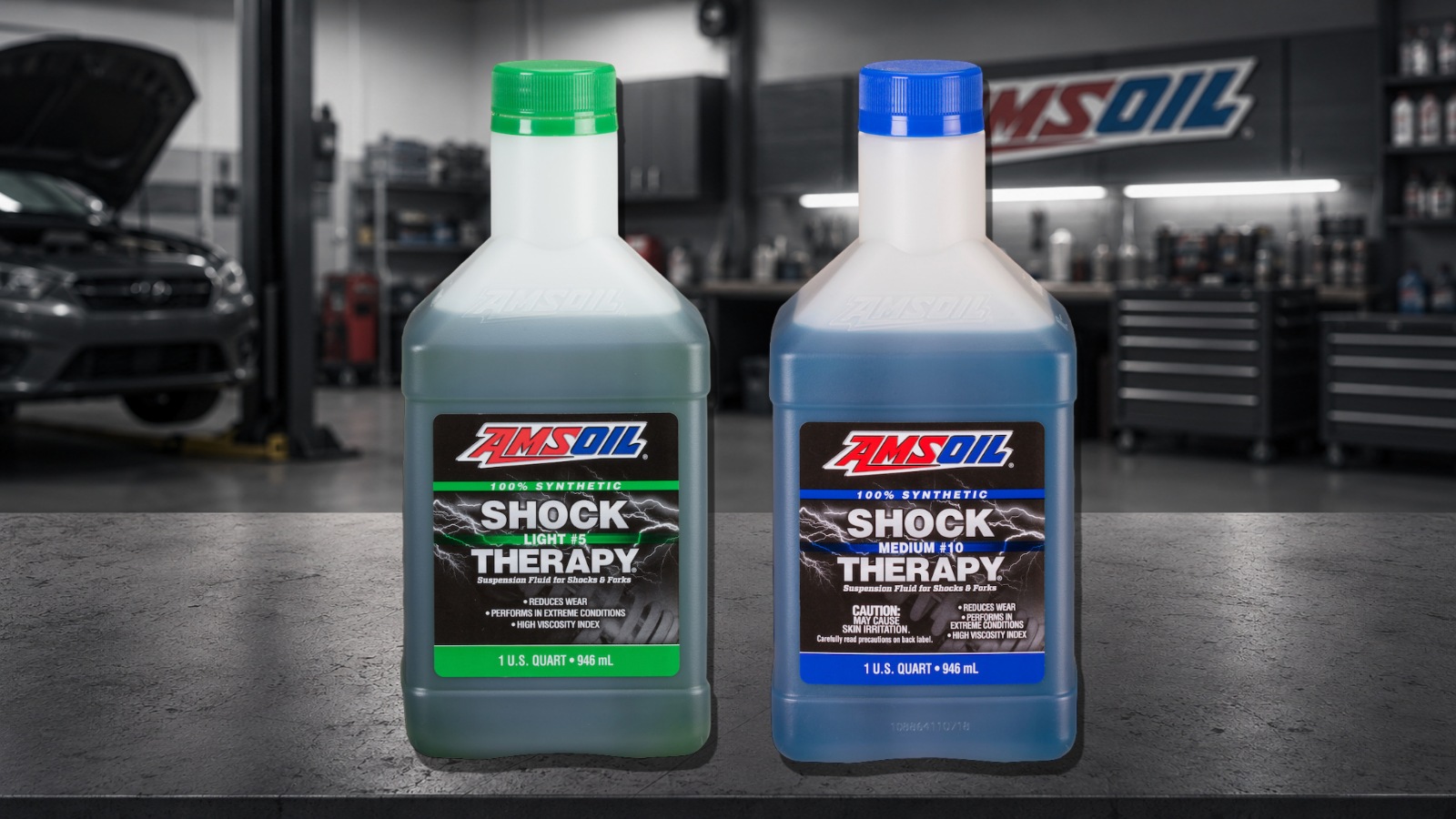
AMSOIL Shock Therapy Suspension Fluid
AMSOIL Shock Therapy Synthetic Suspension Fluid is formulated specifically for motorcycle forks and other high-performance suspension systems where consistent damping is important.
It is available in different viscosities to suit a range of suspension applications and is engineered to provide consistent viscosity across changing operating temperatures while helping protect suspension components against wear.
Published technical properties allow the fluids to be compared using actual viscosity rather than relying solely on nominal grade descriptions.
How to Choose a Replacement Fork Oil
When servicing motorcycle suspension, use the following process:
- Check the manufacturer's recommendation for the fork or suspension system.
- Identify the existing fluid where possible, particularly if the suspension has previously been modified or tuned.
- Find its kinematic viscosity at 40°C in the manufacturer's technical data.
- Compare replacement fluids using cSt at 40°C rather than relying only on the nominal weight printed on the bottle.
- Consider viscosity index where consistent damping across changing temperatures is important.
- Use the correct oil quantity or oil height specified for the suspension.
The best fork oil is not necessarily the one carrying the same nominal weight as the fluid you are replacing. Start with the suspension manufacturer's requirements, compare actual viscosity in cSt at 40°C and choose a high-quality fluid that maintains consistent viscosity as operating temperature changes.
Oil Information & Technical Guides
Explore our oil knowledge base with practical guides covering oil standards, viscosity, base-oil technology and application-specific specifications.