
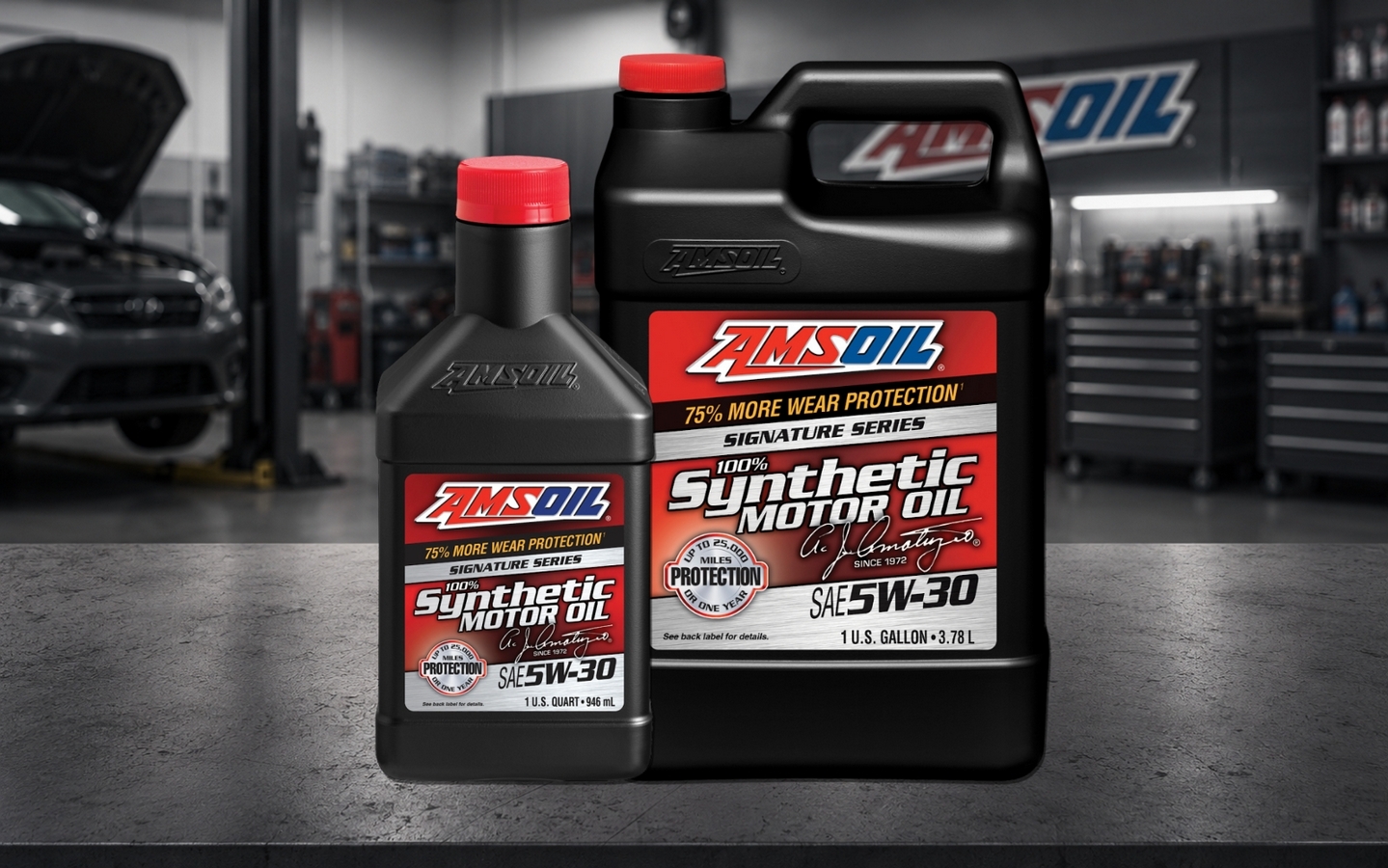
AMSOIL Signature Series Sequence IIIH Test: Twice the Test, Half the Limit
Motor oil is exposed to extreme heat throughout its service life. As oil oxidises, it can thicken, form deposits and lose its ability to circulate and protect critical engine components. The Sequence IIIH Engine Test is one of the industry-standard methods used to evaluate how well an engine oil resists these high-temperature effects.
AMSOIL subjected Signature Series Synthetic Motor Oil to the Sequence IIIH test, but did not stop when the standard 90-hour test was complete. The same oil remained in the engine and testing continued for another 90 hours — producing a total test duration of 180 hours, or twice the standard test length.
The figures of 100%, 0.1% and 49.6% refer to viscosity increase, not engine wear. The 100% figure represents the maximum viscosity increase permitted by the test criteria after the normal 90-hour test period. It is not a measured competitor result.
What Is the Sequence IIIH Engine Test?
The Sequence IIIH is a controlled engine test used to evaluate an engine oil’s performance under sustained high-temperature operating conditions. It is particularly useful for assessing resistance to oxidation, oil thickening and piston deposits.
Unlike a simple laboratory bench test, the Sequence IIIH runs the lubricant in an actual engine under prescribed operating conditions. This subjects the oil to heat, combustion by-products, mechanical stress and other conditions much closer to those encountered inside a working engine.
The test is associated with ASTM D8111 and forms part of the performance testing used in modern engine-oil qualification.
For an overview of the different ways motor oils are evaluated, see our How Is Motor Oil Tested? guide.
What Was AMSOIL Testing?
One of the measurements taken during the Sequence IIIH test is the change in the oil’s viscosity as it is exposed to sustained high temperatures.
Oxidation can cause motor oil to become progressively thicker. Excessive viscosity increase can make the lubricant harder to circulate, increase pumping losses and contribute to the formation of varnish and deposits.
The standard test establishes a maximum allowable viscosity increase. Reaching 100% viscosity increase represents the test limit — meaning the oil has doubled in viscosity compared with its starting point.
The Standard Test Lasts 90 Hours
At the completion of the normal test period, the allowable viscosity-increase limit is 100%. AMSOIL Signature Series recorded just 0.1% viscosity increase.
Rather than stopping at 90 hours, AMSOIL continued running the same lubricant for another 90 hours. At twice the standard test duration, viscosity increase reached 49.6%.
AMSOIL Signature Series Test Results
The 100% value shown above is the allowable viscosity-increase limit for the standard test, not the measured result of another motor oil. The 180-hour AMSOIL result was achieved by continuing the same lubricant in the engine for an additional 90 hours after completion of the standard test period.
Why the 180-Hour Result Matters
The most interesting part of the test is not simply the result at 90 hours. At the normal conclusion of the Sequence IIIH procedure, Signature Series had experienced only 0.1% viscosity increase.
AMSOIL then left the same lubricant in the engine and continued the test for another complete 90-hour cycle.
After 180 hours of total testing, the measured viscosity increase had risen to 49.6%. In other words, even after twice the standard test duration, the oil remained below half of the viscosity-increase limit that applies at the normal 90-hour test endpoint.
The 180-hour result represents one continuous extended test. AMSOIL did not replace the oil after 90 hours and begin again. The lubricant that had already completed the standard test remained in service for the additional 90 hours.
Watch the AMSOIL Sequence IIIH Test
AMSOIL documented the extended Sequence IIIH test in the video below, explaining the test procedure and the results achieved by Signature Series Synthetic Motor Oil.
AMSOIL: “AMSOIL Crushes Double-length Motor Oil Test”
What Does Viscosity Increase Mean?
Motor oil does not remain chemically unchanged while an engine operates. Sustained exposure to heat and oxygen can cause the lubricant to oxidise. As oxidation products accumulate, the oil can become progressively thicker.
A moderate increase in viscosity does not mean an oil has suddenly failed, but excessive thickening can negatively affect lubrication. Oil that has become substantially more viscous can circulate less readily, increase resistance within the engine and contribute to deposit formation.
This is one reason oxidation resistance is important in oils intended for extended drain intervals and severe operating conditions.
Viscosity itself can be measured in several different ways. Our Oil Viscosity Comparison Chart explains how common SAE, ISO and AGMA viscosity grades relate to measured lubricant viscosity.
Does This Test Mean Signature Series Can Be Used Four Times Longer?
No. A laboratory test result should not be converted directly into an oil-change interval.
The Sequence IIIH examines specific aspects of lubricant performance under controlled conditions. Real engines are also affected by fuel dilution, soot, moisture, contaminants, driving conditions, engine condition, operating temperature and many other factors.
Oil-change intervals should therefore be based on the lubricant manufacturer’s recommendations, vehicle requirements and operating conditions rather than extrapolated from a single laboratory test.
No Single Oil Test Tells the Whole Story
The Sequence IIIH provides useful information about high-temperature oxidation, viscosity increase and deposit control, but these are only some of the properties required of a modern engine oil.
An engine oil must also provide wear protection, low-temperature performance, adequate high-temperature film strength, sludge control, compatibility with emissions systems and many other characteristics.
This is why modern performance specifications combine numerous laboratory and engine tests rather than relying on a single result.
To understand how these tests fit together, visit our How Is Motor Oil Tested? article or our Engine Oil Standards Guide.
This test documents the performance of the AMSOIL Signature Series 5W-30 formulation evaluated by AMSOIL at the time the test was conducted. AMSOIL lubricant formulations and industry specifications continue to evolve, so historical performance-test results should not automatically be interpreted as technical data for a later formulation.
Oil Information & Technical Guides
Explore our oil knowledge base with practical guides covering oil standards, viscosity, base-oil technology and application-specific specifications.