
What Is a Hydrostatic Transmission?
A hydrostatic transmission transfers engine power using hydraulic fluid rather than relying solely on a conventional mechanical gearbox. The engine drives a hydraulic pump, which pressurises fluid and sends it to hydraulic motors that drive the wheels.
On a zero-turn mower, the left and right drive systems can be controlled independently. By changing the speed and direction of each side, the machine can accelerate, reverse, pivot and turn within an extremely small area.
The important point is that the transmission fluid is not merely lubricating the mechanism. It is also an active part of the system that transfers power.
A zero-turn mower can be moving slowly while its transmission oil is working extremely hard.
Why Zero-Turn Operation Is So Demanding
Zero-turn mowers often spend long periods operating at relatively low ground speeds while the engine and hydrostatic drive system continue working continuously. Frequent acceleration, braking, reversing and directional changes also place repeated demands on the hydraulic pump and wheel motors.
Commercial mowing can add hours of continuous operation, high ambient temperatures, heavy grass, hills and repeated manoeuvring. All of this contributes to a harsh operating environment for the transmission fluid.
Heat
Hydraulic systems generate heat as fluid is pumped under pressure. Prolonged mowing and heavy loads can raise transmission temperatures substantially.
Mechanical Shear
The fluid is repeatedly forced through pumps, motors, passages and clearances. The lubricant must maintain its viscosity under continued mechanical stress.
Wear Protection
Pumps, motors, gears, bearings and other transmission components rely on a durable lubricating film to limit metal-to-metal contact.
Hydraulic Response
Because the oil is directly involved in transferring power, fluid condition can influence pressure, responsiveness and the way the mower drives.
Heat Changes the Way the Fluid Behaves
All lubricants become thinner as temperature rises. In a hydrostatic transmission, however, excessive thinning is particularly important because the oil is doing more than separating moving surfaces.
The fluid must maintain sufficient viscosity to support hydraulic pressure, lubricate internal components and help preserve the close operating clearances inside pumps and motors.
As the transmission becomes hotter, a fluid with poor high-temperature stability can lose viscosity more rapidly. This can affect the strength of the lubricating film and may also influence the efficiency and responsiveness of the hydraulic system.
Heat also accelerates oxidation. Over time, badly oxidised oil can contribute to deposits, sludge and varnish that may interfere with internal components and hydraulic control.
The Oil Is Part of the Power-Transmission System
This is what makes hydrostatic transmission oil different from the lubricant most people are familiar with inside an engine.
Engine oil is primarily responsible for lubrication, cooling, cleaning and protecting engine components. In a hydrostatic drive, the transmission fluid must also transmit power hydraulically from the pump to the motors.
That makes viscosity retention especially important. If the fluid becomes excessively thin under high temperature or mechanical shear, the transmission can lose some of the characteristics the system depends upon for pressure, efficiency and consistent response.
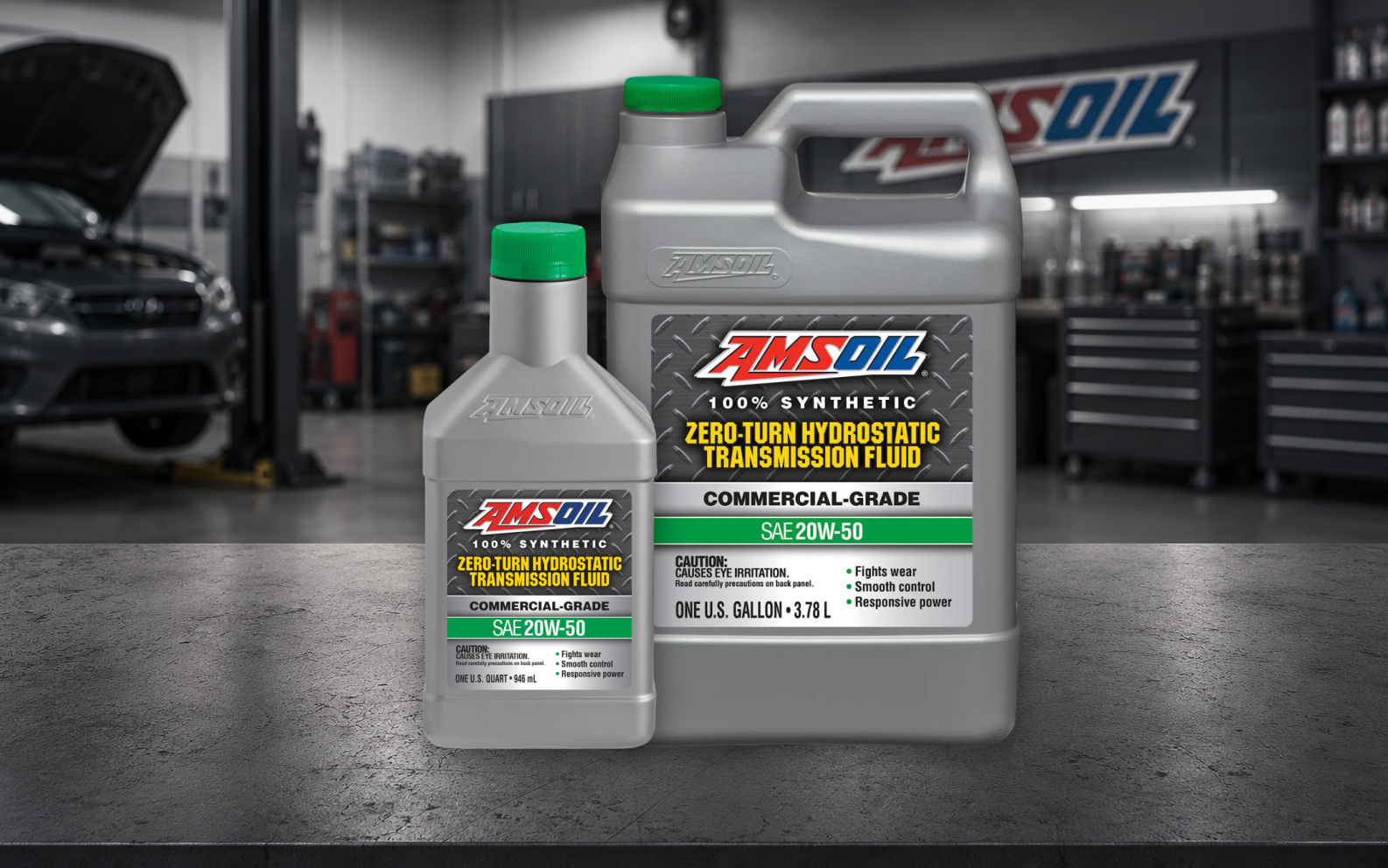
AMSOIL 20W-50 Synthetic Hydrostatic Transmission Fluid is formulated specifically around these operating demands, with an emphasis on viscosity retention, shear stability, anti-wear protection and sustained hydrostatic performance.
Why Do Some Zero-Turn Mowers Specify 20W-50 Motor Oil?
Many hydrostatic mower transmissions have historically specified conventional motor-oil viscosity grades, commonly SAE 20W-50. This can make the application confusing because it appears that the transmission simply requires ordinary engine oil.
In applications where the equipment manufacturer specifies 20W-50 motor oil, a suitable motor oil can provide the required viscosity and protection. However, the fact that two lubricants share the same viscosity grade does not mean they are formulated for exactly the same purpose.
Viscosity tells you how an oil flows at specified temperatures. It does not tell you everything the oil was designed to do.
A purpose-built hydrostatic transmission fluid can use the familiar 20W-50 viscosity range while placing greater emphasis on the operating conditions found inside hydrostatic pumps and motors.
Why AMSOIL Makes a Dedicated 20W-50 Hydrostatic Fluid
AMSOIL 20W-50 Synthetic Hydrostatic Transmission Fluid is designed specifically for zero-turn and other hydrostatic transmissions that call for this type of viscosity.
Rather than treating the transmission as simply another place to use motor oil, the formulation is focused on the conditions found inside hydrostatic equipment.
Viscosity Retention
Designed to maintain a protective fluid film and appropriate viscosity despite the elevated temperatures commonly found in hydrostatic service.
Shear Stability
Formulated to resist viscosity loss caused by the repeated mechanical stress imposed by pumps, motors and hydraulic circuits.
Anti-Wear Protection
A robust anti-wear additive system helps protect heavily loaded components inside the hydrostatic transmission.
Consistent Performance
Maintaining fluid condition and viscosity helps support hydraulic pressure, mower speed and responsive operation during demanding use.
20W-50 Does Not Mean “The Same Oil”
Two lubricants can both carry an SAE 20W-50 viscosity grade and still be substantially different products.
The viscosity grade describes the lubricant's viscosity characteristics. It does not describe its entire additive system, performance requirements or intended application.
A 20W-50 engine oil is formulated around the environment inside an internal-combustion engine. A 20W-50 hydrostatic transmission fluid can instead be formulated around hydraulic pressure, shear stability, pump and motor wear and sustained high-temperature transmission operation.
This distinction is why lubricant selection should never be based on viscosity alone.
Why Can't I Use Hydrostatic Transmission Oil as Motor Oil?
This is where the shared 20W-50 viscosity rating can cause the most confusion.
AMSOIL 20W-50 Synthetic Hydrostatic Transmission Fluid may have the same viscosity grade as many engine oils, but it is not formulated as motor oil and should not be used as a substitute for engine oil.
An internal-combustion engine exposes its lubricant to a completely different operating environment. Engine oil must cope with combustion by-products, fuel dilution, acids, deposits, piston and ring-zone temperatures and contaminants that must remain suspended until they can be removed by the oil filter or during an oil change.
Motor oils are therefore formulated with additive systems specifically designed around engine operation, including detergents, dispersants, anti-wear chemistry, oxidation control and other performance requirements.
Hydrostatic transmission fluid is designed around another job entirely: transferring hydraulic power while protecting pumps, motors and transmission components under heat, pressure and mechanical shear.
| Requirement | 20W-50 Motor Oil | 20W-50 Hydrostatic Fluid |
|---|---|---|
| Primary application | Internal-combustion engine | Hydrostatic transmission |
| Major operating challenges | Combustion heat, deposits, acids, fuel dilution and engine wear | Hydraulic pressure, heat, shear and pump/motor wear |
| Transfers power hydraulically | No | Yes |
| Formulated as engine oil | Yes | No |
| Suitable for an engine requiring 20W-50 motor oil | Yes, where the required specifications are met | No |
20W-50 describes the viscosity. It does not describe the application.
AMSOIL 20W-50 Synthetic Hydrostatic Transmission Fluid is purpose-built precisely because a zero-turn transmission and an internal-combustion engine ask very different things of their lubricants. Use it where the equipment manufacturer calls for a compatible hydrostatic transmission fluid, not simply anywhere you see “20W-50”.
AMSOIL 20W-50 Synthetic Hydrostatic Transmission Fluid
Purpose-built for demanding hydrostatic transmission service, with strong viscosity retention, shear stability and anti-wear protection for zero-turn mowers and other compatible equipment.
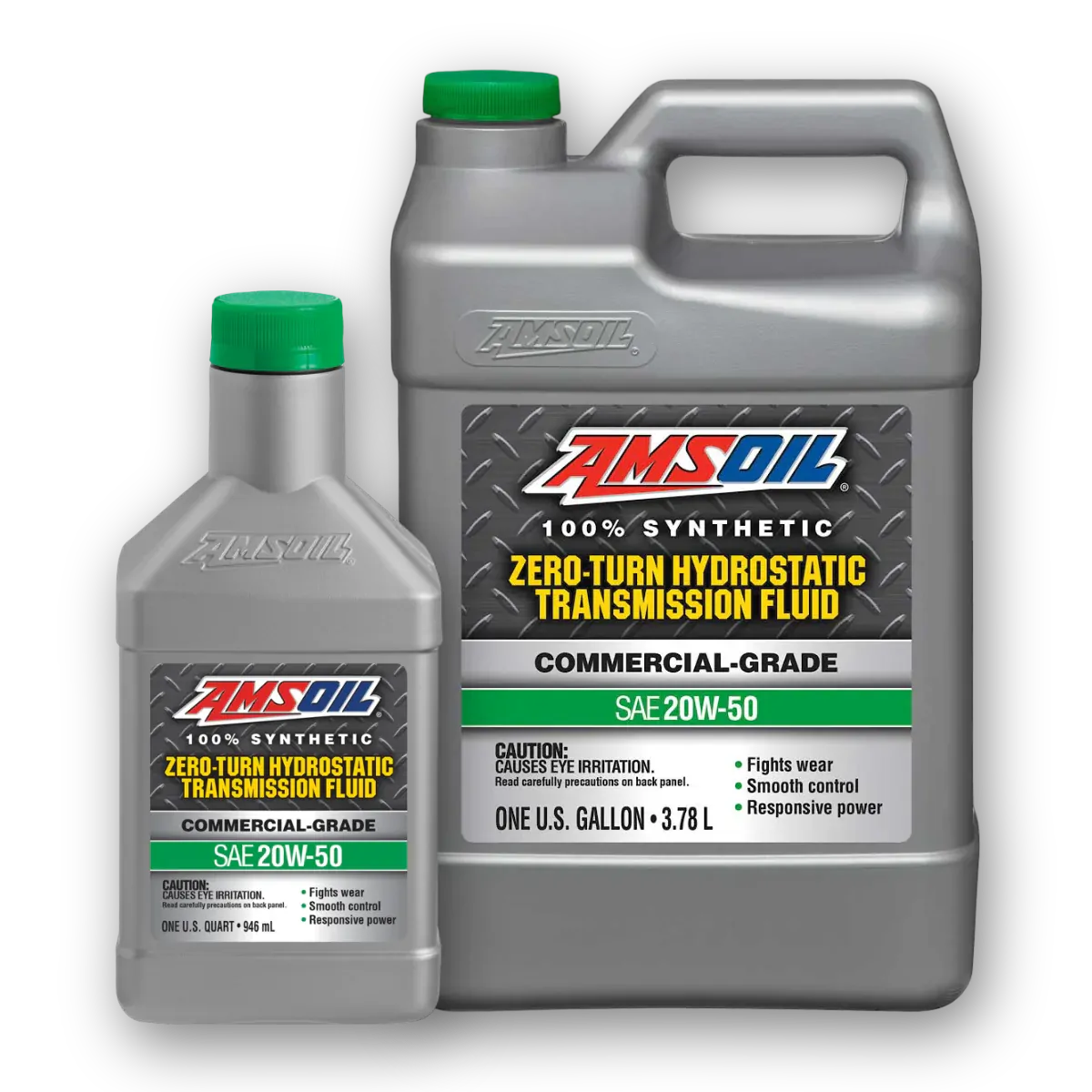
Fights wear for smooth, responsive operation. Purpose-built to outperform motor oils. Resists high heat and shear.
VIEW PRODUCT →Small Engine Guides
Practical information for maintaining lawn mowers, generators and other small-engine equipment, from choosing the correct oil to solving common fuel and starting problems.