
Small engines power a huge range of equipment, from lawn mowers and generators to pressure washers, pumps, compactors and landscaping machinery. They may be physically smaller than automotive engines, but that does not mean they place smaller demands on engine oil.
In fact, many small engines operate under conditions that can be surprisingly hard on lubricants. High operating temperatures, small oil capacities, sustained load, dust and debris, and long periods of storage can all place additional stress on the oil.
That is why it is worth understanding what manufacturers mean by small-engine oil, why these lubricants are formulated for the application, and why simply pouring in whatever engine oil happens to be on the shelf is not always the best approach.
What Is a Small Engine?
The term small engine generally refers to the petrol engines used in outdoor power equipment and similar machinery rather than simply any engine with a small physical displacement.
Common examples include:
- Lawn mowers and ride-on mowers
- Zero-turn mowers
- Generators
- Pressure washers
- Water pumps
- Log splitters
- Compactors
- Tillers and cultivators
- Commercial landscaping equipment
Many of these engines are simple, durable and designed to work hard, but their operating environment can be very different from that of a modern passenger-car engine.
Small Doesn't Mean Easy on Oil
A small engine may only produce a fraction of the power of a car engine, but it can still operate at high load for long periods.
A generator may sit at operating speed for hours. A mower can spend an entire afternoon cutting dense grass. Commercial landscaping equipment may run for most of a working day.
This means the oil can spend long periods exposed to heat, oxidation and contamination without the comparatively stable operating environment found in many liquid-cooled automotive engines.
Air-Cooled Engines Can Run Hot
Many small engines are air-cooled rather than liquid-cooled.
In a liquid-cooled automotive engine, coolant, a radiator, thermostat and water pump help control engine temperature within a relatively narrow range. An air-cooled engine relies much more heavily on airflow across cooling fins and the movement of heat through the engine itself.
Operating temperature can therefore be influenced by ambient temperature, engine load, airflow and the cleanliness of the cooling system.
Grass clippings, dust and debris around cooling fins can also reduce airflow and make an already demanding operating environment even harder on the lubricant.
There Isn't Much Oil in the Sump
Small engines generally have relatively small oil capacities.
That means there is less total lubricant available to absorb heat, suspend contaminants and cope with oxidation during operation.
It also means that losing a relatively small amount of oil through consumption or leakage can represent a significant percentage of the engine's total oil supply.
Checking the oil level regularly is therefore particularly important with small-engine equipment.
Small Engines Often Work at Sustained Load
A passenger car spends much of its life operating at relatively light load, with short periods of higher demand during acceleration or climbing hills.
Many small engines operate very differently.
A mower, generator or pump may run at a relatively constant operating speed while remaining under load for extended periods. That sustained workload can increase oil temperature and accelerate oxidation.
The fact that the engine is small does not mean the lubricant gets an easy life.
Dust and Contamination Matter
Outdoor power equipment also operates in environments where dust, grass, dirt and airborne debris are common.
The air filter is the engine's first line of defence, but maintenance still matters. Dirty filters, contaminated oil and neglected service intervals can all contribute to accelerated wear.
This is one reason commercial landscaping equipment can be particularly demanding. The engines may operate for long hours in dusty conditions while cycling between heavy and light loads throughout the day.
Then the Engine Might Sit for Months
Small engines often experience the opposite problem as well: long periods of inactivity.
A mower may be used heavily through spring and summer and then sit unused through winter. A backup generator may spend most of its life waiting for the next power outage.
That combination of hard use followed by long storage makes both lubricant condition and fuel-system maintenance important.
Can You Just Use Automotive Engine Oil?
Sometimes an automotive engine oil may meet the viscosity and performance requirements specified by a small-engine manufacturer.
But choosing an oil simply because it has the same SAE viscosity grade is not enough information by itself.
A label such as 5W-30 or 10W-30 describes the oil's viscosity characteristics. It does not describe the complete formulation, additive system or intended application.
That is why the correct starting point is always the equipment manufacturer's oil recommendation.
If the manufacturer specifies a particular viscosity range or lubricant requirement, use an oil designed to satisfy that requirement rather than selecting something purely because the viscosity number looks familiar.
Why Make a Dedicated Small-Engine Oil?
A dedicated small-engine lubricant can be formulated around the conditions commonly encountered in outdoor power equipment.
These can include sustained high-temperature operation, oxidation, deposits, wear, oil consumption and extended service under load.
The objective is not to suggest that every automotive engine oil is unsuitable for every small engine. It is simply that a lubricant designed specifically for small-engine service can be optimised around a different operating environment.
One Small-Engine Oil Doesn't Fit Every Small Engine
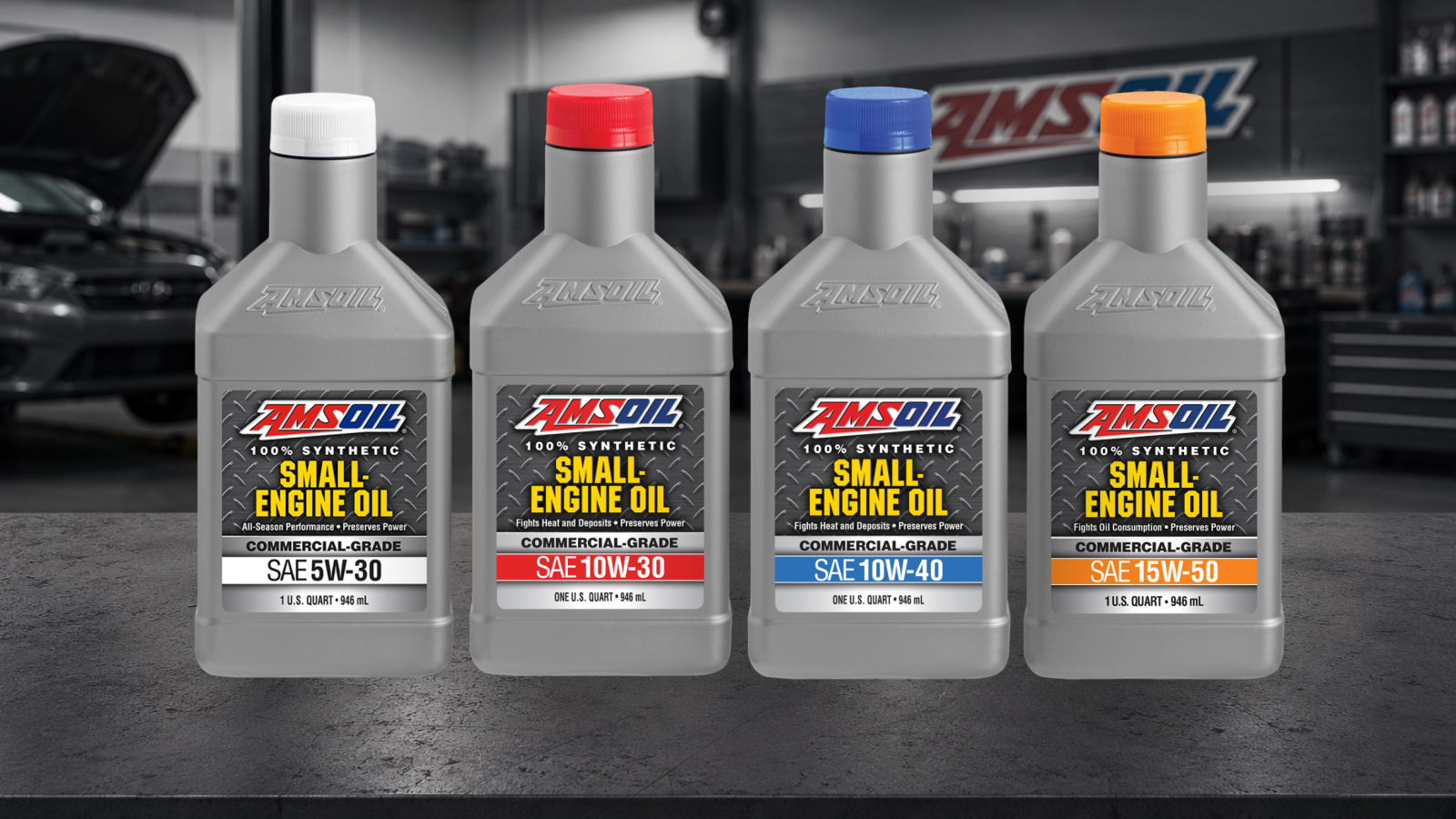
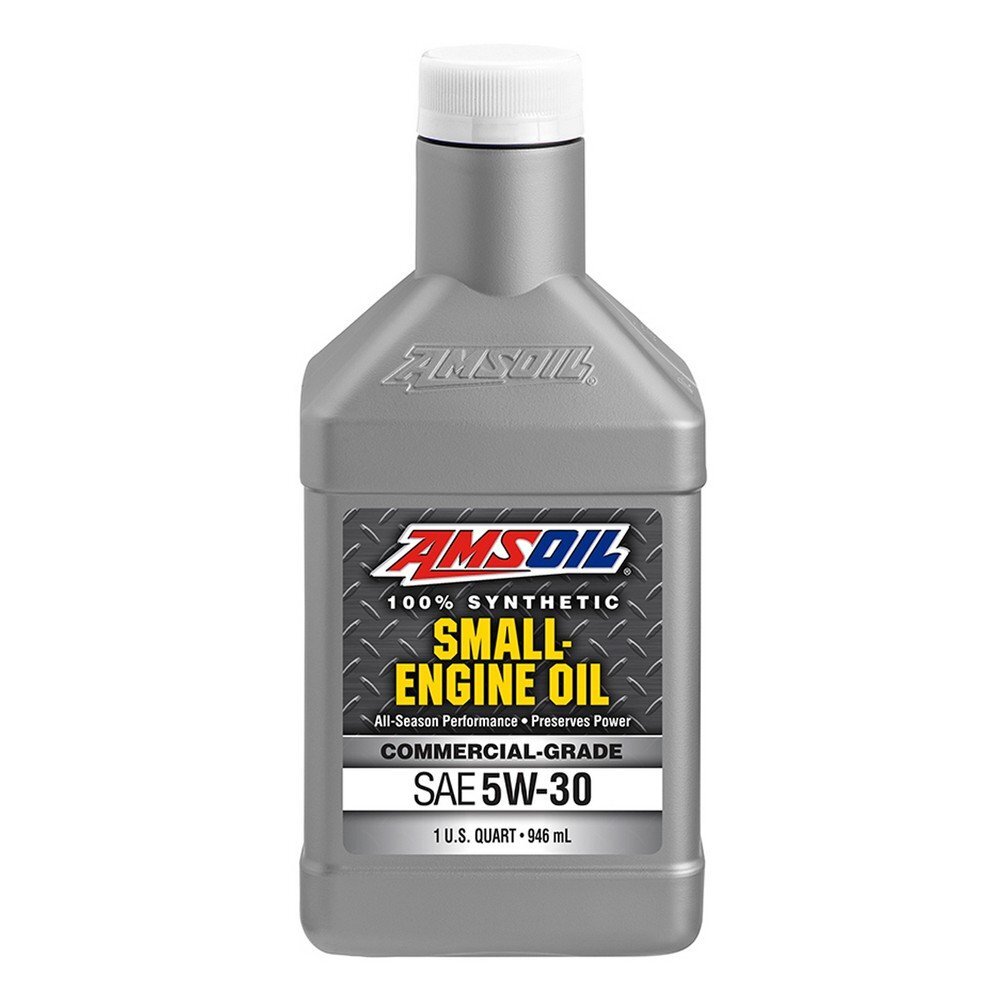
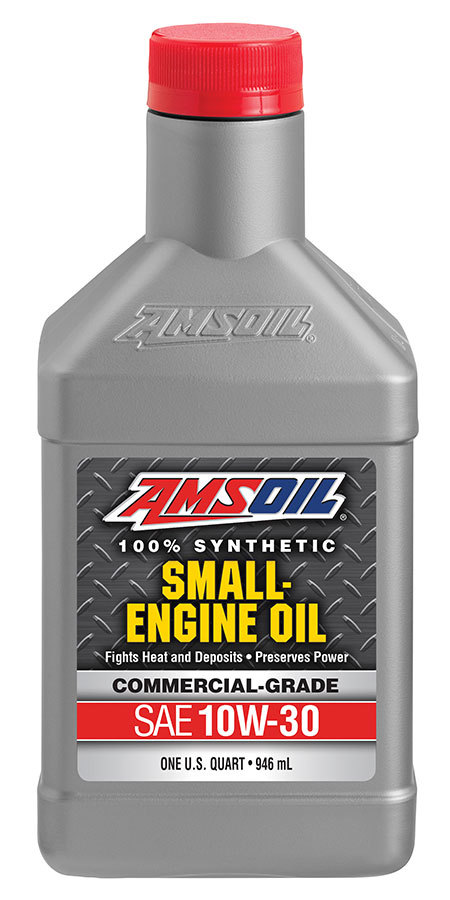
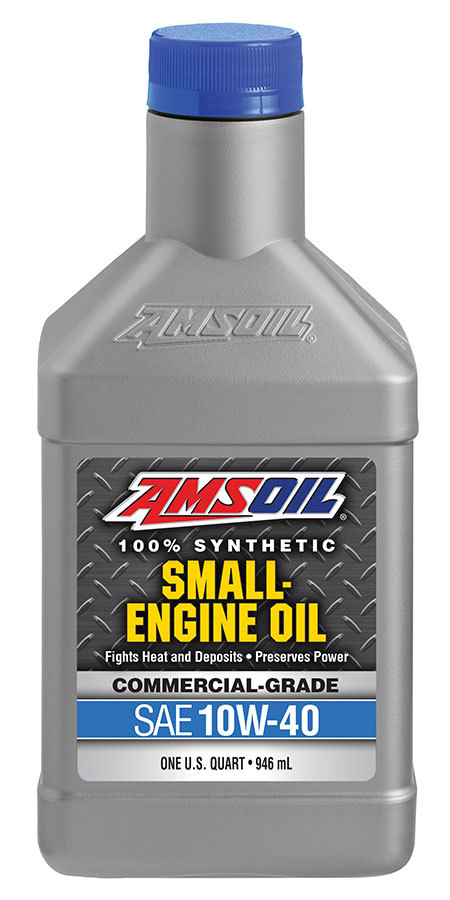
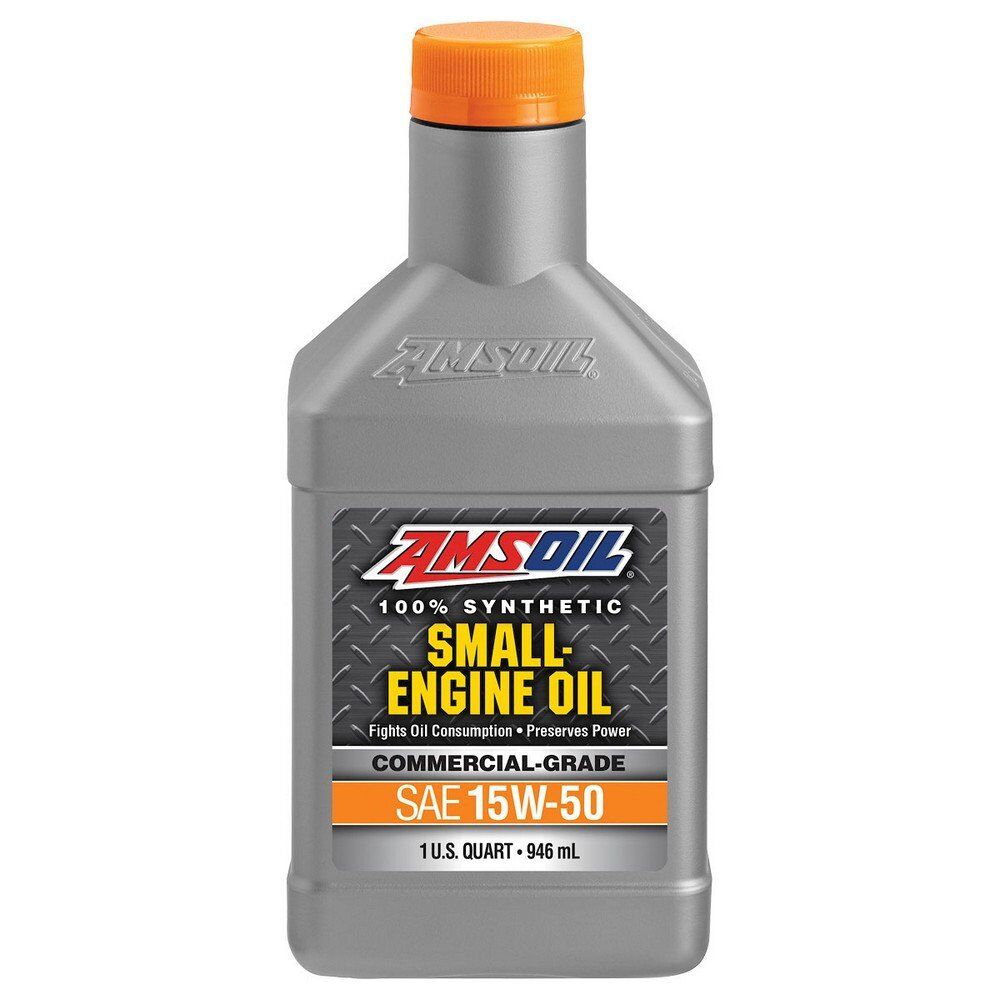
AMSOIL offers several synthetic small-engine oils in different viscosity grades because different engines and operating conditions require different viscosities.
The phrase small-engine oil describes the application. It does not replace the manufacturer's viscosity recommendation.
| SKU | Viscosity | Selection |
|---|---|---|
| AES | 5W-30 | Use where 5W-30 is appropriate for the engine and operating conditions. |
| ASE | 10W-30 | Use where 10W-30 is specified or suitable for the equipment. |
| ASF | 10W-40 | A higher-viscosity option for applications requiring 10W-40. |
| SEF | 15W-50 | For applications where a heavier 15W-50 grade is appropriate. |
Always follow the engine manufacturer's viscosity recommendations, particularly where different grades are specified for different ambient-temperature ranges.
AMSOIL Synthetic Small-Engine Oils
Don't Forget the Rest of the Machine
On equipment such as zero-turn mowers, the engine is only one part of the lubrication picture.
Many zero-turn machines use hydrostatic transmissions that have their own lubricant requirements. The oil used in the engine and the fluid used in the hydrostatic drive system perform very different jobs and should not be treated as interchangeable.
This is another good reason to check the service requirements for the entire machine rather than assuming one oil can be used everywhere.
The Bottom Line
Small engines may be simple, but their operating conditions can be demanding.
Air cooling, small oil capacities, sustained load, dust, high temperatures and long storage periods all influence how the lubricant performs over time.
The safest approach is straightforward: use the viscosity and lubricant type recommended by the engine manufacturer, maintain the correct oil level and service the engine regularly.
And if the bottle in the shed only matches because it says 10W-30 on the front, that is a good reason to check what the engine actually requires before pouring it in.
Small Engine Guides
Practical information for maintaining lawn mowers, generators and other small-engine equipment, from choosing the correct oil to solving common fuel and starting problems.