
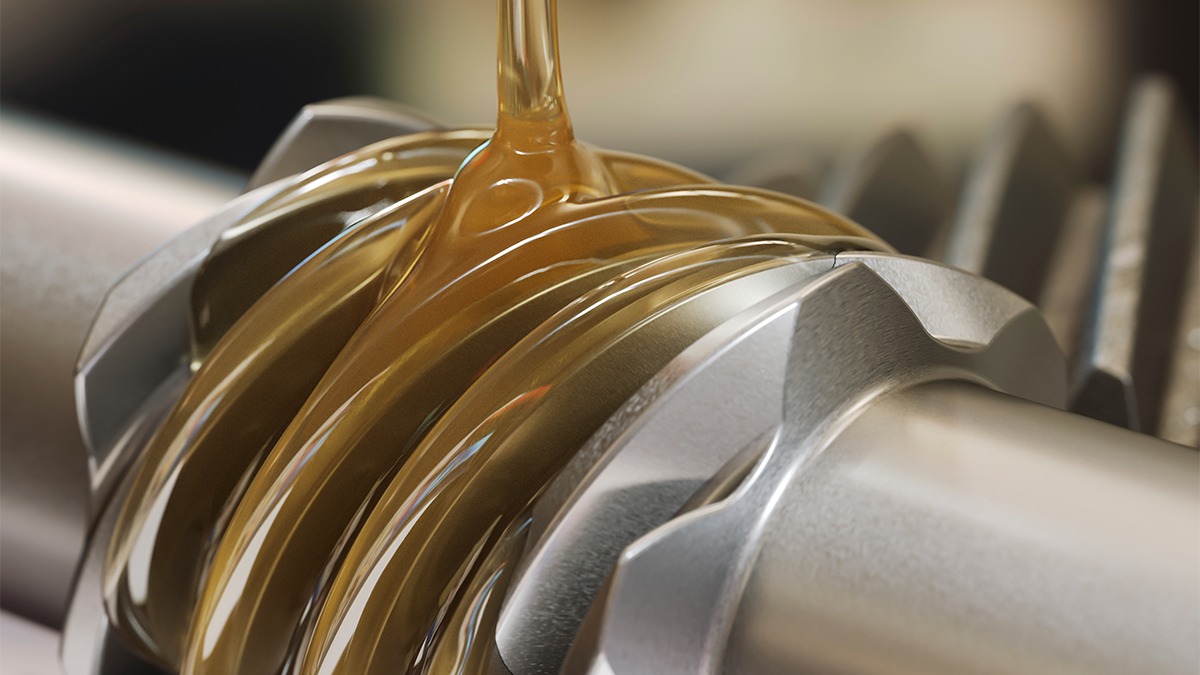
Typical passenger-car motor oil composition. Exact formulations vary by product and application.
Base Oil Is Only the Beginning
Base oil forms the foundation of an engine lubricant. Its chemistry influences characteristics such as viscosity, volatility, oxidation resistance, low-temperature behaviour and solvency.
But even an excellent synthetic base oil cannot perform every job demanded of a modern engine lubricant by itself. Engine oil must operate in the presence of heat, oxygen, combustion by-products, moisture, fuel and other contaminants while continuing to protect heavily loaded moving surfaces.
This is where the additive system comes in. Additives enhance desirable properties of the base oil and provide functions the base oil cannot deliver sufficiently on its own.
Meet the Additive Package
There is no single ingredient called an "oil additive". A finished lubricant can contain several different additive types, each performing a particular function as part of the overall formulation.
Help form protective films on highly loaded surfaces to reduce metal-to-metal contact and wear.
Slow oxidation reactions that can thicken oil and contribute to varnish, sludge and deposit formation.
Help control deposits on hot engine surfaces and can provide alkalinity used to neutralise acidic by-products.
Help keep contaminants suspended in the lubricant rather than allowing them to agglomerate into sludge and deposits.
Alter friction characteristics where required by the lubricant's intended application.
Help some multigrade lubricants maintain the required viscosity characteristics across a wide temperature range.
Help control wax-crystal formation and improve low-temperature behaviour in suitable formulations.
Help protect metal surfaces from moisture, acids and other conditions that can promote rust or corrosion.
Help destabilise foam and release air that becomes entrained in the lubricant.
Used where required to protect surfaces exposed to very high loads and pressures, particularly in gear-lubricant applications.
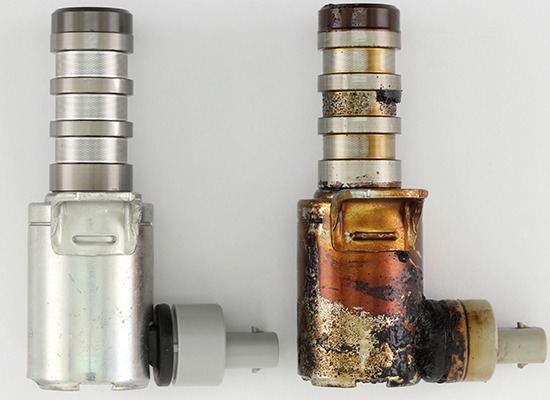
Deposits Don't Have to Be Heavy Sludge
Not every engine deposit is a heavy mass sitting in the bottom of the sump. Oxidation products and contaminants can contribute to varnish and deposits throughout the lubrication system.
Variable valve timing solenoids are a useful example. Typically positioned high in the engine, they rely on engine oil moving through small passages to control camshaft timing. Keeping oil-sensitive components clean is therefore about more than preventing sludge from accumulating at the lowest point of an engine.
Detergents, dispersants and oxidation-control chemistry work together to help manage the contaminants and degradation products that contribute to these deposits.
Detergents and Dispersants: Similar Goal, Different Jobs
Help Keep Surfaces Clean
Detergent additives help control deposits, particularly on hot engine surfaces. Many detergent chemistries also help neutralise acidic combustion and oxidation by-products.
Help Keep Contamination Suspended
Dispersants help prevent contaminants from combining into larger deposits by keeping them suspended within the oil until they can be removed during an oil change or captured where appropriate by filtration.
One of an engine lubricant's functions is to carry contaminants rather than allow them to remain attached to engine surfaces. Oil colour alone does not tell you whether the lubricant is serviceable or whether its additive system has been depleted.

What Is ZDDP?
Zinc dialkyldithiophosphate, usually shortened to ZDDP, is one of the best-known anti-wear additives used in engine oil. Under conditions where the lubricant film becomes very thin, ZDDP can react at the surface and help form a protective anti-wear film.
This is particularly important at highly loaded contact areas. Certain classic, racing and performance-engine applications can benefit from formulations with elevated levels of zinc and phosphorus anti-wear chemistry.
More Isn't Always Better
Lubricant formulation isn't a contest to see which bottle contains the greatest amount of every additive.
Increasing one component can affect other characteristics of the finished oil. Detergents and dispersants, for example, can promote foaming. Anti-foam chemistry is therefore added to help control it, but even that chemistry has to be carefully balanced.
Silicone anti-foam compounds can be effective at concentrations of only a few parts per million. Add too much, however, and they can actually promote foaming rather than suppress it.
The goal isn't the most additives. It's the right chemistry, in the right amounts, for the right application.
Foam Is Air, Not Lubricant
Rotating components can introduce air into oil. If stable foam develops, the lubricant film contains compressible air rather than being composed entirely of liquid oil. Foaming can also promote oxidation and interfere with effective lubrication.
Controlling it sounds simple: add an anti-foam agent. In practice, it is another example of why formulation balance matters.
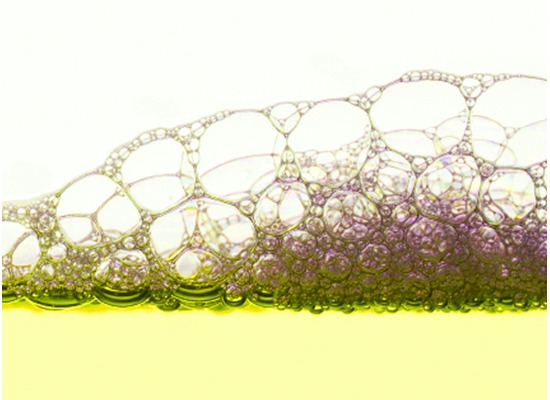
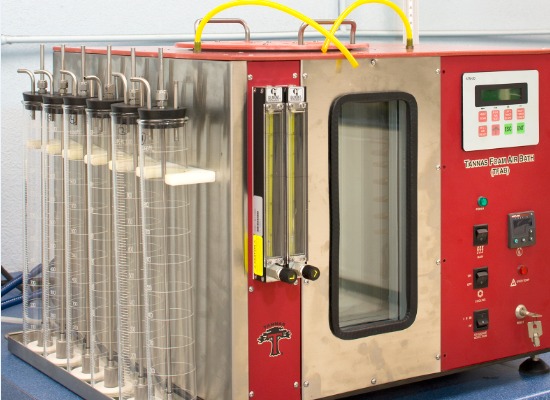
One recognised laboratory method measures the amount of foam produced under controlled conditions and the amount remaining after a settling period. The test helps formulators evaluate how effectively a lubricant controls foam.
Can You Improve Oil by Adding More Additive?
An aftermarket oil treatment might improve one measured property while changing another. That is the problem with looking at a lubricant one ingredient or one test at a time.
In AMSOIL testing, two aftermarket oil additives improved wear performance in a bench test when added to a conventional 5W-30. But both treatments also increased viscosity and impaired cold-temperature performance. In those tests, the treated samples no longer met the tested viscosity requirements for either the 5W winter grade or SAE 30 grade.
A finished engine oil is designed as a complete formulation. Changing that formulation after the fact can change viscosity, friction, cold-flow behaviour and other characteristics at the same time.
Additives Don't Last Forever
Engine oil chemistry is not static once the bottle is opened and the oil enters service. Some additives are gradually consumed while performing their intended functions.
Antioxidants are consumed as they help slow oxidation. Detergent reserve is used as acidic by-products are neutralised. Detergents and dispersants work to control the contamination generated during engine operation.
Same Viscosity Doesn't Mean Same Oil
Two bottles can both carry the same SAE viscosity grade and still be substantially different lubricants.
A viscosity such as 5W-30 describes important viscosity characteristics at specified test conditions. It does not, by itself, tell you the lubricant's complete additive system, specifications, intended application or allowable service interval.
An everyday passenger-car oil, an extended-drain formulation, a high-mileage oil and an oil designed around particular European specifications may share a viscosity grade while using different formulation strategies to meet different requirements.
Choosing an oil means matching the viscosity, required specifications and intended application rather than selecting a product on viscosity alone.
The Finished Formulation Matters
Base-oil quality matters. Additive chemistry matters. Viscosity matters. Specifications matter. None tells the complete story by itself. A modern synthetic lubricant is the result of balancing them to perform a particular job in a particular application.
Find the Right Oil for Your Vehicle →