What Transmission Fluid Does a ZF 8HP Use?
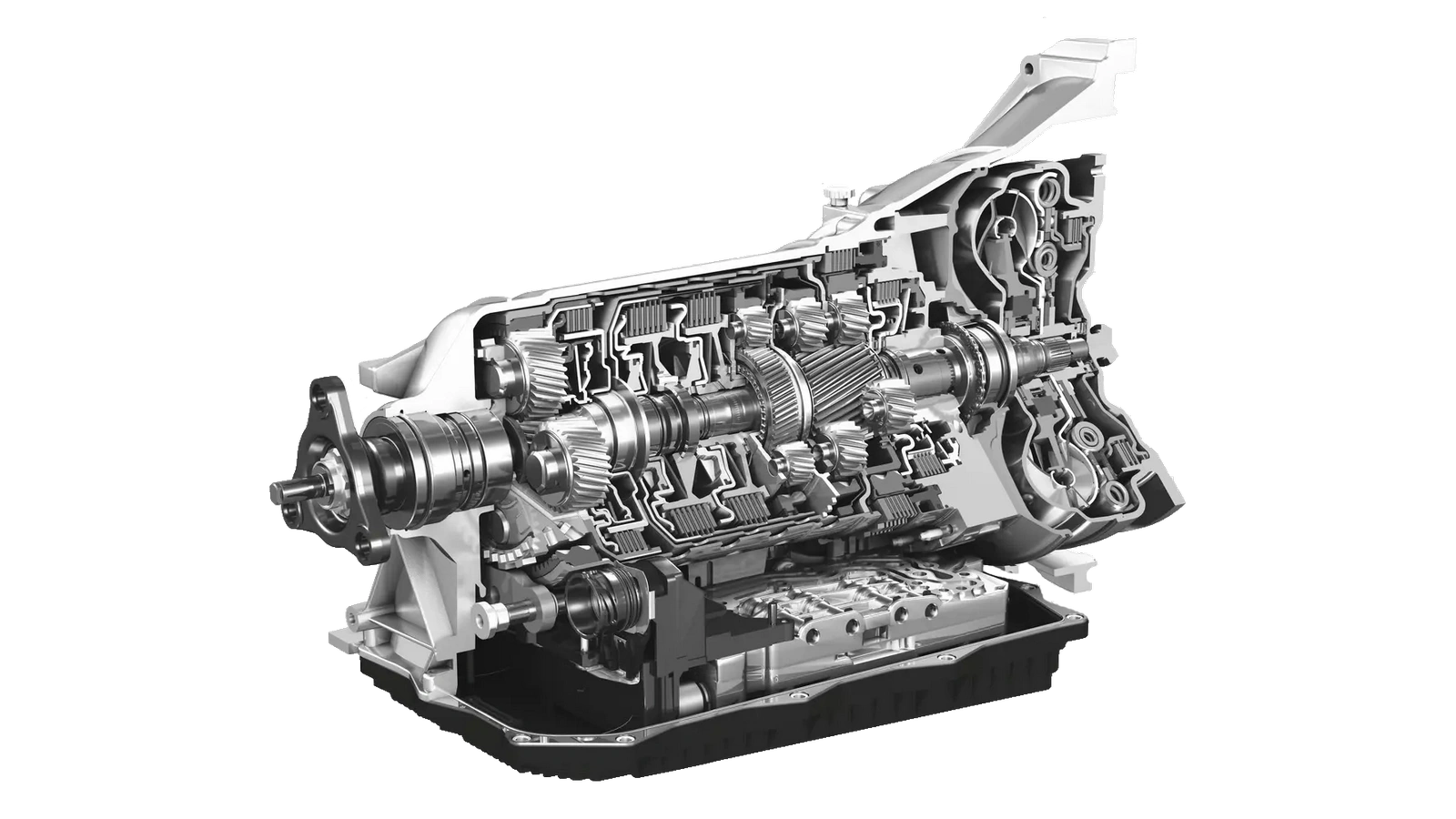
The ZF 8HP eight-speed automatic has become one of the most widely used modern automatic transmissions, appearing in vehicles from BMW, Jaguar, Land Rover, Jeep, Ram, Audi, Volkswagen and numerous other manufacturers. Its combination of fast shifting, efficiency and substantial torque capacity has also made the 8HP increasingly popular for performance builds and transmission swaps.
But an 8HP is not simply filled with generic automatic transmission fluid.
ZF developed specific low-viscosity automatic transmission fluids around the friction characteristics, hydraulic operation and efficiency requirements of the 8HP family. For many ZF 8HP applications, the reference fluid is ZF LifeguardFluid 8.
AMSOIL provides an alternative through AMSOIL Signature Series Fuel-Efficient 100% Synthetic Automatic Transmission Fluid, which AMSOIL recommends for applications requiring ZF LifeguardFluid 8 (S671 090 312).
Quick Answer
| Question | Answer |
|---|---|
| What is the common ZF fluid for the 8HP? | ZF LifeguardFluid 8 is specified for many ZF 8HP applications. |
| ZF LifeguardFluid 8 part number | S671 090 312 |
| Is there an AMSOIL alternative? | Yes. AMSOIL Signature Series Fuel-Efficient Synthetic ATF is recommended by AMSOIL for applications requiring ZF LifeguardFluid 8. |
| Can I use ordinary Dexron ATF? | Do not select fluid simply because it is labelled ATF. Use a product specifically recommended for the fluid specification required by the transmission. |
| Does a ZF 8HP need servicing? | ZF recommends an oil change after 150,000 km and notes that shorter intervals can make sense under high temperatures, high loads or where previous vehicle use is unknown. |
| Can I fill an 8HP by quantity alone? | No. Correct fluid level is established using a temperature-dependent filling and level-check procedure. |
What Is the ZF 8HP?
The ZF 8HP is a family of longitudinal eight-speed planetary automatic transmissions developed by ZF Friedrichshafen. Rather than describing one single transmission, 8HP refers to a transmission family containing numerous versions designed for different vehicles, torque requirements, driveline layouts and generations.
Common versions include:
- ZF 8HP45
- ZF 8HP50
- ZF 8HP51
- ZF 8HP55
- ZF 8HP65
- ZF 8HP70
- ZF 8HP75
- ZF 8HP76
- ZF 8HP90
There are also numerous variants identified by additional letters and vehicle-specific configurations. Consequently, knowing that a vehicle has an “8HP” is not always enough information to determine every service part, oil quantity or procedure.
The exact transmission variant should be identified before ordering fluid, filters, oil pans or other service components.
Why Does the ZF 8HP Need a Specific ATF?
Automatic transmission fluid performs several jobs simultaneously. It is a hydraulic fluid, lubricant, coolant and a carefully controlled friction medium for the transmission's clutch packs.
This last function is particularly important.
Modern automatic transmissions rely on predictable friction behaviour to control clutch engagement. The transmission control system can command extremely precise clutch pressures and shift timing, but those commands assume that the fluid behaves within the required friction characteristics.
Using an ATF with inappropriate viscosity or friction characteristics can affect shift quality, clutch engagement and overall transmission operation.
This is why choosing an ATF by colour, brand familiarity or a generic description such as “synthetic ATF” is not sufficient.
ZF LifeguardFluid 8
ZF LifeguardFluid 8 was developed specifically for ZF 8HP passenger-car automatic transmissions and is the reference fluid for many members of the 8HP family.
ZF describes the fluid as having friction behaviour specifically adapted to the transmission, together with viscosity characteristics intended to support shift quality, efficiency and operation across a wide temperature range.
The ZF part number commonly associated with LifeguardFluid 8 is:
ZF S671 090 312
However, the exact lubricant requirement should still be confirmed for the particular transmission. Later or specialised ZF transmissions can have different lubricant requirements, and vehicle manufacturers may also identify the required fluid under their own part numbers.
Can I Use AMSOIL in a ZF 8HP?
Yes, where the application requires a specification covered by the product.
AMSOIL Signature Series Fuel-Efficient 100% Synthetic Automatic Transmission Fluid is recommended by AMSOIL for transmissions requiring ZF LifeguardFluid 8 (S671 090 312).
The same AMSOIL product is recommended for a broad range of modern low-viscosity ATF requirements, including several specifications used by manufacturers that fitted ZF automatic transmissions.
This makes Signature Series Fuel-Efficient ATF particularly useful for workshops, performance specialists and enthusiasts servicing multiple vehicles rather than purchasing a different branded ATF for every manufacturer.
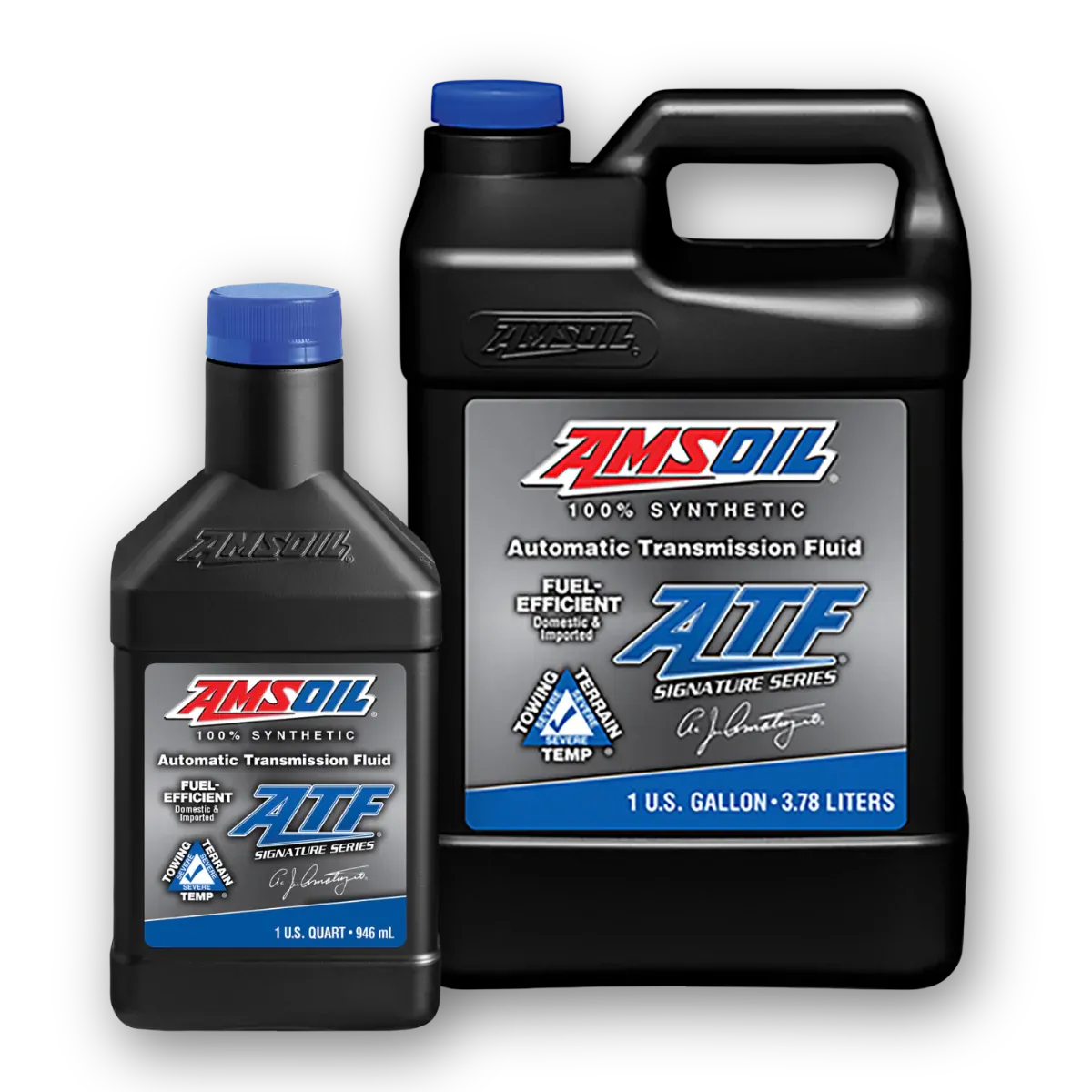
Premium 100% synthetic low-viscosity ATF for modern automatic transmissions. Recommended for ZF LifeguardFluid 8 and many ZF 8HP applications, plus a wide range of modern European, Asian and North American transmission specifications.
VIEW PRODUCT →Is AMSOIL “ZF Approved”?
This distinction is worth explaining carefully.
AMSOIL recommends Signature Series Fuel-Efficient Synthetic ATF for applications requiring ZF LifeguardFluid 8. That is an AMSOIL application recommendation.
It should not automatically be described as a ZF factory approval unless a specific current ZF approval can be demonstrated.
This distinction is common in the lubricant industry. A lubricant manufacturer may formulate and recommend a product for an OEM fluid requirement without the product necessarily appearing as an officially licensed or approved fluid from the transmission manufacturer.
Customers who specifically require the original ZF-branded lubricant or an OEM-approved fluid should follow the transmission or vehicle manufacturer's requirements. Customers seeking an AMSOIL product for an application calling for LifeguardFluid 8 can use AMSOIL's published application recommendation when determining suitability.
What Does “Lifetime Fill” Actually Mean?
The phrase “lifetime fill” has caused considerable confusion around modern automatic transmissions, including the ZF 8HP. It is often interpreted to mean that the transmission fluid should never be changed for as long as the vehicle remains on the road.
That is not a particularly useful interpretation of ZF's own maintenance information.
ZF describes its automatic transmissions as being filled with lifetime oil, but also recommends an oil change after 150,000 kilometres. ZF further states that shorter intervals can make sense where the transmission has experienced high operating temperatures, high loads or where the vehicle's previous use is unknown.
In practice, terms such as “sealed for life” and “lifetime fill” need context. The design life and maintenance expectations of a new vehicle are not necessarily the same as those of an owner intending to keep a vehicle for 200,000, 300,000 or 400,000 kilometres.
A transmission can also be described as “sealed” without being literally impossible to service. The ZF 8HP has provisions for draining, filling and establishing the correct fluid level, and ZF sells dedicated oil-change kits and publishes service procedures for the transmission.
So Should You Change ZF 8HP Fluid?
If long-term transmission life is the objective, the more useful question is not whether the original fluid was marketed as a lifetime fill, but whether continuing to operate on ageing fluid remains the best maintenance strategy for the vehicle.
Automatic transmission fluid is exposed to heat, oxidation, clutch material and other contamination throughout its service life. Its condition at 150,000 km is not identical to its condition when the vehicle left the factory.
ZF's own recommendation provides a sensible reference point: oil change after 150,000 km, with shorter intervals potentially appropriate under demanding operating conditions.
For vehicles used for towing, performance driving, high-load operation or substantially increased engine output — or where the previous service history is unknown — a more conservative maintenance strategy may be appropriate.
Should the Filter Be Changed With the Fluid?
In many ZF 8HP applications, the transmission filter is incorporated into the transmission oil pan. Servicing the filter therefore involves replacing the complete pan/filter assembly rather than simply unscrewing a conventional external filter.
ZF's own 8HP oil-change kits can contain a complete plastic oil pan with integrated filter, sealing components, mounting hardware and the appropriate LifeguardFluid.
Other 8HP variants can use different pan and filter arrangements, so service parts should be selected according to the exact transmission rather than assuming every 8HP uses the same pan.
Replacing only the fluid while leaving an old filter in service may not constitute the same level of maintenance as a complete transmission service.
How Much Oil Does a ZF 8HP Take?
There is no single correct answer for every ZF 8HP.
The amount required depends on:
- the exact 8HP variant;
- vehicle installation;
- whether only the pan has been drained;
- whether the transmission has been completely emptied;
- whether the torque converter and cooler circuit contain oil;
- whether repairs or transmission replacement have been performed; and
- the filling procedure used.
This is why figures found online for “8HP capacity” can appear contradictory. One figure may describe an ordinary service refill while another describes the approximate capacity of a dry transmission.
Do not establish final 8HP fluid level by pouring in a quoted capacity and stopping.
Service Fill vs Dry Fill
A routine transmission service does not normally remove every litre of fluid from the transmission.
Oil remains within the torque converter, hydraulic passages, cooler circuit and other internal components. Consequently, the quantity drained during a pan service can be considerably less than the transmission's total dry capacity.
A newly installed, rebuilt or completely drained transmission is a different situation and can require substantially more fluid.
For both situations, the manufacturer's filling and level-setting procedure remains critical.
How Is the Fluid Level Checked on a ZF 8HP?
The ZF 8HP does not generally use a traditional dipstick that allows the fluid level to be checked cold in the driveway.
Fluid level is established through the transmission's filling opening while the transmission is operating within a specified temperature range.
ZF's current service procedure for many 8HP applications involves starting the engine, monitoring transmission-oil temperature, circulating fluid through the transmission and torque converter, selecting the required gear positions and then checking the fluid level at the filling opening.
The prescribed ZF fluid is added until it exits the filling opening, after which the level is allowed to stabilise to the specified condition before the fill plug is installed.
Temperature Matters
This part is important because automatic transmission fluid expands as temperature increases.
ZF's service information for many 8HP variants specifies a fluid-temperature window of approximately 30°C to 50°C during the level-setting procedure, although procedures can differ for particular applications.
Checking the level outside the required temperature range can result in an incorrect fill.
For that reason, servicing an 8HP properly normally requires a scan tool or another reliable method of reading transmission-fluid temperature.
Do Not Guess the Filling Procedure
The following should be treated as an explanation of the process rather than a universal workshop procedure.
ZF 8HP variants and vehicle installations can differ in filling instructions, temperatures, tightening torques and service components. Always obtain the correct service information for the vehicle and transmission being worked on.
This is particularly important for performance conversions, where the transmission may no longer be installed in the vehicle for which ZF or the original manufacturer published the service procedure.
ZF 8HP Swaps and Performance Cars
The ZF 8HP has become increasingly popular as a performance transmission conversion because it combines rapid shifts, strong torque capacity, good road manners and widespread availability.
That creates a different maintenance situation from servicing an original unmodified vehicle.
An 8HP fitted behind a modified engine may experience substantially different torque, heat and duty cycle from the production application it originally came from. Transmission calibration, converter choice, cooling-system design and intended vehicle use can all influence operating conditions.
For a swap vehicle, simply identifying the engine is not enough to select the transmission fluid or service parts. The important information is the actual transmission variant being used.
Know Which 8HP You Have
If you have purchased an 8HP for a conversion, identify the transmission before ordering service components.
For example, an 8HP45 and an 8HP70 both belong to the same transmission family, but they are not simply interchangeable versions of the same gearbox. Different variants can use different hardware, torque capacities, pans and vehicle-specific configurations.
Record the transmission identification details while the unit is accessible. This information becomes particularly valuable years later when the vehicle requires servicing and the transmission's original donor vehicle is no longer obvious.
8HP45 vs 8HP70
The 8HP45 and 8HP70 are among the best-known earlier ZF 8HP variants.
The model designation reflects different transmission classes and torque capabilities rather than different numbers of gears: both are eight-speed automatics.
The heavier-duty 8HP70 became particularly attractive for performance applications because of its greater torque capability, while the 8HP45 appeared extensively in lower-torque production vehicles.
Later generations introduced variants such as the 8HP50, 8HP51, 8HP75 and 8HP76, continuing the development of the 8HP family.
Do not use the model number alone to infer the required service fill quantity or parts. Vehicle-specific variants still need to be identified correctly.
Modified Engines, Towing and High Transmission Temperatures
Heat is one of the major stresses placed on automatic transmission fluid.
Higher engine output, repeated hard acceleration, towing and insufficient transmission cooling can increase the thermal load placed on the fluid. Elevated temperature accelerates lubricant oxidation and can shorten useful fluid life.
This is one reason a high-quality synthetic ATF can be attractive in performance and severe-service applications.
It is equally important to recognise that premium fluid cannot compensate indefinitely for inadequate cooling, excessive clutch slip or inappropriate transmission calibration. If a modified 8HP is consistently operating at excessive temperatures, the cause should be addressed rather than relying on fluid quality alone.
Can You Mix AMSOIL With Existing LifeguardFluid 8?
A normal transmission service leaves some old fluid inside the torque converter and other parts of the transmission, so partial mixing is often unavoidable when changing from one compatible ATF to another.
Where a replacement ATF is suitable for the required specification, this does not automatically require the transmission to be completely dry before changing products.
However, the resulting fluid mixture will naturally contain both products. For customers seeking the maximum benefit of a new fluid, replacing a greater proportion of the old lubricant results in a higher concentration of the new product.
Aggressive flushing procedures should not be improvised. Follow an appropriate service method for the transmission and vehicle.
Should I Use a Transmission Flush Machine?
There is an important difference between replacing transmission oil according to the manufacturer's procedure and connecting the transmission to an indiscriminate power-flushing process.
ZF publishes oil-change procedures and service kits built around draining the transmission, servicing the filter or pan as applicable, refilling with the correct fluid and establishing the proper level.
Where additional fluid exchange is desired, the procedure should be appropriate for the transmission and performed by someone familiar with the 8HP platform.
More fluid replacement is not automatically better if the method used introduces contamination, creates an incorrect fluid level or conflicts with the manufacturer's service procedure.
Should I Add Transmission Additives?
No aftermarket additive should be assumed necessary simply because the transmission has high kilometres or is used in a performance application.
The friction characteristics of modern automatic transmission fluids are carefully engineered around clutch engagement and hydraulic control. Adding another chemical package changes those characteristics in ways that may not be predictable.
ZF specifically advises against adding supplementary additives to its transmission oils.
Use the correct ATF rather than attempting to modify an unsuitable fluid with an aftermarket additive.
ZF LifeguardFluid 8 vs AMSOIL Signature Series Fuel-Efficient ATF
| ZF LifeguardFluid 8 | AMSOIL Signature Series Fuel-Efficient ATF | |
|---|---|---|
| Product Type | ZF transmission fluid | 100% synthetic multi-application low-viscosity ATF |
| ZF 8HP Application | Developed specifically for ZF 8HP transmissions | AMSOIL recommends it for applications requiring ZF LifeguardFluid 8 |
| Reference | ZF S671 090 312 | Lists ZF LifeguardFluid 8 (S671 090 312) in AMSOIL application recommendations |
| Best Choice For | Customers specifically requiring the ZF-branded reference fluid | Customers seeking AMSOIL's premium synthetic ATF for a compatible 8HP application |
The important distinction is not that one bottle says “ZF” and another says “AMSOIL”. The first question is whether the lubricant is appropriate for the fluid requirement of the exact transmission.
Which AMSOIL Fluid Should I Use?
For compatible ZF 8HP applications requiring ZF LifeguardFluid 8 (S671 090 312), AMSOIL recommends:
AMSOIL Signature Series Fuel-Efficient 100% Synthetic Automatic Transmission Fluid.
Do not assume that every transmission carrying an 8HP-related designation necessarily uses the same lubricant specification. ZF continues to develop the transmission family, and vehicle manufacturers can have application-specific requirements.
Use the AMSOIL Vehicle Product Finder for standard production vehicles or confirm the exact transmission and fluid requirement before ordering for a conversion or custom application.
ZF 8HP Transmission Fluid FAQ
What oil goes in a ZF 8HP70?
Many ZF 8HP70 applications specify ZF LifeguardFluid 8. AMSOIL Signature Series Fuel-Efficient Synthetic ATF is recommended by AMSOIL for applications requiring ZF LifeguardFluid 8. Always confirm the requirement for the particular vehicle and 8HP70 variant.
What oil goes in a ZF 8HP45?
Many ZF 8HP45 applications also use ZF LifeguardFluid 8. Confirm the exact vehicle and transmission application before selecting fluid or service parts.
Can I use AMSOIL in an 8HP70 swap?
If the transmission requires ZF LifeguardFluid 8, AMSOIL recommends Signature Series Fuel-Efficient Synthetic ATF for that application. For a swap, identify the transmission itself rather than relying on the engine or vehicle receiving the conversion.
Is ZF LifeguardFluid 8 the same as ordinary ATF?
No. LifeguardFluid 8 is formulated specifically around the requirements of compatible ZF automatic transmissions. Generic ATF should not be substituted unless the lubricant manufacturer specifically recommends the product for the required ZF fluid specification.
Does a ZF 8HP really have lifetime oil?
ZF uses the term lifetime oil, but its own current lubricant information recommends an oil change after 150,000 km and notes that shorter intervals can make sense under high temperatures, high loads or unknown previous use.
Do I need to change the transmission pan?
Many ZF 8HP applications use an oil pan with an integrated filter, making pan replacement part of a complete filter service. Other configurations exist, so identify the exact transmission and required service kit.
How many litres does an 8HP70 take?
There is no universal service quantity that should be used for every 8HP70 installation. A routine pan drain removes less fluid than a completely dry transmission. Use the correct service information and establish the final fluid level according to the prescribed temperature-dependent procedure.
Can I fill a ZF 8HP without reading transmission temperature?
Accurate fluid level depends on temperature. ZF specifies a controlled temperature range during the filling and level-check procedure, so transmission temperature should be measured rather than guessed.
Should I service a modified 8HP more frequently?
Higher torque, towing, racing and increased operating temperature can place additional stress on transmission fluid. ZF itself recognises high temperature and high load as reasons shorter oil-change intervals can make sense. The appropriate interval for a modified vehicle should reflect its actual use and transmission condition.
Choosing Fluid for Your ZF 8HP
The ZF 8HP's reputation for excellent shift quality and durability depends on a sophisticated combination of mechanical design, hydraulic control, electronics and the correct lubricant.
For many 8HP applications, ZF LifeguardFluid 8 is the reference fluid. For customers who want to use AMSOIL, AMSOIL Signature Series Fuel-Efficient Synthetic ATF is specifically recommended by AMSOIL for applications requiring ZF LifeguardFluid 8.
Whichever lubricant is selected, the same fundamentals apply: identify the exact transmission, use a fluid suitable for its specification, service the filter where applicable and establish the fluid level using the correct temperature-dependent procedure.
If you have an original-production vehicle, use the AMSOIL Vehicle Product Finder to identify the recommended AMSOIL products. For an 8HP conversion or modified application, contact AMSOIL Australia with the transmission model or identification details so the lubricant requirement can be confirmed before ordering.