
For most motorists, engine oil is simply another maintenance item. You service the car at the recommended interval, use the correct oil and expect the engine to keep running reliably.
But with conventional, semi-synthetic and fully synthetic engine oils available, it's reasonable to ask whether paying extra for synthetic oil actually makes a difference in everyday driving.
The answer is yes, although the benefits aren't necessarily what you'd expect. You don't need a high-performance sports car, a modified engine or extended oil-change intervals to benefit from a quality synthetic lubricant.
What Makes Synthetic Engine Oil Different?
All engine oils begin with base oils and a carefully selected package of performance additives. These components work together to reduce friction and wear, control deposits, resist oxidation and protect engine components against corrosion.
Conventional mineral oils are refined from crude petroleum, while synthetic lubricants use more extensively processed or chemically synthesised base oils designed to achieve particular performance characteristics.
Synthetic base oils generally offer improved resistance to oxidation, more consistent viscosity behaviour across a wide temperature range and better low-temperature flow properties.
However, the base oil is only part of the finished lubricant. Detergents, dispersants, anti-wear additives and other chemical components are equally important.
A well-formulated synthetic engine oil combines these properties to deliver dependable protection across a range of operating conditions.
Why Everyday Driving Can Be Demanding on Engine Oil
It's easy to assume that engine oil only faces demanding conditions during racing, towing or high-performance driving.
In reality, ordinary driving introduces its own challenges, particularly when vehicles are frequently used for short journeys, commuting and stop-start traffic.
Frequent Cold Starts
When an engine has been switched off for several hours, its temperature gradually falls and engine oil becomes more viscous.
During startup, the oil must circulate through the lubrication system to supply critical components such as bearings, camshafts and turbochargers.
Synthetic oils can provide excellent low-temperature flow characteristics, helping the lubricant circulate effectively during startup.
This isn't only relevant in freezing climates. Even on a warm Australian morning, an engine that has been parked overnight is considerably cooler than its normal operating temperature.
Short Trips and Stop-Start Traffic
Short journeys can prevent an engine from remaining at normal operating temperature for long enough to evaporate moisture and fuel contamination effectively.
Repeated cold starts, idling and low-speed operation can therefore create challenging conditions for engine oil, even when the vehicle is never driven particularly hard.
Synthetic engine oils are formulated to resist deterioration and manage contaminants, but regular servicing remains essential to remove accumulated contamination.
High Operating Temperatures
Modern engines can generate significant heat, particularly when equipped with turbochargers, direct injection and compact high-output designs.
Engine oil must maintain an appropriate lubricating film while resisting oxidation and deposit formation at elevated temperatures.
Quality synthetic lubricants generally offer strong oxidation resistance and thermal stability, helping them maintain their protective properties throughout the service interval.
Does Synthetic Oil Reduce Engine Wear?
One of the most important functions of engine oil is separating moving metal components with a protective lubricating film.
Where complete fluid-film lubrication cannot be maintained, anti-wear additives help protect surfaces operating under boundary lubrication conditions.
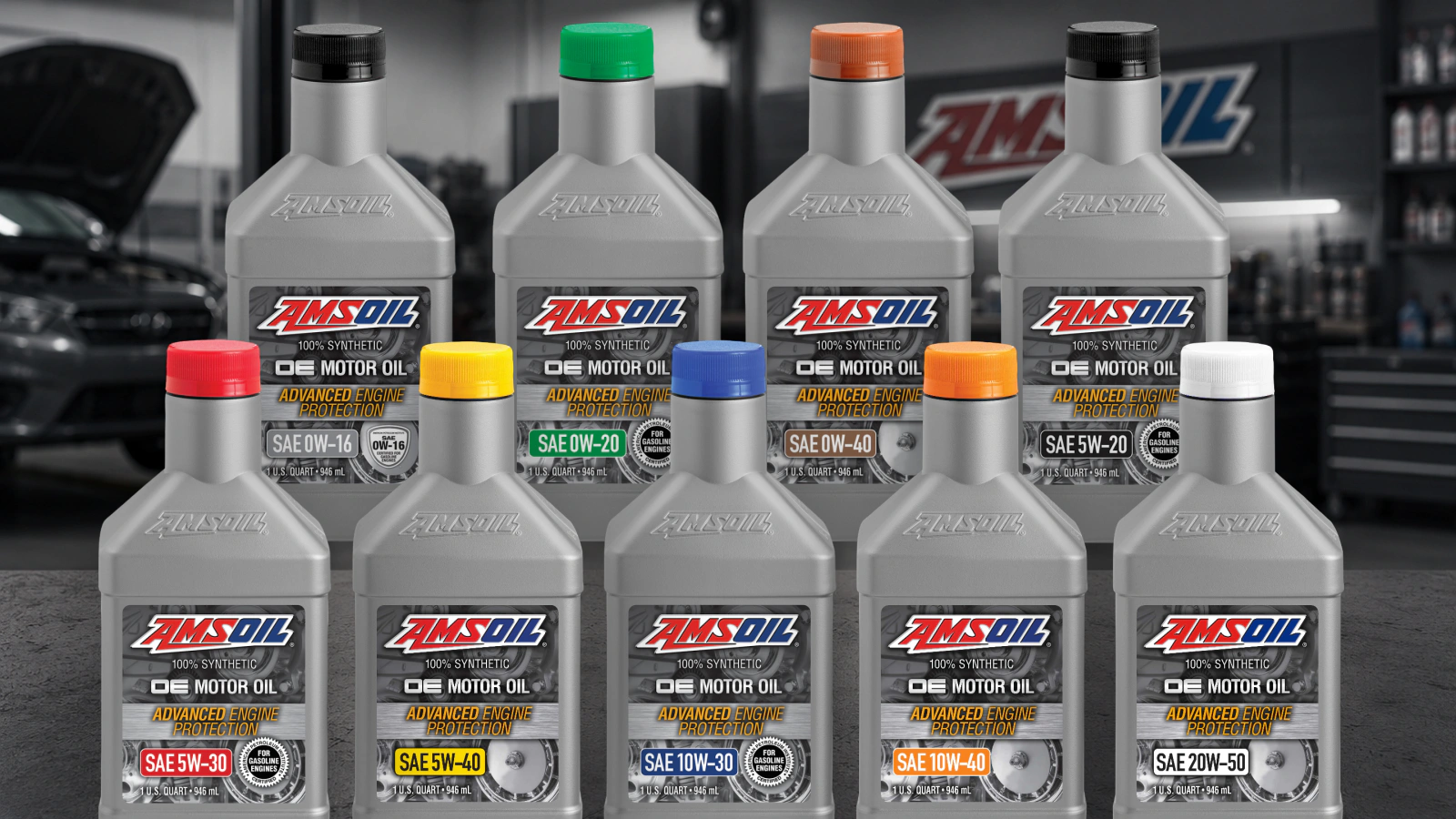
AMSOIL OE 100% Synthetic Motor Oil is formulated to protect critical engine components, including pistons, bearings and camshafts, in modern petrol engines.
In specified industry testing, AMSOIL OE has demonstrated wear protection beyond the minimum requirements of the applicable test standard.
While individual test results cannot predict the exact lifespan of an engine, they demonstrate why lubricant formulation matters even when a vehicle is serviced at its normal recommended intervals.
What About Turbocharged and Direct-Injection Engines?
Modern petrol engines often produce more power from smaller displacements through technologies such as turbocharging and gasoline direct injection (GDI).
These technologies improve engine efficiency and performance, but can also introduce additional demands on engine lubricants.
Turbochargers operate at high rotational speeds and are exposed to significant heat. Engine oil helps lubricate and cool their bearings while resisting deposit formation.
Some turbocharged direct-injection engines are also susceptible to low-speed pre-ignition (LSPI), an abnormal combustion event that can cause severe engine damage.
Modern engine oil standards incorporate tests addressing LSPI, timing-chain wear, oxidation and other challenges associated with contemporary engine designs.
AMSOIL OE features additive technology developed to meet the protection requirements of compatible modern petrol engines, including those equipped with turbochargers and direct injection.
For a more detailed explanation, see our guide to low-speed pre-ignition.
Does Synthetic Engine Oil Improve Fuel Economy?
Engine oil can influence fuel consumption because moving components must overcome friction and the oil pump requires energy to circulate lubricant throughout the engine.
Low-viscosity oils can help reduce these losses when used in engines specifically designed for them.
Synthetic base oils are particularly useful when formulating low-viscosity engine oils because they can provide desirable low-temperature flow and high-temperature stability.
However, switching to synthetic oil does not guarantee a noticeable improvement in fuel economy.
Any difference depends on the previous lubricant, engine design, operating conditions and viscosity grade.
Always use an engine oil viscosity and performance specification approved for your vehicle. Choosing a thinner oil simply to reduce friction can compromise protection if the engine was not designed for it.
Do You Need Extended Oil-Change Intervals to Benefit from Synthetic Oil?
No. This is an important distinction when comparing different synthetic engine oils.
Some premium lubricants are engineered with additional oxidation resistance, additive reserves and contamination-handling capability to support extended oil-change intervals under specified conditions.
However, extending service intervals is not the only reason to use synthetic oil.
A synthetic lubricant designed for routine servicing can still offer excellent protection against wear, deposits and oil breakdown throughout the manufacturer's recommended maintenance interval.
AMSOIL OE 100% Synthetic Motor Oil is designed specifically for motorists following their vehicle manufacturer's recommended oil-change intervals.
For more information on how service conditions and oil formulations affect maintenance requirements, read our guide to synthetic engine oil change intervals.
Where Does AMSOIL OE Fit Into the Range?
AMSOIL offers several synthetic engine oil families designed around different priorities.
AMSOIL OE provides 100% synthetic engine protection for everyday driving and vehicle manufacturer-recommended oil-change intervals.
AMSOIL Extended-Life provides a more robust formulation intended to deliver additional lubricant durability and extended-drain capability where permitted by AMSOIL's recommendations and the vehicle manufacturer's requirements.
AMSOIL Signature Series is the flagship petrol engine oil range, developed for exceptional protection and long service life under demanding conditions.
For Australian applications, the vehicle manufacturer's prescribed servicing requirements remain important when selecting an oil and determining replacement intervals.
Choosing OE does not mean accepting inadequate protection. It means selecting a synthetic lubricant designed around normal vehicle maintenance requirements rather than paying for extended-drain capabilities that may not be needed.
Is Synthetic Engine Oil Worth the Extra Cost?
When comparing lubricants, the purchase price is only one consideration.
The engine's long-term condition, required performance specifications, service conditions and maintenance schedule are also important.
A well-formulated synthetic engine oil can offer valuable performance advantages, particularly in engines experiencing frequent starts, high operating temperatures and demanding modern operating conditions.
For drivers who intend to follow their manufacturer's recommended oil-change intervals, a lubricant such as AMSOIL OE can provide these benefits without requiring a premium extended-drain formulation.
The right choice isn't necessarily the most expensive oil on the shelf. It's the oil that meets your engine's specifications and provides the protection appropriate for how the vehicle is used.
Key Points
- Synthetic engine oils can offer improved oxidation resistance, low-temperature flow and viscosity stability compared with conventional mineral oils.
- Everyday driving conditions, including short trips and stop-start traffic, can place significant demands on engine oil.
- Modern turbocharged and direct-injection engines require lubricants that meet appropriate performance standards.
- Synthetic oil does not need to be used for extended oil-change intervals to provide worthwhile benefits.
- AMSOIL OE is designed to provide 100% synthetic protection while following vehicle manufacturer-recommended service intervals.
- Always select an oil that meets your vehicle's required viscosity and performance specifications.