
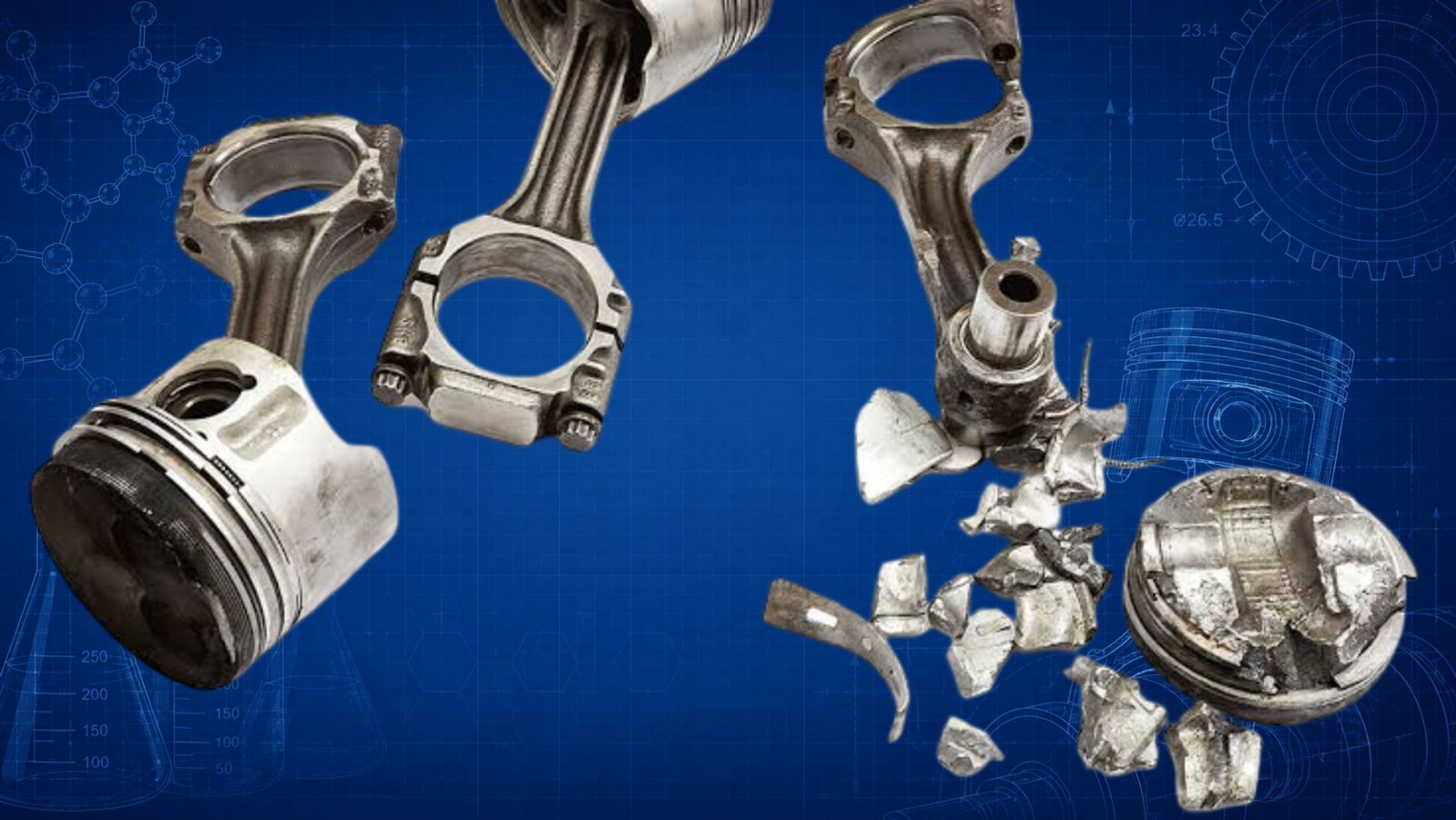
Low-speed pre-ignition, commonly known as LSPI, is an abnormal combustion event associated primarily with modern turbocharged direct-injection petrol engines. It occurs most commonly under a particularly demanding combination of operating conditions: low engine speed and high engine load.
That distinction is important. Low engine speed by itself is not necessarily harmful. Large-displacement engines have cruised comfortably at very low rpm for decades. The LSPI problem emerged as manufacturers began extracting increasingly high torque from much smaller engines while simultaneously using modern transmissions and engine-management strategies to keep engine speeds low in the pursuit of fuel economy and reduced emissions.
This guide explains why LSPI became a problem, what happens inside the engine during an LSPI event, why "labouring" an engine matters and, perhaps surprisingly, why the formulation of your motor oil can influence abnormal combustion inside the cylinder.
Why Did LSPI Become a Modern Engine Problem?
Engine knock and pre-ignition are certainly not new. What changed was the widespread adoption of a particular combination of engine technologies designed to improve efficiency without sacrificing performance.
Instead of using a relatively large naturally aspirated engine, manufacturers increasingly adopted smaller-displacement engines with turbocharging, direct fuel injection and variable valve timing. Modern transmissions gained more ratios and increasingly sophisticated control strategies, allowing engine speed to remain low during normal driving.
The result is impressive. A modern 1.2- or 1.4-litre turbocharged petrol engine can produce torque and performance that once required considerably more engine displacement, while using less fuel under many operating conditions.
But producing big-engine torque from small-engine displacement means each cylinder can be asked to do considerably more work. Combine that with a transmission attempting to keep the engine at very low rpm and a new operating challenge emerges: very high engine load at very low engine speed.
It is this low-speed, high-load operating region that is strongly associated with LSPI in susceptible turbocharged direct-injection petrol engines.
What Does "Labouring" an Engine Mean?
The traditional term labouring — also commonly called lugging — describes asking an engine to produce substantial torque while it is operating at an engine speed that is very low for the load being demanded.
Imagine a vehicle travelling along a flat highway in top gear at 1,200 or 1,500 rpm. Only a relatively small amount of power may be required to maintain speed, so the engine can operate happily under light load despite the low rpm.
Now imagine the same vehicle beginning to climb a steep hill without changing down. The driver presses the accelerator further, engine load increases and a turbocharged engine may begin producing significant boost — but the engine is still turning at approximately the same low speed.
There are fewer combustion cycles occurring per unit of time at low rpm, yet considerably more torque is now being demanded. Each combustion event must therefore contribute much more work, with high cylinder filling and potentially very high cylinder pressures.
That is very different from simply cruising at low rpm.
Low RPM Isn't the Problem by Itself
Large-displacement engines provide a useful comparison. Large petrol engines have often been fitted with very tall highway gearing, allowing them to cruise at surprisingly low engine speeds.
A large-displacement V8, for example, may cruise comfortably at around 1,200–1,500 rpm because maintaining road speed on level ground requires only a small fraction of the engine's available torque. With several litres of displacement available, the engine does not need to operate anywhere near its maximum specific output to move the vehicle along the road.
A 1.4-litre turbocharged engine can also cruise happily at the same engine speed. The important difference appears when substantial torque is demanded without selecting a lower gear.
The smaller engine may now require considerably greater cylinder filling and turbocharger boost to provide the requested torque while engine speed remains low. In other words, the problem is not simply 1,200 rpm. It is the combination of low rpm, small displacement and high load in an engine susceptible to LSPI.
What Is LSPI?
LSPI stands for Low-Speed Pre-Ignition. It is an abnormal combustion event in which combustion begins before the spark plug produces the intended ignition event.
During normal operation of a petrol engine, the spark plug ignites the compressed air-fuel mixture at a carefully controlled point in the engine cycle. Cylinder pressure rises in a controlled manner and combustion pressure helps drive the piston downward.
During an LSPI event, part of the mixture ignites prematurely while the piston is still travelling upward on its compression stroke. This unintended combustion can then produce an extremely rapid pressure rise and can be followed by a severe knock event sometimes described as super-knock or mega-knock.
The result can be dramatically higher cylinder pressures than would occur during normal combustion.
Why Can LSPI Damage an Engine?
Combustion timing is critical because cylinder pressure needs to act on the piston at the correct point in its travel. During LSPI, combustion can begin while the piston is still moving toward top dead centre.
Instead of combustion pressure working with the normal movement of the engine, an abnormal pressure event can oppose the rising piston and place enormous instantaneous loads on the piston, rings, connecting rod and other components.
LSPI is not simply an annoying pinging noise. Severe LSPI and the knock event that can follow it have been associated with broken piston ring lands, fractured pistons and other serious engine damage. A small number of sufficiently severe events can potentially cause catastrophic damage.
Why Didn't We Hear About LSPI Years Ago?
Pre-ignition and detonation existed long before LSPI became an everyday consideration in engine-oil development. What changed was the operating environment inside modern petrol engines.
Historically, a relatively small naturally aspirated engine asked to climb a hill in too high a gear would quickly make its unhappiness obvious. It simply did not have enough torque. The driver or automatic transmission would select a lower gear, engine speed would rise and the required work would be spread across more combustion events.
Turbocharging changes that equation. A modern small-displacement engine can produce substantial torque at very low rpm, allowing the powertrain to remain in a taller gear while meeting the driver's demand for acceleration or climbing power.
This combination of engine downsizing, turbocharging, direct injection and downspeeding helped manufacturers improve efficiency while maintaining performance, but it also made low-speed, high-load operation far more significant.
LSPI can therefore be viewed as one of the unintended engineering challenges created by extracting increasingly high specific output from smaller, more efficient engines. As those engines became commonplace, engine design, control strategies, fuel systems and lubricant technology all had to evolve to address the problem.
What Causes LSPI?
LSPI is a complex phenomenon and there is no single explanation that accounts for every event. Research has linked LSPI behaviour to engine operating conditions, fuel characteristics, combustion-chamber deposits and lubricant formulation.
One proposed mechanism involves small quantities of engine oil, sometimes mixed with fuel, entering the combustion chamber and providing a source for unintended ignition before the scheduled spark. Detached deposits have also been investigated as potential ignition sources.
The important point is that an LSPI event is not simply the spark plug firing at the wrong time. Something within the cylinder initiates combustion independently of the intended spark event.
What Does Motor Oil Have to Do With Combustion?
At first glance, motor oil seems like an unlikely participant in a combustion problem. Its job is to lubricate the engine, not burn with the fuel.
In a running engine, however, tiny quantities of lubricant inevitably reach areas exposed to the combustion process. Research into LSPI has demonstrated that the composition of the engine oil can influence LSPI frequency.
This is where the issue becomes more complicated than simply choosing a low-volatility oil. Lubricant volatility can influence how oil behaves in an engine, but LSPI research has shown that additive chemistry itself is particularly important. Different detergent and additive chemistries can significantly change LSPI behaviour.
This creates a substantial formulation challenge. Engine-oil additives perform essential jobs including controlling deposits, neutralising acids, reducing wear and maintaining engine cleanliness. Lubricant formulators cannot simply remove an additive because it influences LSPI; the complete formulation must balance LSPI protection with all the other performance requirements of a modern engine oil.
That is why two bottles carrying the same SAE viscosity grade are not necessarily equivalent for a modern engine.
LSPI vs Engine Knock: What's the Difference?
The terms LSPI, knock, detonation and pre-ignition are often used interchangeably in casual conversation, but they describe different abnormal combustion events.
Conventional knock or detonation generally occurs after the spark plug has initiated combustion. Part of the remaining unburned mixture auto-ignites rather than being consumed normally by the advancing flame front, producing rapid pressure changes and the familiar metallic pinging or knocking associated with detonation.
Pre-ignition occurs when combustion begins before the intended spark event.
LSPI is a particular form of pre-ignition associated predominantly with low-speed, high-load operation in downsized, boosted direct-injection petrol engines. The LSPI event can subsequently trigger an extremely severe knock event.
Mechanical noises commonly described as an "engine knock" — such as noises from bearings, piston clearances or valvetrain components — are different again and are not LSPI.
Does Higher-Octane Fuel Prevent LSPI?
Octane rating describes a petrol fuel's resistance to knock under defined test conditions, so it is natural to assume that higher-octane fuel must also solve LSPI.
The relationship is not that simple. Fuel properties can influence LSPI, but LSPI is a pre-ignition phenomenon affected by multiple factors including engine operating conditions and lubricant formulation. Conventional octane rating alone does not completely describe a fuel's LSPI behaviour.
Drivers should use the fuel grade recommended by the vehicle manufacturer, particularly in turbocharged and high-performance engines. Using higher-octane fuel should not be regarded as a substitute for using the correct engine-oil specification or addressing an engine fault.
How Engine-Oil Standards Evolved to Address LSPI
Once the relationship between modern engine design, operating conditions and lubricant formulation became clear, LSPI protection became an important part of petrol-engine oil development.
API SN PLUS was introduced as an interim supplement to API SN to address LSPI protection. It was followed by API SP and ILSAC GF-6 in 2020, which incorporated LSPI protection alongside requirements covering timing-chain wear, deposits, oxidation and other areas of modern engine performance.
The latest API SQ and ILSAC GF-7 standards, introduced in 2025, go further by requiring protection against LSPI with both fresh and aged engine oil.
The progression tells an interesting story. LSPI went from being a relatively unfamiliar problem associated with a new generation of highly boosted, downsized engines to becoming something specifically addressed by mainstream petrol-engine oil specifications.
It also demonstrates why selecting oil solely by viscosity is increasingly inadequate. A 5W-30 formulated for an older generation of engine and a modern 5W-30 designed to meet current specifications may share an SAE viscosity grade while being required to demonstrate very different performance.
Can Driving Style Affect LSPI?
Because LSPI is associated with low-speed, high-load operation, the conditions under which an engine is driven can affect whether it enters the operating region where LSPI is most likely to occur.
For drivers of manual vehicles, this provides another reason not to unnecessarily labour the engine. If substantial acceleration or climbing power is required while the engine is turning very slowly in a high gear, selecting a lower gear increases engine speed and reduces the amount of torque that must be produced by each individual combustion event.
Modern automatic transmissions control this decision themselves, although their calibration may deliberately favour low engine speeds for efficiency. Engine-management systems also employ sophisticated strategies to control boost, ignition timing and other parameters.
Normal low-rpm driving should not therefore be treated as inherently dangerous. The distinction remains low speed combined with high load, not low engine speed by itself.
How Can You Help Protect an Engine Against LSPI?
LSPI is ultimately an engine-design, combustion-control and lubricant-formulation challenge rather than something a driver can eliminate with one simple trick. However, sensible operation and maintenance help ensure the engine is working under the conditions intended by its manufacturer.
- Use an engine oil with the viscosity and performance specification recommended by the vehicle manufacturer.
- Use the recommended fuel grade for the vehicle.
- Follow the manufacturer's oil-change and maintenance schedule.
- Address engine faults, warning lights and abnormal combustion rather than ignoring them.
- Avoid unnecessarily labouring a manual-transmission engine at very low rpm under heavy throttle.
- Use lubricants formulated for the performance requirements of modern turbocharged direct-injection engines where specified.
Choosing the Correct Engine Oil
LSPI provides an excellent example of why a modern engine oil is much more than its viscosity grade. The SAE grade tells you important information about the oil's viscosity characteristics, but it does not describe every aspect of the lubricant's performance.
Specifications such as API, ILSAC, ACEA and individual manufacturer requirements define additional performance characteristics that may include wear protection, deposit control, oxidation resistance, emissions-system compatibility and protection against abnormal combustion phenomena such as LSPI.
When choosing oil for a modern turbocharged petrol engine, start with the viscosity and lubricant specification recommended by the vehicle manufacturer rather than assuming that any oil of the same viscosity is interchangeable.
The Bottom Line
LSPI did not make low engine speeds suddenly dangerous. Large engines have operated happily at low rpm under light load for decades. What changed was our ability to extract substantial torque from increasingly small engines while simultaneously keeping engine speeds low.
Turbocharging, direct injection, variable valve timing, engine downsizing and increasingly sophisticated transmissions have delivered remarkable improvements in specific output and efficiency. They have also created new engineering challenges. In susceptible engines, demanding high torque at low engine speed creates operating conditions strongly associated with low-speed pre-ignition.
Lubricant chemistry has been shown to influence LSPI behaviour, which is why LSPI protection progressed from a specialist concern to a requirement addressed by modern mainstream petrol-engine oil standards.
For the vehicle owner, the lesson is straightforward: use the correct oil specification, not simply the correct viscosity. Modern engine oil is increasingly part of the engineering system that allows a small, highly boosted engine to deliver the performance, efficiency and durability expected of it.