

0W-20 has become one of the most commonly specified engine-oil viscosities in modern passenger vehicles, but it is also one of the most questioned. Is 0W-20 too thin? Is it only specified to improve fuel economy? Should you use something thicker in Australia's warmer climate?
The short answer is that 0W-20 is not inherently too thin. An engine designed and validated for 0W-20 can operate reliably using the specified oil. However, oil viscosity is only one part of the lubrication system. Engine speed, load, oil temperature, bearing design, clearances and surface finish all affect the oil film separating moving components.
Understanding those relationships explains both why 0W-20 works extremely well in many engines and why simply saying "thicker oil is always safer" - or "the manufacturer specifies 0W-20, so viscosity can never matter" - misses a much more interesting engineering question.
What Does 0W-20 Actually Mean?
The two numbers in a multigrade engine-oil viscosity describe different parts of its behaviour.
- 0W describes the oil's low-temperature performance. The "W" refers to winter performance, not the oil's operating-temperature viscosity.
- 20 is the oil's SAE high-temperature viscosity grade once the engine is at operating temperature.
This means a 0W-20 is not simply "20-weight oil made thinner". It is formulated to provide very good low-temperature performance while remaining within the SAE requirements for a 20-grade oil at operating temperature.
If you're unfamiliar with SAE viscosity grades, our Engine Oil Viscosity Chart & Guide explains how grades such as 0W-20, 5W-30 and 10W-40 compare, including their cold-temperature and operating-temperature viscosity ranges.
Why Do Modern Engines Use 0W-20?
Lower-viscosity oils can reduce the energy required to pump oil and reduce viscous drag inside an engine. That can contribute to improved efficiency, which is one reason viscosities such as 0W-20 have become increasingly common.
But that does not mean manufacturers simply took an old engine designed for thick oil and filled it with something thinner.
Modern engines are developed around their lubrication requirements. Bearing dimensions and clearances, oil pumps, oil galleries, variable-valve-timing systems, piston cooling and operating strategies can all form part of a system designed around a particular range of oil viscosities.
Is 0W-20 Too Thin for Australian Conditions?
A common argument is that 0W-20 may be suitable in colder countries but is too thin for Australia's climate. Ambient temperature certainly matters to engine-oil selection, particularly during starting, but Australia's warmer weather does not automatically mean an engine specified for 0W-20 should be changed to 5W-30 or another thicker viscosity.
Once an engine is fully warmed, its oil operates at temperatures far above normal Australian ambient temperatures. The cooling and lubrication systems are designed to control those operating temperatures.
The correct starting point is therefore the vehicle manufacturer's viscosity and performance specification. Some manufacturers permit several viscosities depending on climate or operating conditions; others specify a much narrower range.
If the manufacturer permits more than one viscosity, operating conditions can become part of the decision. If it specifies only 0W-20, however, Australia's climate alone is not a good reason to disregard that requirement.
Does Thicker Oil Create a Stronger Oil Film?
It can, but this is where the common idea that "thicker oil means more protection" becomes misleading.
Viscosity is one of the factors that influences the oil film separating components such as a crankshaft journal and its bearing. In otherwise identical conditions, increasing viscosity can increase hydrodynamic film thickness. An engine, however, is not simply a laboratory bearing where viscosity can be changed while everything else remains constant.
Bearing clearances, oil galleries, oil-pump capacity and the expected lubricant viscosity are designed to work together. The clearances provide controlled paths for oil to flow through the engine while the pump supplies the required volume of oil. The resulting oil pressure is partly a consequence of the resistance to that flow.
Changing to a substantially thicker oil changes that relationship. Greater viscosity increases resistance to flow, which may increase indicated oil pressure without necessarily increasing the volume of oil reaching and passing through every lubricated component. Modern engines may also use variable-displacement oil pumps and oil-pressure control strategies designed around the specified viscosity.
Engine oil also carries heat away from bearings, pistons and other components. Maintaining appropriate oil circulation is therefore important for cooling as well as lubrication.
This is why selecting a thicker oil purely to obtain a "stronger oil film" is not automatically beneficial. Any potential increase in hydrodynamic film thickness has to be considered as part of the complete lubrication system, including oil flow, clearances, temperature, pump operation and the requirements of hydraulically operated components.
The objective is not to create the thickest possible oil film. It is to maintain the lubrication regime the engine was designed to operate with.
The Stribeck Curve: Why Engine Speed and Load Matter
Tribologists commonly use the Stribeck curve to describe how viscosity, speed and load influence the lubrication regime between moving surfaces.
At one end is boundary lubrication, where the oil film is very thin and microscopic surface asperities can interact. Between the extremes is mixed lubrication, where the surfaces are partially separated by an oil film. Further along the curve is hydrodynamic lubrication, where a continuous fluid film separates the moving surfaces.
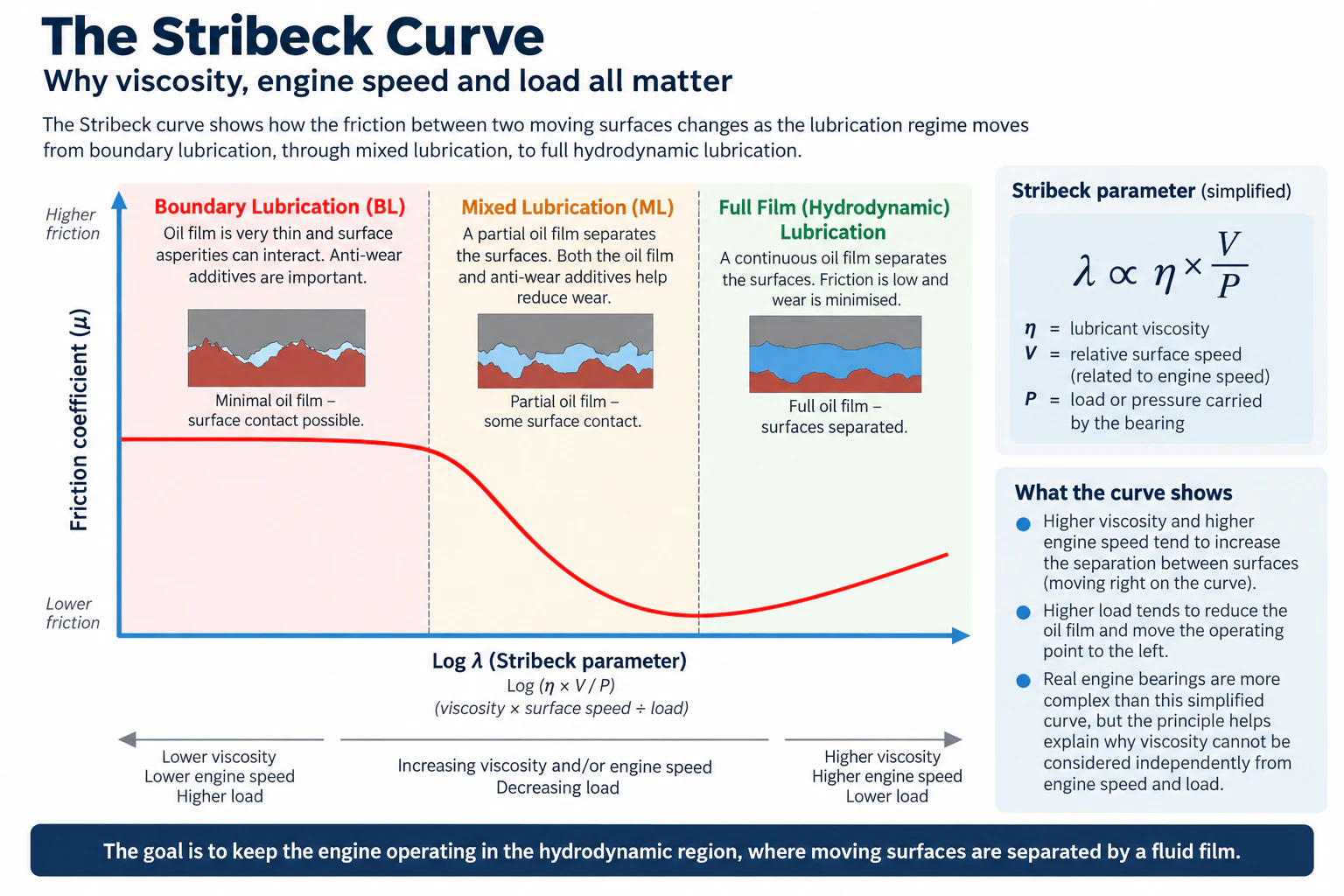
For an engine crankshaft bearing, the important lesson is that viscosity cannot be considered by itself. Higher engine speed increases the relative surface speed within the bearing, while greater engine load increases the pressure the oil film must support.
This means the same oil can experience very different operating conditions depending on what the engine is doing. Low engine speed combined with relatively light load may provide an entirely adequate lubrication margin. Increase the load substantially while keeping engine speed low, however, and that margin can decrease.
Higher engine speed tends to favour greater fluid-film separation.
Higher viscosity tends to favour greater fluid-film separation.
Higher load works in the opposite direction.
None of these variables should be considered independently.
Real engine bearings are considerably more complicated than a simplified Stribeck curve. Bearing geometry, clearances, oil temperature, oil supply, surface finish and rapidly changing dynamic loads all influence the actual oil film. The curve is useful because it shows why an oil viscosity that works well under one combination of speed and load may have a different lubrication margin under another.
Why a Hill Is a Useful Example
Consider a vehicle cruising along a level highway in its highest transmission gear. Engine speed is low and only enough power is required to overcome aerodynamic drag, rolling resistance and drivetrain losses.
Now the road begins climbing.
To maintain the same road speed, the engine must provide additional power to lift the vehicle against gravity. The additional tractive force required to climb the gradient increases with vehicle mass.
For a relatively light passenger car, that additional load may remain quite modest. A much heavier pickup or large SUV climbing the same gradient at the same speed requires considerably more tractive force.
If an automatic transmission immediately downshifts, engine speed rises and the required power can be produced at a different combination of engine speed and torque.
But modern transmissions can have eight, nine or ten ratios and are often calibrated to use very tall gearing during highway cruising. If the transmission holds top gear as the road begins climbing, engine load can increase substantially while engine speed remains very low.
Low engine speed means relatively low crankshaft journal speed.
Increased engine torque means greater combustion and bearing loads.
The lubricant itself has not suddenly changed - the operating conditions of the bearing have.
Does That Mean 0W-20 Is Unsafe in Heavy Vehicles?
No. Vehicle weight alone cannot determine the correct engine-oil viscosity, and a heavy vehicle does not automatically require thick engine oil.
Aerodynamic drag, for example, does not simply double because vehicle mass doubles. Engine design, torque output, bearing dimensions, bearing clearances, journal diameter, oil temperature, oil supply and transmission calibration all affect the actual lubrication environment.
The hill example simply demonstrates why the same viscosity can operate under very different combinations of speed and load in different vehicles.
This is also why the successful use of 0W-20 across millions of passenger vehicles and engines does not mean every engine using 0W-20 has exactly the same lubrication margin under every operating condition.
A Current Case Study: The GM 6.2L L87 V8
General Motors' 6.2-litre L87 V8 provides a useful contemporary example of why engine-oil viscosity should not be considered independently from engine design, manufacturing and operating conditions.
GM recalled certain L87 engines after identifying manufacturing and quality problems that could contribute to bearing damage and engine failure. The identified issues included sediment contamination affecting connecting rods and crankshaft oil galleries, along with crankshafts with out-of-specification dimensions and surface finish.
For affected engines that pass GM's inspection and remain in service, the recall procedure changes the specified engine oil from 0W-20 to a higher-viscosity 0W-40 and includes an oil-filter and oil-fill-cap change.
That has understandably generated discussion about whether 0W-20 itself was responsible for the failures. The available evidence does not support such a simple conclusion. GM's documented recall identifies manufacturing defects as causes or contributors to the bearing damage.
So Why Is the L87 Still Interesting?
Reports of additional L87 failures following the recall remedy have prompted further investigation and discussion about whether other factors may also contribute to the problem.
Tribologist Lake Speed Jr., from The Motor Oil Geek, has discussed one particularly interesting hypothesis: increasingly low highway cruising rpm combined with high engine load may reduce the hydrodynamic lubrication margin available at the crankshaft bearings.
The idea relates directly to the Stribeck relationship described above. If the crankshaft is rotating more slowly, journal surface speed is reduced. If engine load then rises substantially while the transmission remains in a tall gear, bearing load can increase without the corresponding increase in journal speed that would occur following a downshift.
In a large pickup or SUV weighing considerably more than a typical passenger car, maintaining highway speed up a gradient can require a substantial increase in engine output. This makes the low-rpm, high-load operating condition particularly interesting when considering bearing lubrication.
Lake Speed Jr. of The Motor Oil Geek discusses the continuing GM L87 investigation, bearing lubrication, oil viscosity and the possible effect of low-rpm highway operation.
Does the GM L87 Problem Mean Your 0W-20 Car Needs Thicker Oil?
No. A bearing-failure investigation involving a particular 6.2-litre V8, its manufacturing history and its application in large pickups and SUVs is not evidence that every engine factory-filled with 0W-20 should use thicker oil.
A smaller passenger vehicle may require substantially less additional tractive force to climb the same hill. Its engine may have completely different bearing dimensions, clearances, oil supply, torque characteristics and transmission calibration.
More importantly, engines specified for 0W-20 are designed and validated around a particular lubrication system. Changing viscosity alters more than simply oil-film thickness.
Is Thicker Engine Oil Always Better?
No. Increasing viscosity can increase oil-film thickness under some operating conditions, but thicker oil also creates greater resistance to flow and greater viscous drag.
Modern engines may also use engine oil hydraulically for variable valve timing, timing-chain tensioners and other systems. Oil pumps, galleries and bearing clearances are designed around expected lubricant characteristics.
The goal is therefore not to use the thickest oil possible. It is to use an oil with the correct viscosity and performance characteristics for the engine and its operating conditions.
Should I Use 5W-30 Instead of 0W-20?
Not automatically.
If your vehicle manufacturer specifies 0W-20, that specification should be the starting point. If the manufacturer explicitly permits 5W-30 or another viscosity for particular temperatures or operating conditions, there may be legitimate reasons to select between the approved options.
But replacing a specified 0W-20 with 5W-30 simply because the vehicle operates in Australia - or because an unrelated engine family has experienced bearing failures - is not a sound way to select an engine oil.
Always check the manufacturer's current viscosity and oil-performance requirements for the specific engine.
Which AMSOIL 0W-20 Should I Use?
AMSOIL offers several 0W-20 engine oils because vehicles with the same viscosity requirement can still have different applications, specifications, mileage and service requirements.
The correct choice starts with the specifications required by the vehicle manufacturer. From there, the appropriate AMSOIL 0W-20 can be selected for the vehicle, service interval and intended use.
| AMSOIL 0W-20 | Typical Application |
|---|---|
| OE 0W-20 | Everyday servicing and manufacturer-recommended drain intervals where the required specifications and 0W-20 viscosity are met. |
| High Mileage 0W-20 | Higher-mileage vehicles requiring a suitable 0W-20, with a formulation designed around the needs of ageing engines. |
| Signature Series 0W-20 | Premium synthetic protection for compatible vehicles, including applications where AMSOIL's extended drain-interval recommendations are appropriate. |
| Hybrid 0W-20 | Petrol-electric hybrid applications requiring a compatible 0W-20, formulated for the distinctive operating conditions of hybrid engines. |
Do not choose between these products on viscosity alone. Check the required API, ILSAC and manufacturer specifications as well as the SAE viscosity grade.
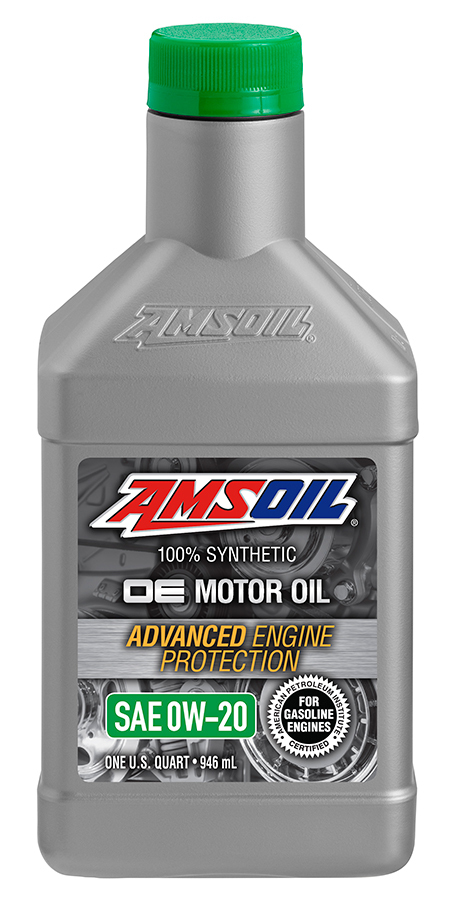
OE 0W-20 Synthetic Motor Oil
A practical choice for regular servicing where the vehicle requires a compatible 0W-20 engine oil.
View OE 0W-20 ›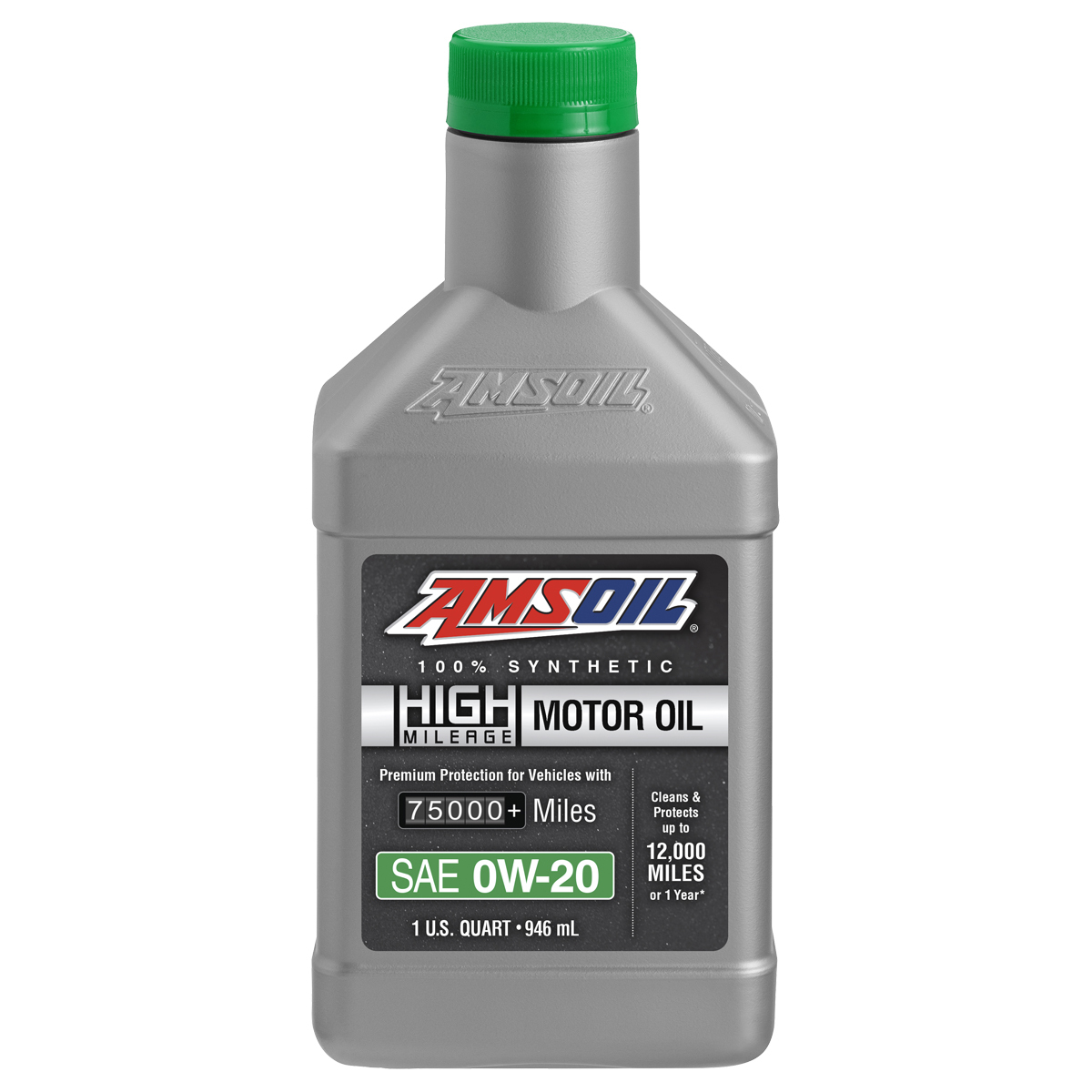
High Mileage 0W-20 Synthetic Motor Oil
Designed for higher-mileage engines while maintaining the required 0W-20 viscosity and compatible performance specifications.
View High Mileage 0W-20 ›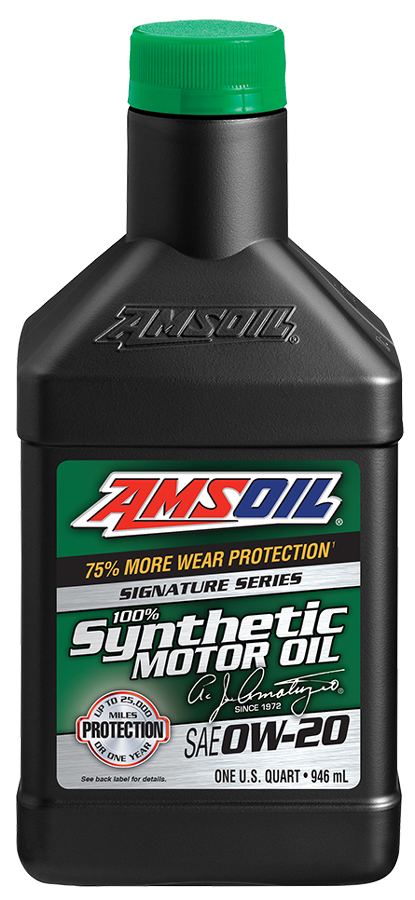
Signature Series 0W-20 Synthetic Motor Oil
AMSOIL's premium 0W-20 for maximum protection and, where applicable, extended drain intervals beyond conventional service schedules.
View Signature Series 0W-20 ›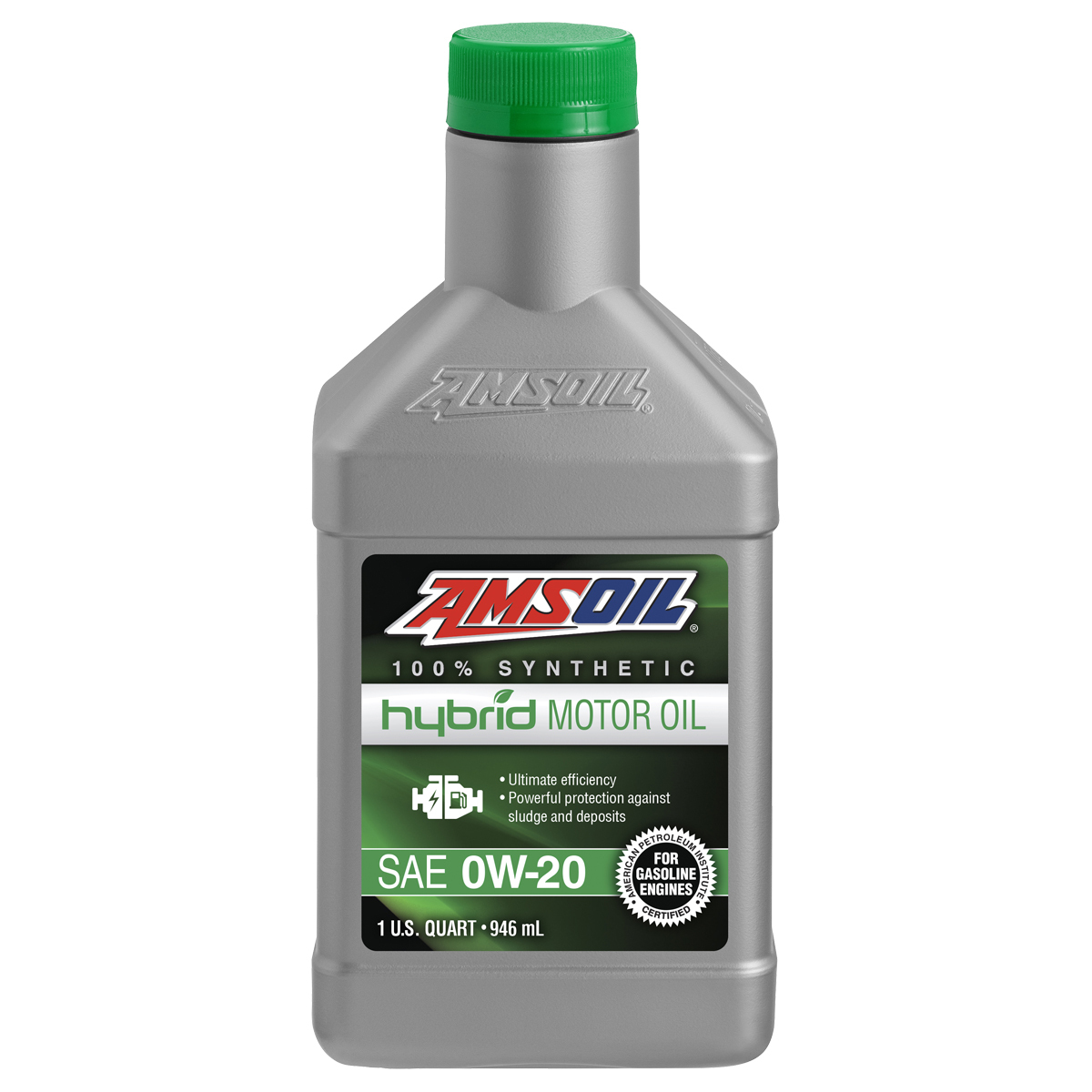
0W-20 Hybrid Synthetic Motor Oil
Formulated for petrol-electric hybrids and their distinctive stop-start, condensation and fuel-dilution operating conditions.
View Hybrid 0W-20 ›The Bottom Line
0W-20 is not inherently "too thin". In an engine designed for it, a correctly specified 0W-20 can provide the lubrication, cooling and protection the engine requires while also providing excellent cold-start flow and reduced viscous losses.
At the same time, viscosity matters. The oil film inside a bearing depends on more than the number printed on the bottle. Oil temperature, viscosity, bearing load, journal speed, clearances, surface finish and oil supply all interact.
The ongoing discussion surrounding GM's L87 V8 is a useful demonstration of that complexity, not evidence that every 0W-20 engine should be filled with thicker oil.
Start with the viscosity and performance specifications required for your engine, consider any alternative viscosities specifically permitted by the manufacturer, and choose an oil formulated to meet those requirements.