
Hybrid vehicles are designed to reduce fuel consumption by combining a petrol engine with an electric motor. Depending on driving conditions, the vehicle can use electric power, petrol power or a combination of both.
While this reduces the amount of time the petrol engine needs to run, it also changes the conditions in which that engine operates. Frequent restarts, short running periods and lower operating temperatures can introduce lubrication challenges that are less common in conventional petrol vehicles.
So, do hybrid cars actually need a special engine oil? The answer depends on the vehicle manufacturer's requirements, but there are good reasons why lubricants designed specifically for hybrid engines exist.
How Is a Hybrid Engine Different?
In a conventional petrol vehicle, the engine generally runs continuously throughout a journey. Once it reaches normal operating temperature, it can remain there for an extended period.
A hybrid vehicle operates differently. Its control system may shut down the petrol engine when electric power can handle the driving load, restarting it when additional power is required or when battery charging and other operating conditions demand it.
This creates several important differences:
- The engine may start and stop repeatedly throughout a journey.
- Some operating periods may be too short for the oil to reach normal working temperature.
- The engine can remain switched off while the vehicle continues travelling.
- The petrol engine may need to provide significant power shortly after restarting.
These characteristics do not necessarily mean a hybrid engine experiences more wear than a conventional engine. They do, however, make certain lubricant properties especially important.
Why Moisture Can Be a Problem in Hybrid Engines
Water vapour is a normal by-product of combustion, and moisture can also enter an engine through condensation. In an engine that regularly reaches and maintains normal operating temperature, much of this moisture can evaporate and leave through the crankcase ventilation system.
Hybrid engines do not always operate long enough or at sufficiently high temperatures for this process to occur as effectively.
When moisture remains in the engine, it can contribute to corrosion and oil contamination. Over time, these conditions may compromise the lubricant's ability to protect internal components.
This is one reason hybrid-specific engine oils can contain enhanced corrosion inhibitors and dispersant additives designed to help manage condensation-related contamination.
Fuel Dilution: Another Challenge for Hybrid Engines
Fuel dilution occurs when unburnt petrol passes the piston rings and enters the engine's crankcase, mixing with the lubricating oil.
Some fuel dilution can occur in conventional petrol engines, particularly during cold starts and short trips. Hybrid operation can create similar conditions when the petrol engine runs intermittently and does not remain at normal operating temperature for long.
Excessive fuel contamination can reduce engine oil viscosity and compromise its ability to maintain a protective lubricating film between moving components.
High-quality engine oils are formulated to resist viscosity loss and maintain protection under demanding conditions. Hybrid-specific formulations can place additional emphasis on managing the effects of fuel dilution.
What Happens When a Hybrid Engine Restarts?
Whenever an engine stops, oil circulation from its mechanically driven oil pump generally stops as well. A protective oil film remains on lubricated components, but the engine must re-establish oil circulation when it starts again.
In a hybrid vehicle, the petrol engine may restart while the vehicle is already moving and may be required to provide power relatively quickly.
Oil viscosity, particularly at lower temperatures, plays an important role in how quickly the lubricant can circulate and reach critical components.
This does not mean the thinnest possible oil is always the best choice. The engine is designed around specific lubrication requirements, and using an oil that is too thin or too thick for that application can create problems.
The correct viscosity and performance specification must always be determined by the vehicle manufacturer.
Can You Use Ordinary Synthetic Engine Oil in a Hybrid?
Yes. A hybrid vehicle does not automatically require an oil labelled specifically for hybrid engines.
Many conventional synthetic engine oils are suitable for hybrid applications, provided they meet the viscosity and performance specifications required by the vehicle manufacturer.
A hybrid-specific formulation offers an alternative designed to address operating conditions such as frequent restarts, condensation, fuel dilution and intermittent engine operation.
It is important to distinguish between a lubricant's intended application and its formal specifications. The word "Hybrid" on the bottle does not replace the need to check the required SAE viscosity and engine oil standards.
Why Do Hybrid Vehicles Use Low-Viscosity Engine Oils?
Many modern hybrid engines specify low-viscosity lubricants such as SAE 0W-20, 0W-16 or even 0W-8.
These oils can help reduce internal friction and pumping losses, contributing to improved fuel efficiency when used in engines designed for them.
However, these viscosity grades are not interchangeable simply because they are all used in hybrid vehicles.
For example, an engine designed for SAE 0W-8 may have different lubrication requirements from one specifying SAE 0W-20. Even when two oils share similar viscosity characteristics, their required performance standards may differ.
Always consult the vehicle's owner's manual before selecting a viscosity or changing from the originally specified grade.
Does a Hybrid Need Less Frequent Oil Changes?
It's tempting to assume that because a hybrid's petrol engine operates less frequently, its engine oil should last longer.
Unfortunately, oil life is not determined solely by the number of kilometres travelled or the amount of time an engine spends running.
Contamination, fuel dilution, moisture, oxidation and additive depletion all influence the useful service life of engine oil.
Some hybrids may accumulate fewer combustion-engine operating hours than comparable petrol-only vehicles. Others may spend much of their time making short journeys with repeated cold starts.
These operating patterns can affect oil condition in different ways.
Follow the vehicle manufacturer's specified oil-change intervals, including any applicable severe-service requirements. A hybrid-specific synthetic oil should not be treated as automatic permission to extend those intervals.
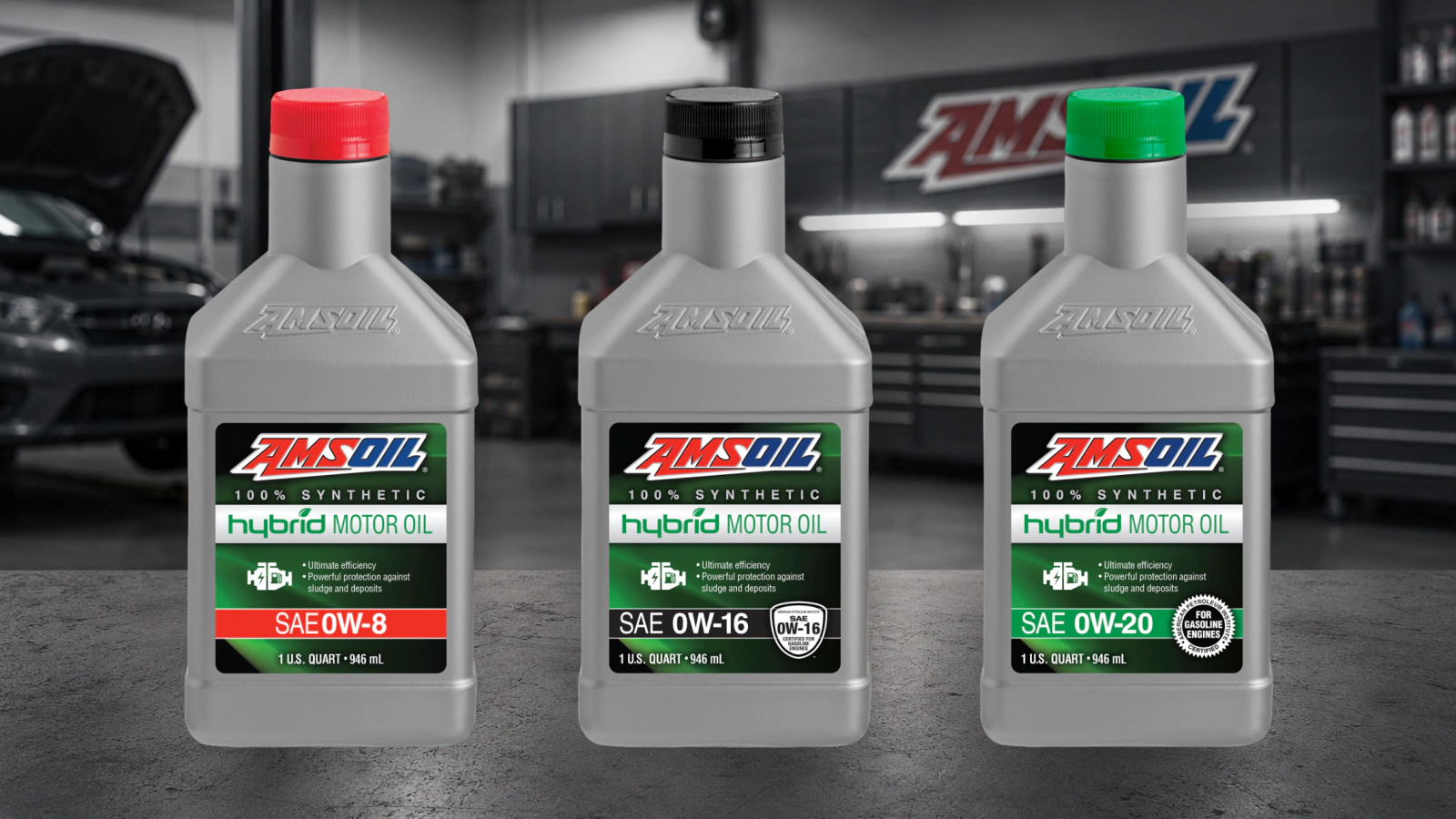
AMSOIL Synthetic Hybrid Motor Oil
AMSOIL has developed a dedicated range of 100% synthetic Hybrid Motor Oils to address the lubrication challenges associated with petrol-electric vehicles.
The formulations emphasise corrosion protection, moisture management, resistance to the effects of fuel dilution and rapid oil circulation during engine startup.
The range includes three viscosity grades:
- SAE 0W-8: For compatible engines specifically requiring this ultra-low viscosity grade and the applicable performance specification.
- SAE 0W-16: For hybrid and other petrol engines requiring SAE 0W-16 and its specified performance standards.
- SAE 0W-20: For compatible engines requiring SAE 0W-20 and the appropriate manufacturer or industry specifications.
Not every hybrid vehicle requires one of these three grades, and not every hybrid-specific oil is suitable for every hybrid engine.
For a detailed explanation of the technology and available formulations, visit our AMSOIL Hybrid Engine Technology guide.
You can also browse the AMSOIL Hybrid Engine Oil range or use the vehicle product finder to identify a suitable lubricant for your application.
Key Points
- Hybrid engines operate differently from conventional petrol engines due to frequent starts, stops and intermittent operation.
- Short running periods can make moisture management and fuel dilution important considerations.
- Hybrid-specific engine oils may provide additional protection against corrosion and contamination.
- Ordinary synthetic engine oils can also be suitable for hybrid vehicles when they meet the required specifications.
- Always use the manufacturer-specified viscosity, performance standard and oil-change interval.