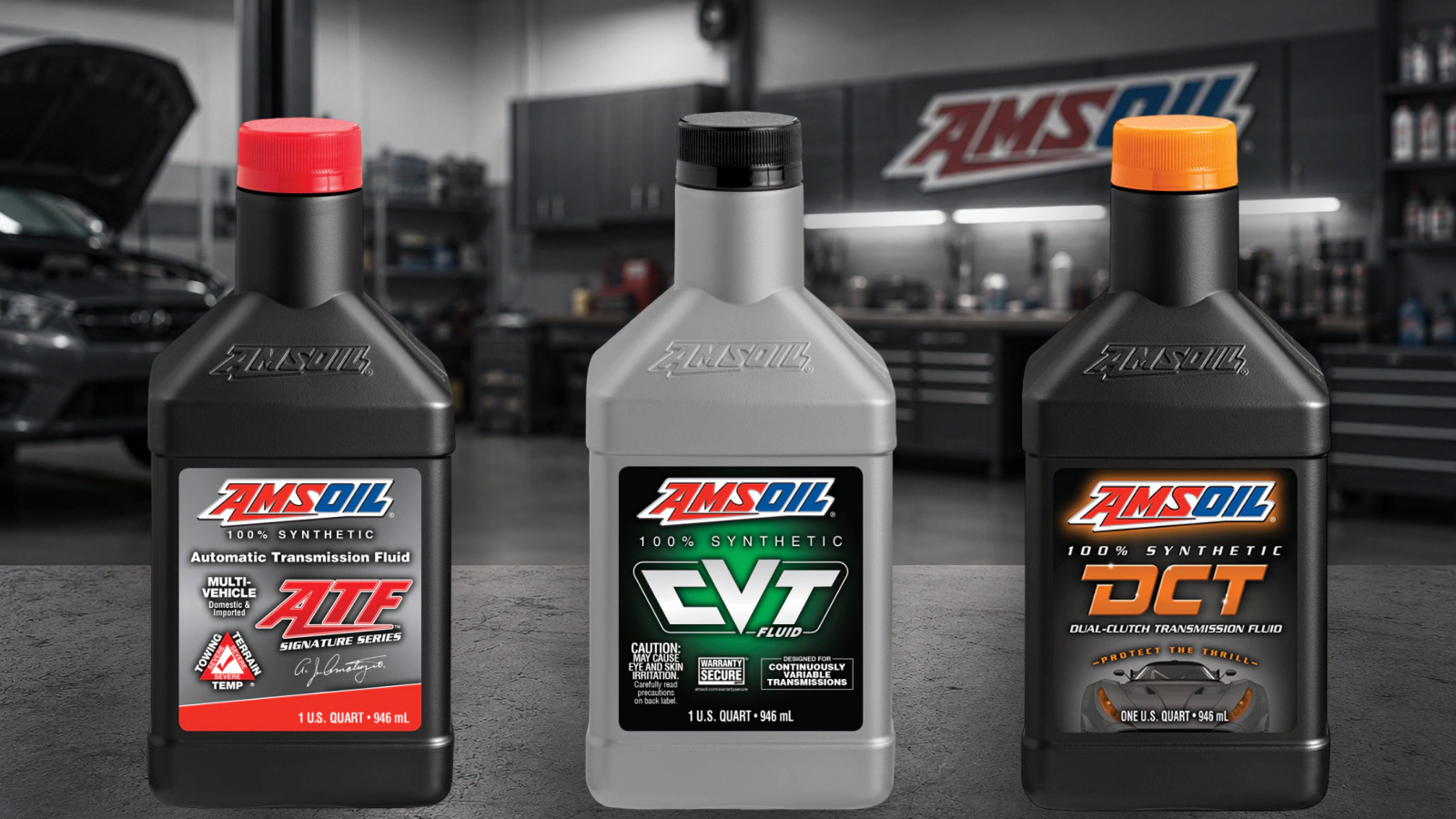
Not all automatic transmissions operate in the same way, and neither do their lubricants. Conventional automatic transmissions, continuously variable transmissions (CVTs) and dual-clutch transmissions (DCTs) use different mechanical systems, each with specific lubrication and friction requirements.
Understanding these differences helps explain why automatic transmission fluids are not universally interchangeable, even when they appear similar.
This guide explores how the three main transmission types work, the role of transmission fluid in each design, and the AMSOIL synthetic transmission fluids available for compatible applications.
What Does Automatic Transmission Fluid Do?
Transmission fluid performs several critical functions. Depending on the transmission design, it may:
- Lubricate gears, bearings and other moving components.
- Transfer hydraulic pressure to operate transmission components.
- Control clutch engagement through specific friction characteristics.
- Transfer power through a torque converter.
- Help remove heat from internal components.
- Protect against wear, oxidation and deposit formation.
Different transmission designs place different demands on the fluid. The correct lubricant must provide the characteristics specified by the transmission manufacturer, including viscosity, friction performance and compatibility with internal materials.
Conventional Automatic Transmissions
Conventional automatic transmissions commonly use a torque converter, planetary gearsets and hydraulically operated clutches to provide different gear ratios without requiring the driver to operate a clutch pedal.
The torque converter transfers engine power to the transmission through fluid coupling, while internal clutch packs and other control components engage different gear combinations. Modern automatic transmissions also use electronically controlled hydraulic systems to manage gear changes.
How Does a Conventional Automatic Transmission Work?
The following video, Shifting Transmissions, explains the operation of a traditional automatic transmission and how its internal components work together to change gears.
Why Conventional Automatics Need the Correct ATF
In a conventional automatic transmission, fluid does much more than lubricate moving parts. It also plays an important role in hydraulic operation, torque-converter performance and controlled clutch engagement.
Automatic transmissions are engineered around specific fluid characteristics. Incorrect friction properties or viscosity can affect shift quality, hydraulic performance and component protection.
Specifications such as DEXRON, MERCON and manufacturer-specific requirements identify fluids designed for particular transmission applications. Fluids with similar colour or viscosity should not automatically be considered interchangeable.
AMSOIL Synthetic Automatic Transmission Fluids
AMSOIL offers OE and Signature Series synthetic automatic transmission fluids for a wide range of compatible applications.
OE Synthetic ATF provides a synthetic transmission fluid option for applications requiring compatible specifications, while Signature Series ATF offers a premium formulation designed for demanding operating conditions and extended performance.
Both ranges include different viscosity and specification families. Multi-Vehicle, Fuel-Efficient and Ultra-Low Viscosity fluids are not simply interchangeable performance grades. Each must be matched to the transmission's requirements.
OE Synthetic Automatic Transmission Fluids
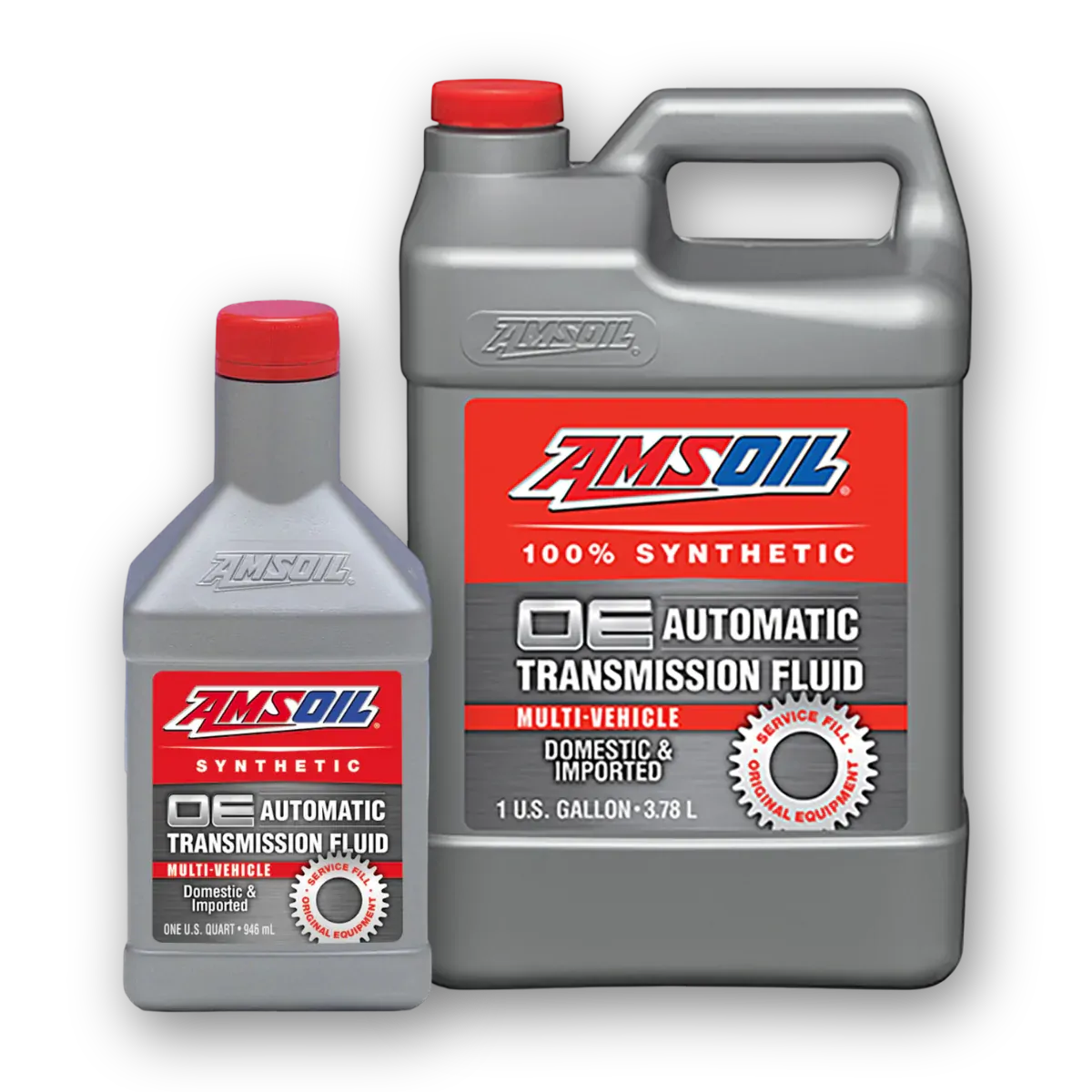
Protects against wear. Resists harmful sludge. Excellent cold-weather performance. Guards against leaks. Promotes smooth, shudder-free shifts.
VIEW PRODUCT →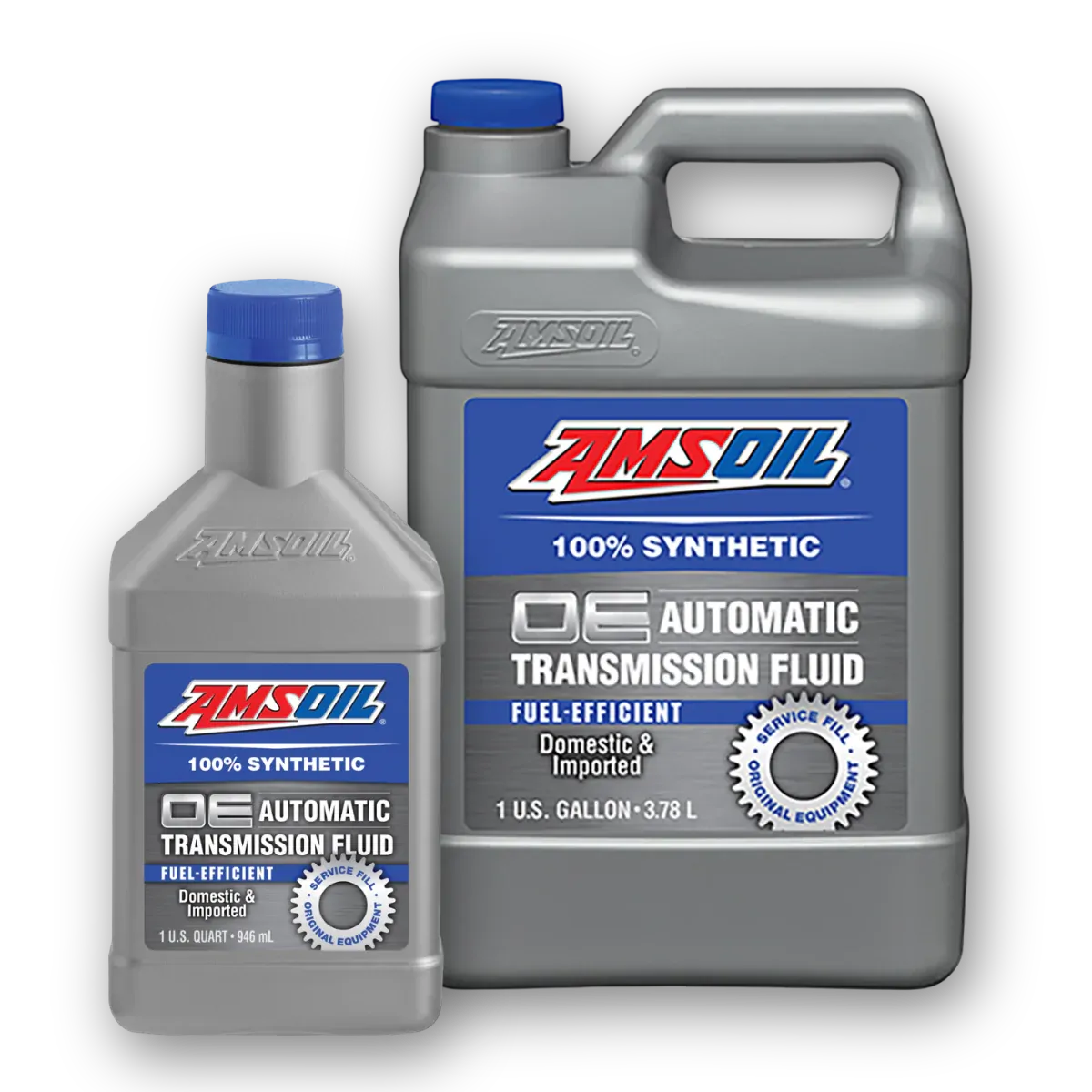
AMSOIL OE Synthetic Automatic Transmission Fluid provides passenger-car/light-truck transmissions excellent wear protection, sludge resistance and extreme-temperature performance throughout original equipment manufacturer (OEM)-recommended drain intervals
VIEW PRODUCT →Signature Series Synthetic Automatic Transmission Fluids
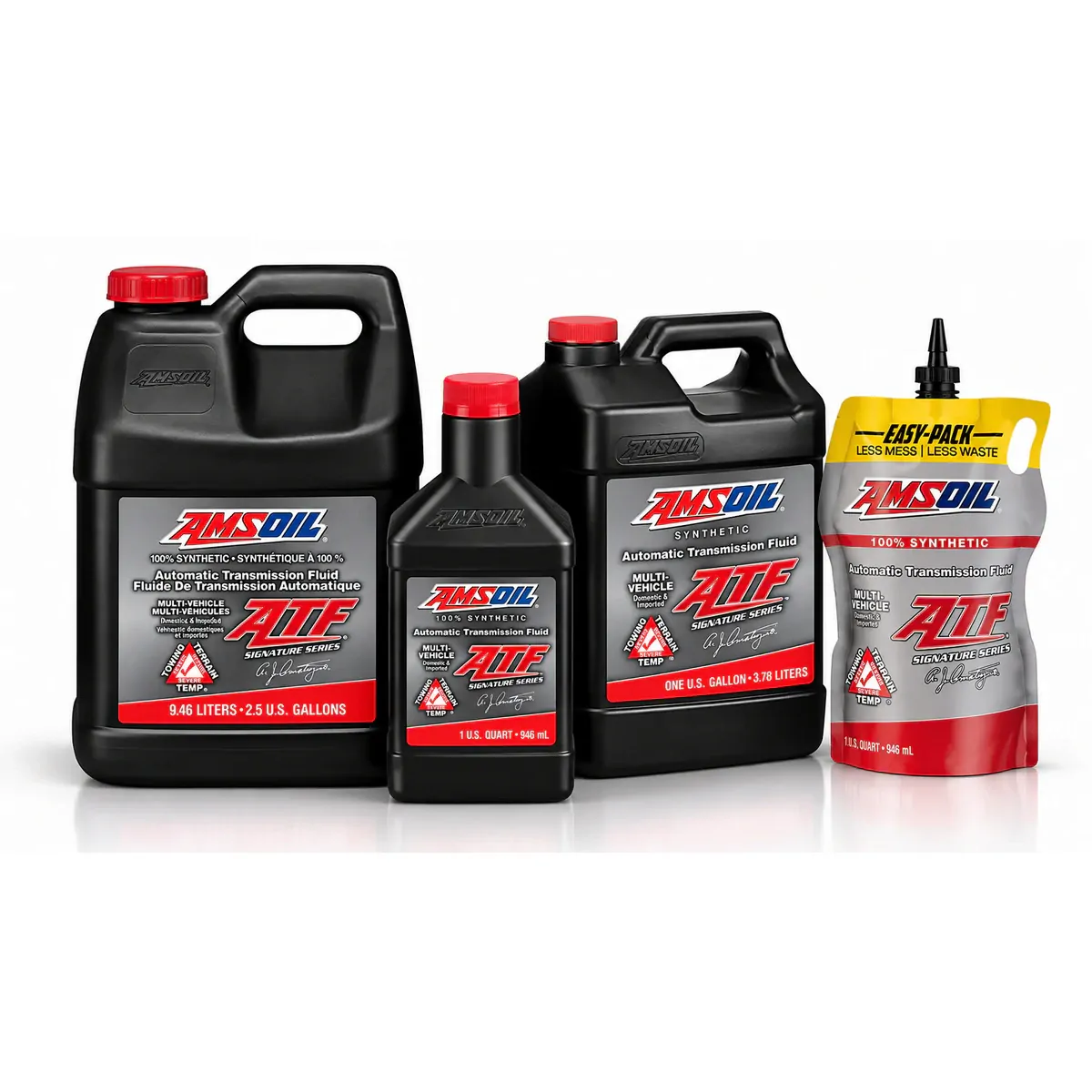
Withstands the rigors of heavy towing, elevated temperatures and challenging terrain. Remains fluid in sub-zero temperatures. Provides reserve protection during heavy use and abuse.
VIEW PRODUCT →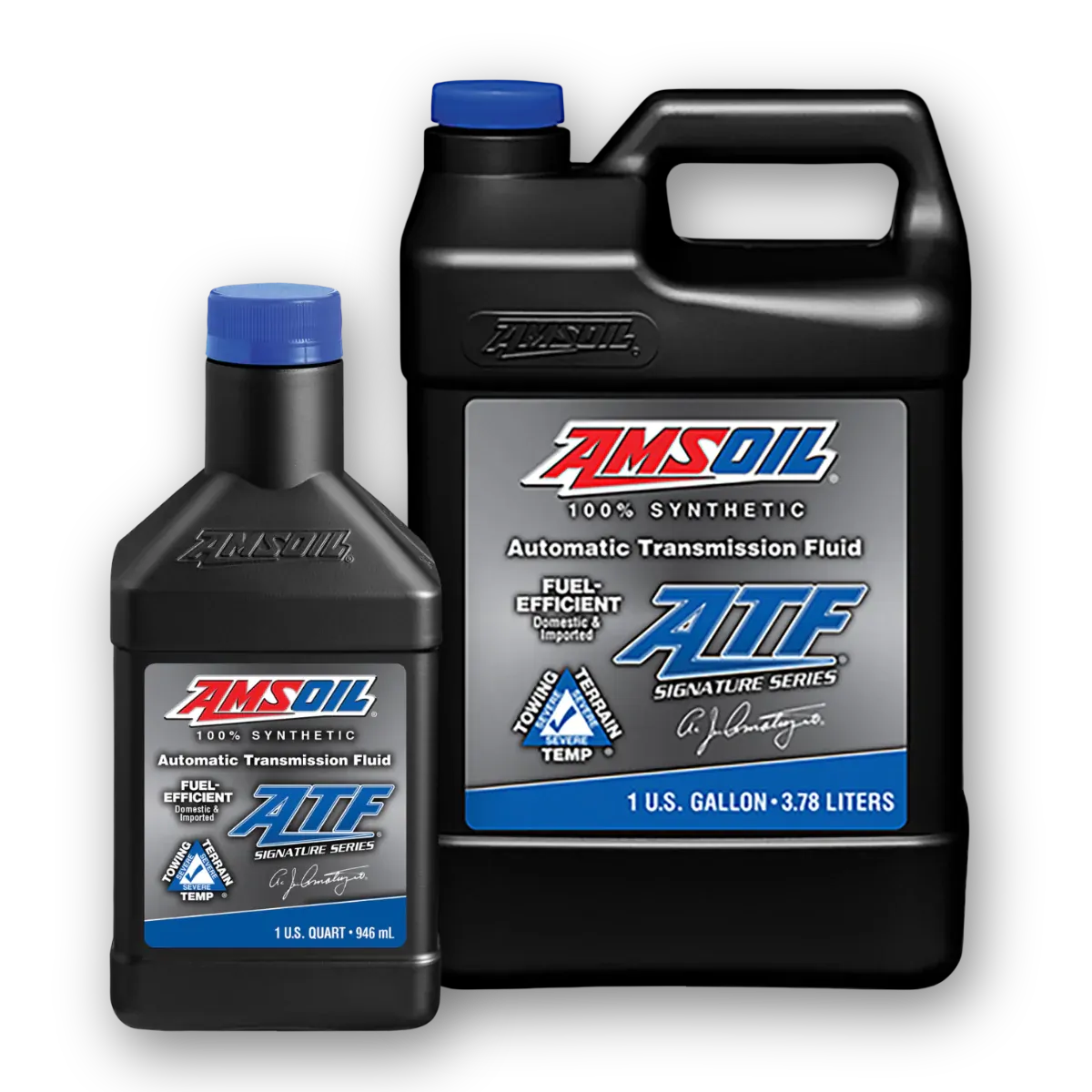
Premium 100% synthetic low-viscosity ATF for modern automatic transmissions. Recommended for ZF LifeguardFluid 8 and many ZF 8HP applications, plus a wide range of modern European, Asian and North American transmission specifications.
VIEW PRODUCT →
Continuously Variable Transmissions (CVT)
A continuously variable transmission operates differently from a conventional automatic. Instead of selecting between a fixed number of gear ratios, many automotive CVTs use a system of variable-diameter pulleys connected by a steel belt or chain.
By changing the effective diameter of the pulleys, the transmission can continuously vary its ratio, allowing the engine to operate at speeds suited to the driving conditions without conventional stepped gear changes.
Not every transmission described as a CVT uses the same mechanical arrangement, so lubricant selection must still be based on the particular transmission design.
How Does a CVT Work?
The following video, What Is a CVT?, explains the basic operating principles of a continuously variable transmission.
Why CVTs Need Specialised Transmission Fluid
In belt- and chain-driven CVTs, the fluid must provide suitable lubrication and friction characteristics for the transmission's pulley and traction system while also supporting hydraulic operation and component protection.
These requirements differ from those of many conventional automatic transmissions. Using an unsuitable fluid can interfere with transmission operation and potentially accelerate component wear.
CVT fluids are therefore not interchangeable with conventional ATF simply because both products are used in automatic transmissions.
AMSOIL Synthetic CVT Fluid
AMSOIL Synthetic CVT Fluid is formulated for compatible continuously variable transmissions requiring the specifications covered by the product. Always verify the manufacturer's fluid requirements before use.
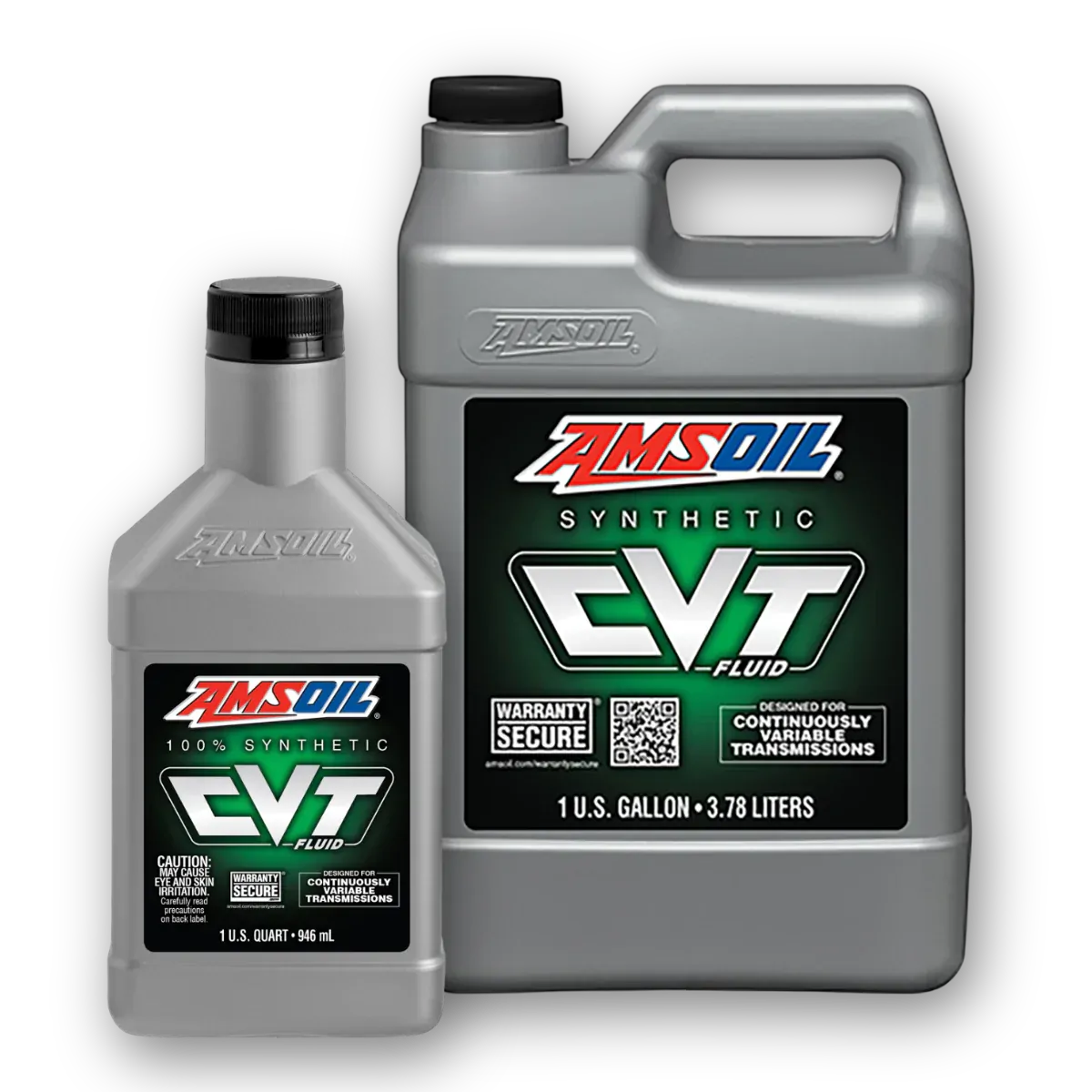
Premium 100% synthetic CVT fluid for belt- and chain-type transmissions, including applications requiring Nissan NS-2/NS-3, Subaru Lineartronic, Mitsubishi CVTF-J4 and Honda HCF-2 fluids.
VIEW PRODUCT →Dual-Clutch Transmissions (DCT)
A dual-clutch transmission combines aspects of a manual gearbox with automated clutch and gear selection. Rather than using a conventional torque converter, a typical DCT uses two clutches to manage power delivery through separate gear paths.
One clutch generally operates one group of gears, while the other operates the remaining group. This arrangement allows the transmission to prepare the next gear before completing a shift, enabling rapid gear changes with minimal interruption to power delivery.
Although a DCT can behave like a conventional automatic from the driver's perspective, its mechanical operation is fundamentally different.
How Does a Dual-Clutch Transmission Work?
The following video explains a dual-clutch transmission in relation to a conventional manual gearbox, illustrating how the two-clutch arrangement enables automated gear changes.
Wet-Clutch and Dry-Clutch DCTs
Dual-clutch transmissions can use wet or dry clutch systems. In a wet-clutch DCT, the clutch assemblies operate in lubricant, placing particular demands on the fluid's friction characteristics and thermal performance.
Dry-clutch DCTs use clutch assemblies that are not immersed in transmission fluid. However, their internal gearsets and control systems may still require specialised lubricants, depending on the transmission design.
Because DCT designs vary, it is important not to assume that all dual-clutch transmissions require the same fluid.
AMSOIL Synthetic DCT Fluid
AMSOIL Synthetic DCT Fluid is formulated for compatible dual-clutch transmission applications, providing the lubrication and friction performance required by the specifications it supports.
Always confirm compatibility with the particular transmission before selecting a DCT lubricant.

Premium 100% synthetic fluid for dual-clutch transmissions, including applications requiring Nissan GT-R R35, Ford WSS-M2C936-A, BMW DCTF-1, Mitsubishi SSTF-I and other specified DCT fluids.
VIEW PRODUCT →ATF vs CVT vs DCT: What's the Difference?
Although all three transmission types can change gear ratios without the driver operating a conventional clutch pedal, their mechanical designs and lubrication requirements differ considerably.
| Transmission Type | How It Works | Fluid Requirements |
|---|---|---|
| Conventional Automatic | Torque converter, planetary gearsets and hydraulically operated clutches. | Suitable ATF with the specified viscosity, hydraulic and friction characteristics. |
| CVT | Continuously variable ratios, commonly using a belt or chain and adjustable pulleys. | Specialised fluid matched to the CVT's traction, friction and hydraulic requirements. |
| DCT | Manual-style gearsets with two automatically controlled clutches. | Transmission-specific lubricant matched to the gearsets, clutch design and control system. |
Important: ATF, CVT and DCT fluids should never be treated as universally interchangeable. Even within one transmission type, different manufacturers and models may require different fluid specifications.
Why Transmission Fluid Specifications Matter
Transmission manufacturers design their systems around particular lubricant characteristics, including viscosity, friction performance, hydraulic response and compatibility with internal materials.
Some AMSOIL transmission fluids are formulated for numerous compatible specifications, while others are intended for more specialised applications. A broader range of applications does not remove the need to verify compatibility with the specific transmission.
Heat and Transmission Protection
Heat is one of the major stresses placed on transmission fluid. Towing, heavy loads, performance driving, stop-start operation and high ambient temperatures can increase transmission temperatures and accelerate lubricant degradation.
High-quality synthetic transmission fluids are formulated to resist oxidation and thermal breakdown while maintaining dependable lubrication and operating performance across changing temperatures.
However, improved thermal performance does not make an otherwise incompatible fluid suitable for a transmission.
How to Find the Correct Transmission Fluid
The most reliable approach is to identify the exact transmission and confirm the manufacturer's required fluid specification.
- Identify whether the vehicle uses a conventional automatic, CVT or DCT.
- Check the manufacturer's required transmission fluid specification.
- Confirm the recommended AMSOIL product supports that specification.
- Follow the manufacturer's fluid level, servicing and replacement procedures.
Use the AMSOIL Vehicle Product Finder to identify recommended lubricants for your vehicle by make, model, year and transmission application.
Further Reading: ZF 8HP Automatic Transmissions
The ZF 8HP is a widely used eight-speed automatic transmission found in numerous European and performance vehicles. Although it is a conventional torque-converter automatic, its fluid requirements are specific to the transmission design and application.
For a closer look at transmission specifications and suitable AMSOIL fluids, read our ZF 8HP Transmission Fluid Guide.