
Most drivers have heard of octane, but cetane is much less familiar. For diesel engines, however, cetane is an important measure of fuel ignition quality and can influence how readily the engine starts, how smoothly it runs and how effectively combustion takes place.
Cetane Measures How Readily Diesel Fuel Ignites
Diesel engines operate differently from petrol engines. Instead of using a spark plug to ignite the air-fuel mixture, a diesel engine compresses air until it becomes extremely hot, then injects fuel into that hot compressed air.
There is a short period between the moment fuel is injected and the moment combustion begins. This is known as ignition delay . Cetane number is closely related to this ignition behaviour: a higher cetane number generally indicates fuel that ignites more readily after injection.
In simple terms: octane tells us how resistant petrol is to unwanted ignition, while cetane tells us how readily diesel fuel will ignite under compression.
This is why calling cetane simply “diesel octane” can be misleading. Both numbers describe fuel ignition characteristics, but the desirable behaviour is effectively opposite.
Octane vs Cetane
Octane and cetane both describe how a fuel behaves during ignition, but they are used for different fuels and different combustion systems.
A higher octane rating means petrol is more resistant to uncontrolled autoignition or knock. In a spark-ignition engine, that resistance is desirable because combustion should begin when commanded by the spark plug.
A higher cetane number means diesel fuel is generally more willing to ignite when injected into hot compressed air. In a compression-ignition engine, prompt and predictable ignition is desirable.
Why Ignition Delay Matters
Fuel does not begin burning at exactly the same instant it leaves the injector. A small ignition delay is part of normal diesel combustion, but the length and consistency of that delay influence the way combustion develops inside the cylinder.
If ignition is delayed for longer, more fuel can enter the combustion chamber before burning begins. When combustion finally starts, a larger amount of fuel may begin burning over a shorter period, contributing to the characteristic harsh combustion noise often associated with diesel knock.
Fuel with stronger ignition quality can shorten this delay and promote more controlled combustion. This can be particularly noticeable during cold starting, when cylinder temperatures are lower and the conditions required for reliable ignition are harder to achieve.
That does not mean the highest possible cetane number automatically creates unlimited extra power. The engine design, injection strategy, fuel quality and operating conditions all influence how much benefit can be realised.
What Can Better Cetane Quality Do?
Improving diesel fuel's ignition quality can help address several areas of engine operation. The exact result depends on the engine and the fuel being used, but cetane improvement is commonly associated with better starting and smoother combustion.
Fuel that ignites more readily can help improve startability, particularly when the engine and ambient temperatures are low.
Reduced ignition delay can help combustion begin in a more controlled manner, contributing to smoother engine operation.
More predictable ignition can help reduce the harsh combustion characteristic commonly described as diesel knock.
Improved ignition quality can support more effective combustion, which may help reduce visible smoke and improve overall fuel utilisation.
Why Cetane Boost Can Be Useful
Diesel fuel must meet applicable fuel standards, but that does not mean every tank of diesel will have identical ignition characteristics. Fuel composition can vary between suppliers, batches, regions and seasons.
Some engines are also more sensitive to fuel quality than others. Modern high-pressure common-rail systems precisely control injection timing and quantity, while older mechanical diesel engines may respond differently to changes in fuel quality.
A cetane-improving additive provides a way to deliberately increase the ignition quality of the fuel rather than relying solely on the cetane level already present at the pump.
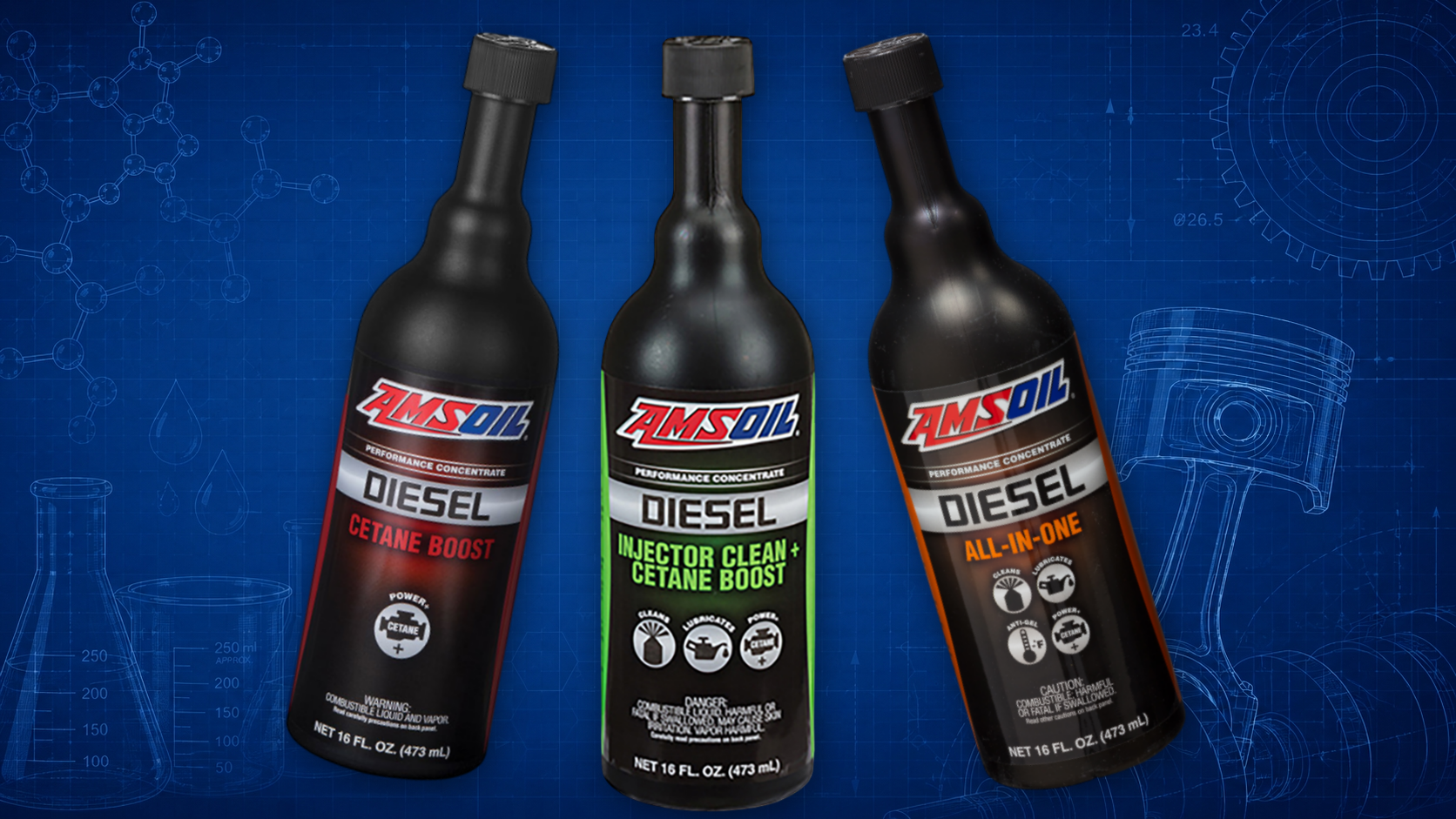
AMSOIL states that its Diesel Cetane Boost can increase cetane by up to eight points and is designed to improve ignition quality, starting, idle quality and overall combustion performance.
Cetane Boost Is Not Just “Horsepower in a Bottle”
Cetane is an important fuel property, but it is only one part of diesel performance. Increasing cetane does not override the engine's calibration, repair worn injectors, restore compression or compensate for every other fuel-quality problem.
The greatest benefit is generally seen where the existing fuel's ignition quality leaves room for improvement. Once combustion behaviour is already well matched to the engine, continuously increasing cetane does not necessarily continue producing proportional gains.
It is better to think of cetane boost as a fuel-quality tool: something that can help improve how readily the fuel ignites and how consistently the combustion process begins.
Which AMSOIL Diesel Additive Is Right for You?
Cetane improvement can be purchased on its own or combined with injector cleaning and other diesel-fuel treatments. The right product depends on what you are trying to achieve.
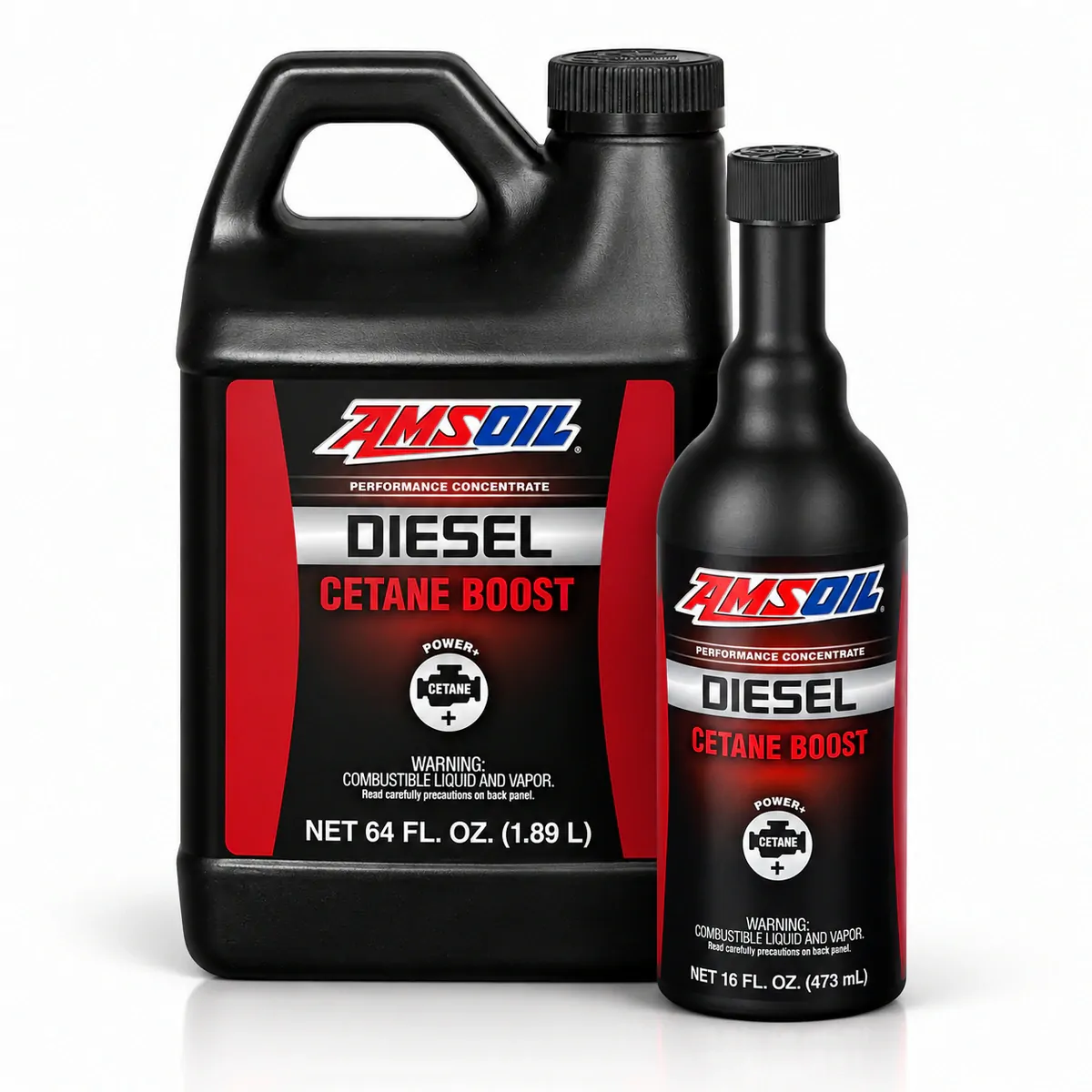 CETANE FOCUSED
The straightforward choice when the primary goal is to improve diesel fuel ignition quality. AMSOIL states that Diesel Cetane Boost can raise cetane by up to eight points while helping improve starting and smooth engine operation.
View Diesel Cetane Boost →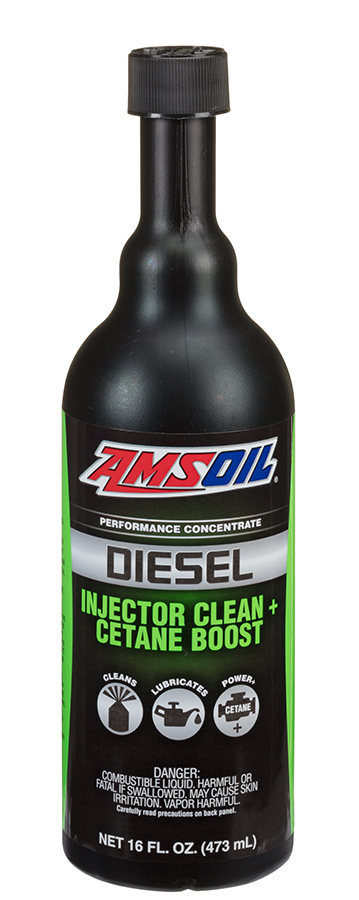 CLEAN + BOOST
Combines injector detergency with improved lubricity and increased cetane. A good option when you want to address both injector cleanliness and fuel ignition quality in one treatment.
View Injector Clean + Cetane Boost →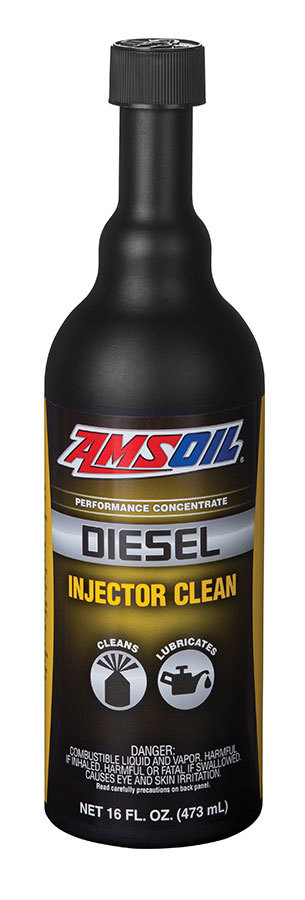 COMPLETE TREATMENT
For owners wanting broader diesel-fuel treatment, the all-in-one option combines cetane improvement with fuel-system cleaning and additional protection in a single additive package.
View All-In-One Diesel →Good Diesel Combustion Starts With Good Ignition Quality
Cetane number describes an important part of diesel-fuel behaviour: how readily the fuel begins combustion after it is injected into hot compressed air. Higher cetane generally corresponds with shorter ignition delay and more readily initiated combustion.
For drivers, that can translate into easier starting, smoother operation and more consistent combustion, particularly where the original fuel quality is less than ideal.
So while cetane may not be as familiar as octane, it plays an equally important role in understanding whether a fuel is well suited to the way a diesel engine actually works.
Explore AMSOIL diesel fuel additives for cetane improvement, injector cleaning, lubricity and complete fuel-system treatment.
Explore Diesel Fuel Additives →