
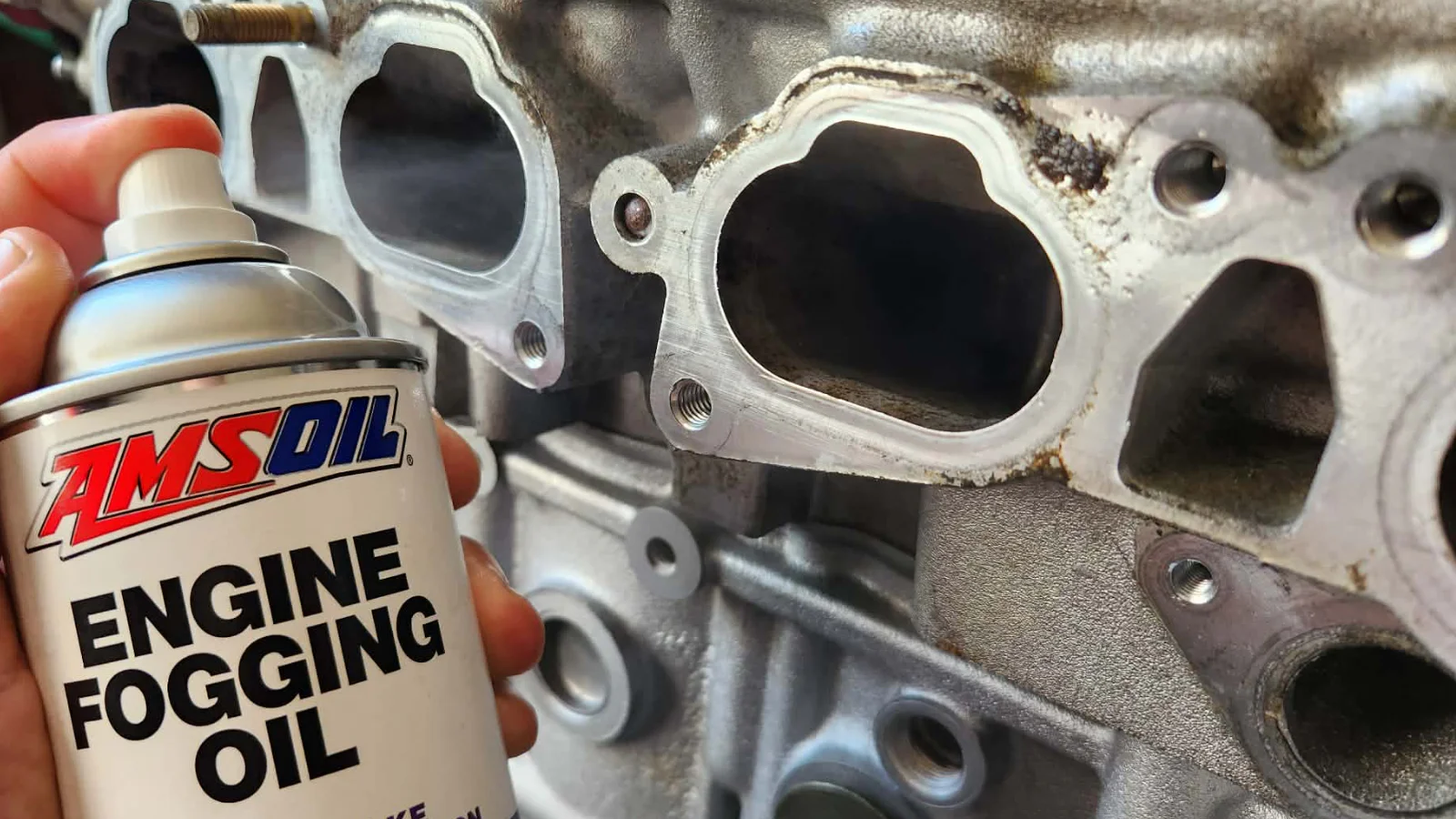
Engines Can Corrode While Doing Absolutely Nothing
Storage might seem like an easy life for an engine. There is no combustion pressure, no high temperature operation and no mechanical load. Unfortunately, an engine that is sitting still can develop a completely different set of problems.
Changes in ambient temperature can allow moisture to condense inside an engine. When that moisture reaches unprotected steel or iron surfaces, corrosion can begin forming on components such as cylinder walls, piston rings, bearings and other exposed metal surfaces.
An engine that remains unused for an extended period may also lose some of the protective oil film normally present during regular operation. When the engine is eventually started again, the first few moments of operation can occur before normal oil circulation has been fully re-established.
Fogging oil is designed specifically for this period of inactivity. Rather than lubricating an operating engine in the conventional sense, its job is to leave a persistent protective film on internal surfaces during storage and help guard against both corrosion and dry starts.
A Protective Oil Film Delivered by Aerosol
AMSOIL Engine Fogging Oil is supplied as an aerosol, allowing the product to be distributed into areas that would otherwise be difficult to coat evenly. Once applied, the volatile portion of the product dissipates and leaves behind a tenacious oil film containing corrosion protection.
That film retention is particularly valuable when equipment may sit unused for weeks or months. AMSOIL recommends Engine Fogging Oil for a broad range of two- and four-stroke equipment including motorcycles, ATVs, marine engines, lawn equipment, generators, cars and trucks.
The concept is particularly useful in engines where cylinder orientation or engine design can make conventional oil distribution during storage less effective. Outboard marine engines are one obvious example, but the underlying problem is not unique to marine equipment.
Classic Cars, Performance Engines and Race Cars Need Protection Too
Fogging oil is often marketed around seasonal equipment, but the same corrosion mechanisms apply to automotive engines.
A classic car or competition vehicle may spend considerably more time stationary than a normal daily driver. During that time, some valves may remain open, allowing humid outside air to reach internal engine surfaces through the intake or exhaust system. A car stored in a damp or poorly controlled garage can therefore remain exposed to moisture even though the vehicle itself never moves.
This was one of the applications discussed by AMSOIL's Len Groom in an EngineLabs technical feature examining the use of Engine Fogging Oil outside its more traditional small-engine and marine markets. Groom explained that although a race engine may not encounter the same environment as a personal watercraft, the materials being protected and the basic corrosion problem remain much the same.
Classic & Collector Vehicles
Useful where an engine may remain unused for extended periods between drives, particularly in humid storage environments.
Race & Competition Engines
Performance engines can spend weeks or months between events, making storage protection relevant even when the vehicle never sees conventional seasonal use.
Motorcycles & Powersports
Ideal for machines that may be ridden frequently at one time of year and then remain stationary for a prolonged period.
Marine & Small Engines
Traditional fogging-oil applications include outboards, personal watercraft, generators, lawn equipment and other intermittently used engines.
Protecting Engines That Aren't Even Finished Yet
One of the more interesting uses discussed by EngineLabs and Len Groom involves engines that are not simply stored, but are actually in the process of being built.
A bare machined engine block contains numerous exposed surfaces that cannot simply be painted or permanently coated. Cylinder bores, deck surfaces, bearing saddles and journals can all be vulnerable to surface corrosion while an engine is waiting for machining, parts or final assembly.
According to Groom, fogging oil can be applied directly to these exposed metal surfaces. The aerosol carrier allows the product to spread easily before evaporating, leaving behind a tacky protective oil film and corrosion inhibitors.
The same approach can be used on assembled cylinder heads, short blocks and other engine assemblies that may sit for a period before final assembly. Critical gasket surfaces should, of course, be correctly cleaned and prepared before the engine is completed.
This makes Engine Fogging Oil particularly interesting for engine builders, restoration workshops and enthusiasts whose project engine may spend considerably longer on an engine stand than originally planned.
This application was discussed with AMSOIL's Len Groom in the EngineLabs article “Fighting Rust: Using Engine Fogging Oil to Combat Moisture”.
Machine-Shop Equipment and Precision Metal Surfaces
The EngineLabs discussion uncovered another application that is easy to overlook: protecting exposed precision-machined workshop equipment.
Machine tools such as lathes and milling machines can have large areas of bare, accurately machined metal that must remain free of corrosion. Mill tables, milling vices and lathe ways are examples of surfaces where even light rust is undesirable, particularly in workshops exposed to high humidity.
EngineLabs asked Groom whether AMSOIL Engine Fogging Oil could be used for this purpose. His response was that it was particularly well suited to the application because it provides a light oily protective coating rather than the heavier wax-like film left by some long-term metal preservatives.
That distinction matters on precision machinery. A heavy storage coating can require considerable cleaning before the equipment is returned to use, whereas a light oil film can simply be wiped away where necessary.
There is one trade-off: a tacky oil film can attract airborne dust. On exposed workshop machinery, Groom recommended wiping the surface before use where dust accumulation is a concern.
Fogging Oil Isn't a Universal Workshop Spray
The unusual applications above do not mean Engine Fogging Oil should automatically replace every penetrating oil, assembly lubricant, cutting fluid or long-term metal preservative in the workshop.
Its strength is relatively specific: it is easy to apply, reaches difficult surfaces and leaves behind a persistent oily film designed to help protect metal from moisture and corrosion.
For internal engine storage, that is exactly the job it was designed to perform. For engine components awaiting assembly and certain precision-machined workshop surfaces, those same characteristics can also be useful.
For equipment-specific storage procedures, always follow the manufacturer's recommendations. Application methods also vary between engine types, particularly on modern engines fitted with sensitive intake sensors and other electronic components.
Rust Doesn't Care Whether the Engine Is Running
The expensive part of corrosion is rarely the visible patch of brown on a piece of metal. It is what that corrosion means when the affected surface is a cylinder bore, bearing journal, precision-machined engine component or machine-tool surface.
Engines and mechanical components can represent substantial investments in parts, machining and labour. Protecting those surfaces while equipment is inactive is considerably easier than repairing corrosion after it has occurred.
That is ultimately what makes fogging oil useful. It solves a fairly simple problem: when machinery stops moving, the protection still needs to remain behind.
AMSOIL Engine Fogging Oil
Designed to help protect internal engine components against corrosion and dry starts during storage and long periods of inactivity.
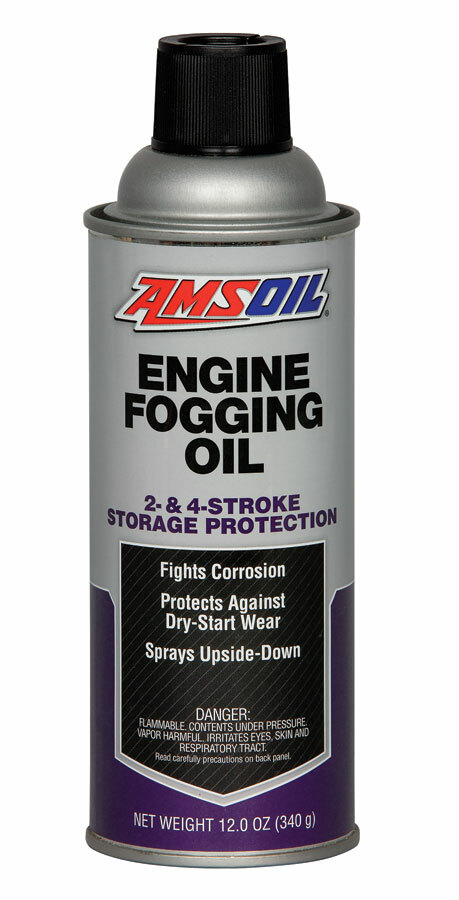
Protection for Stored Seasonal Equipment. Highly-effective rust preventive designed to protect internal engine components during storage or long periods of inactivity. Ideal for outboard motors, lawn and garden equipment, motorcycles, snowmobiles, ATVs, m
VIEW PRODUCT →