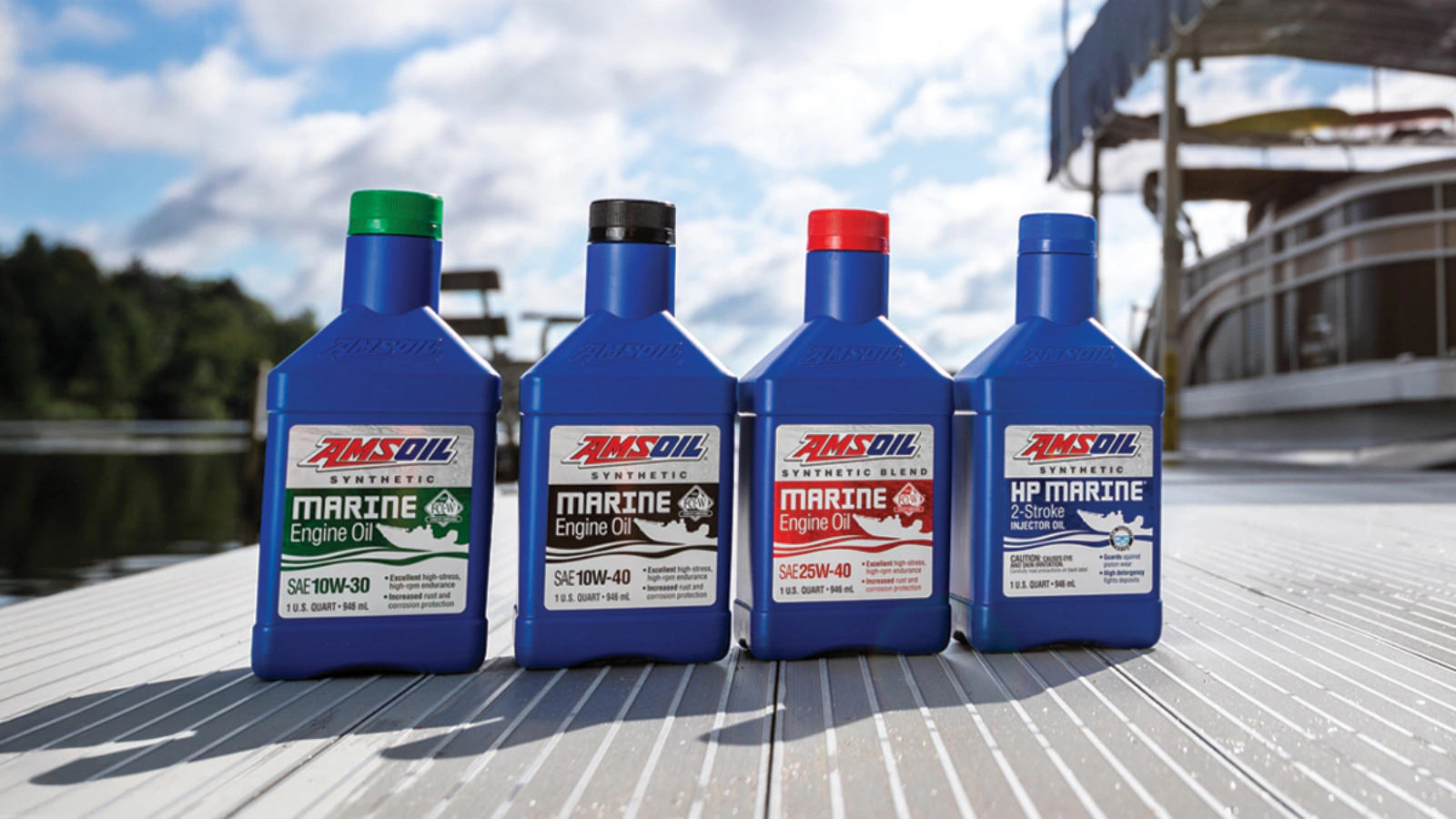
Marine engines operate under demanding conditions, including sustained high loads, extended running periods and regular exposure to moisture. Choosing the correct marine engine oil helps protect critical components, control deposits and maintain dependable performance throughout the boating season.
AMSOIL offers synthetic marine engine oils for suitable two-stroke and four-stroke applications, with formulations designed to meet the different lubrication requirements of each engine type.
Why Marine Engines Need Specialised Oil
Unlike most road vehicles, which regularly accelerate, decelerate and operate under relatively light loads, boat engines can spend extended periods working against the continuous resistance of water.
This places significant demands on engine oil. Sustained operating temperatures, high loads and exposure to moisture make wear protection, oxidation resistance and deposit control particularly important.
Marine engine oils are formulated to address these operating conditions, but the correct lubricant still depends on the engine design and manufacturer's requirements.
Two-Stroke vs Four-Stroke Marine Engine Oil
Four-Stroke Marine Engine Oil
Four-stroke marine engines use a circulating oil supply to lubricate internal components, much like a conventional automotive engine. However, their operating conditions and lubricant specifications can differ substantially from those of a passenger vehicle.
AMSOIL synthetic four-stroke marine oils are designed to provide wear protection, resist oxidation and help control deposits during sustained operation.
When selecting a four-stroke marine oil, confirm the required viscosity and applicable engine manufacturer specifications. An automotive engine oil should not automatically be considered interchangeable with a marine lubricant.
Two-Stroke Marine Engine Oil
Two-stroke marine engines use a different lubrication system. Rather than retaining oil in a conventional crankcase, the lubricant is introduced through oil injection or fuel mixing and is consumed during engine operation.
Two-stroke marine oils must provide effective lubrication while also supporting clean combustion and controlling deposit formation.
Different two-stroke engines can require different oil specifications. Always check the manufacturer's recommendations, including whether the engine requires a TC-W3 lubricant or another specified formulation.
Important: Two-stroke and four-stroke marine engine oils are not interchangeable.
Choosing the Correct Marine Engine Oil
Before selecting an oil, identify the engine type and check the manufacturer's lubrication requirements.
- Engine design: Two-stroke or four-stroke.
- Oil specification: The required marine performance standard or manufacturer approval.
- Viscosity: The recommended SAE viscosity grade for four-stroke engines.
- Lubrication system: Oil injection, premixing or circulating crankcase lubrication.
- Operating conditions: Consider sustained loads, temperature and the marine environment.
For application-specific recommendations, use the AMSOIL application lookup to identify compatible lubricants for your engine or equipment.
AMSOIL Synthetic Marine Engine Oils
Explore the AMSOIL marine engine oil range below for specialised two-stroke and four-stroke lubricants designed for demanding marine applications.
AMSOIL Synthetic Marine Engine Oils
AMSOIL offers specialised two-stroke and four-stroke engine oils for a range of marine applications. Select the appropriate formulation based on your engine design, lubrication system and manufacturer specifications.
Two-Stroke Marine Engine Oils
AMSOIL HP Marine 2-Stroke Engine Oil is formulated for compatible two-stroke marine engines. For applications specifically suited to 100:1 premix lubrication, AMSOIL Outboard 100:1 Pre-Mix 2-Stroke Oil provides another option. Always follow the engine manufacturer's lubrication requirements rather than assuming these products are interchangeable.
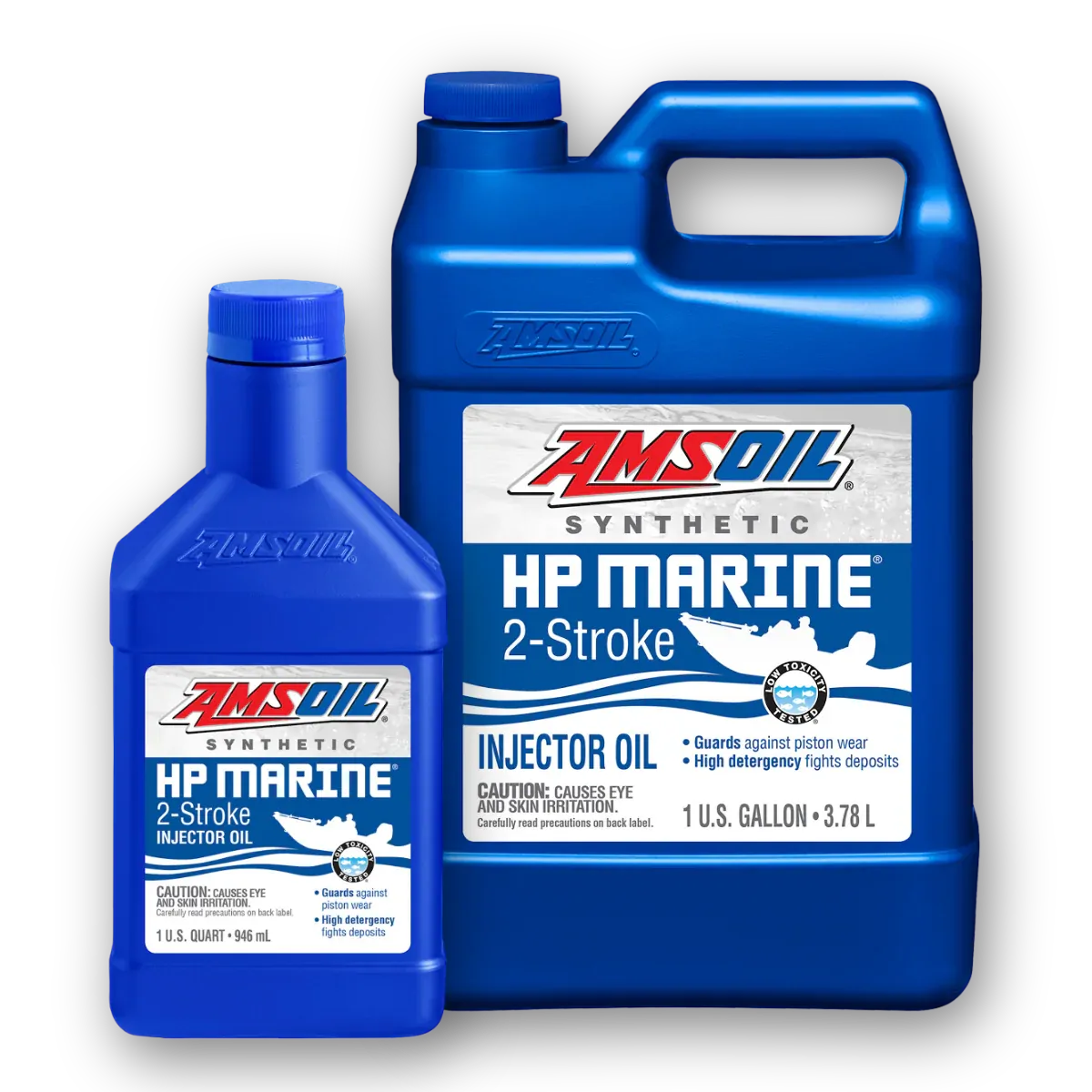
Excellent for Evinrude E-TEC factory-lean setting. Helps prevent deposits. Protects against wear. Low smoke. Protects against rust. Low aquatic toxicity. Superior performance as an injection oil or at 50:1 pre-mix.
VIEW PRODUCT →
Designed for pre-mix applications as lean as 100:1 ratios. Improves throttle response and lowers or eliminates smoke. Minimizes deposit formation and lowers emissions.
VIEW PRODUCT →Four-Stroke Marine Engine Oils
AMSOIL Marine Four-Stroke Engine Oils are available in SAE 10W-30, 10W-40 and 25W-40 viscosity grades. The correct viscosity depends on the engine manufacturer's requirements and the intended application.
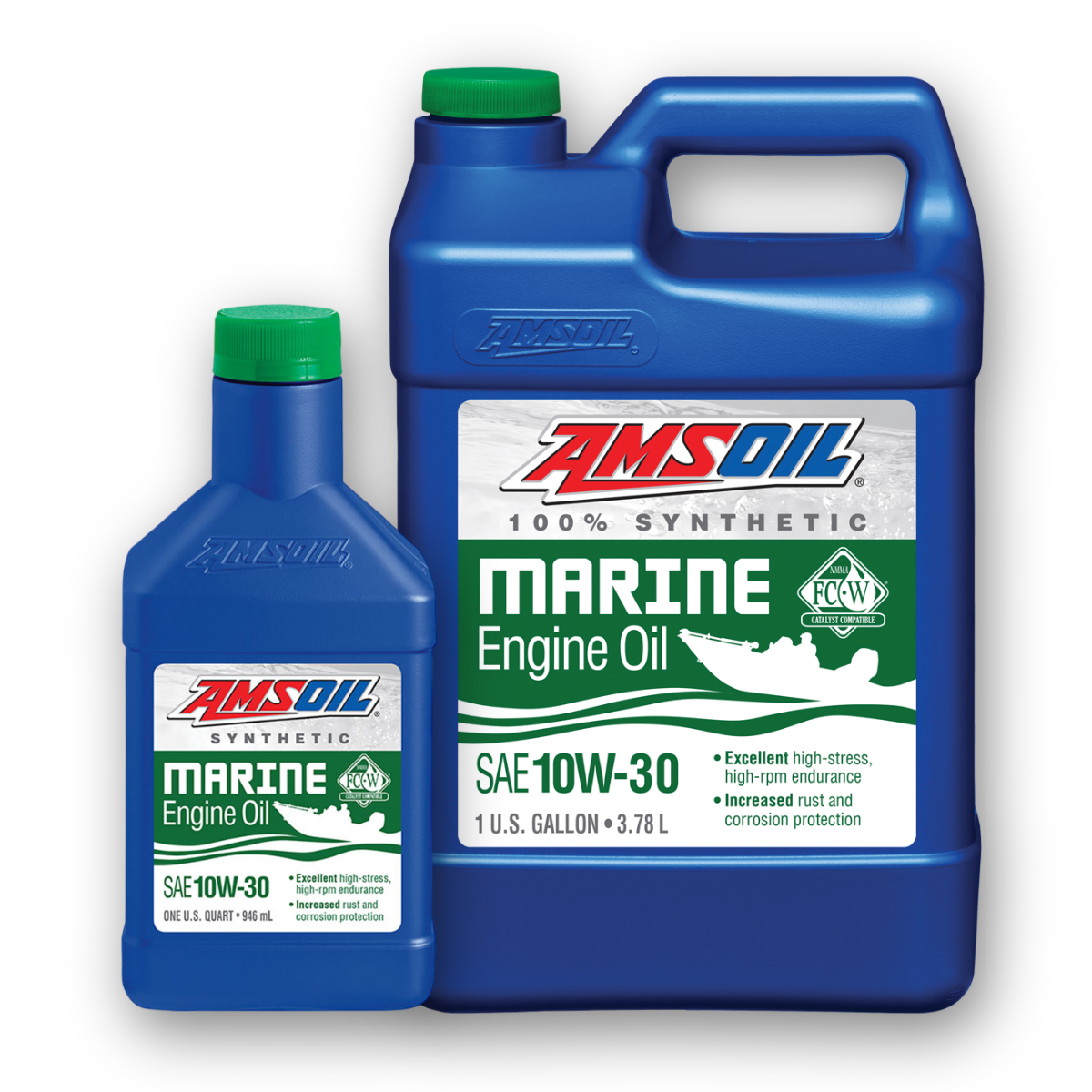
Excellent high-stress, high-rpm endurance. Increased rust and corrosion protection. NMMA FC-W Catalyst Compatible. Perfect for hardcore anglers and boaters who demand the best protection for their marine engines.
VIEW PRODUCT →
Excellent high-stress, high-rpm endurance. Increased rust and corrosion protection. NMMA FC-W Catalyst Compatible. Perfect for hardcore anglers and boaters who demand the best protection for their marine engines.
VIEW PRODUCT →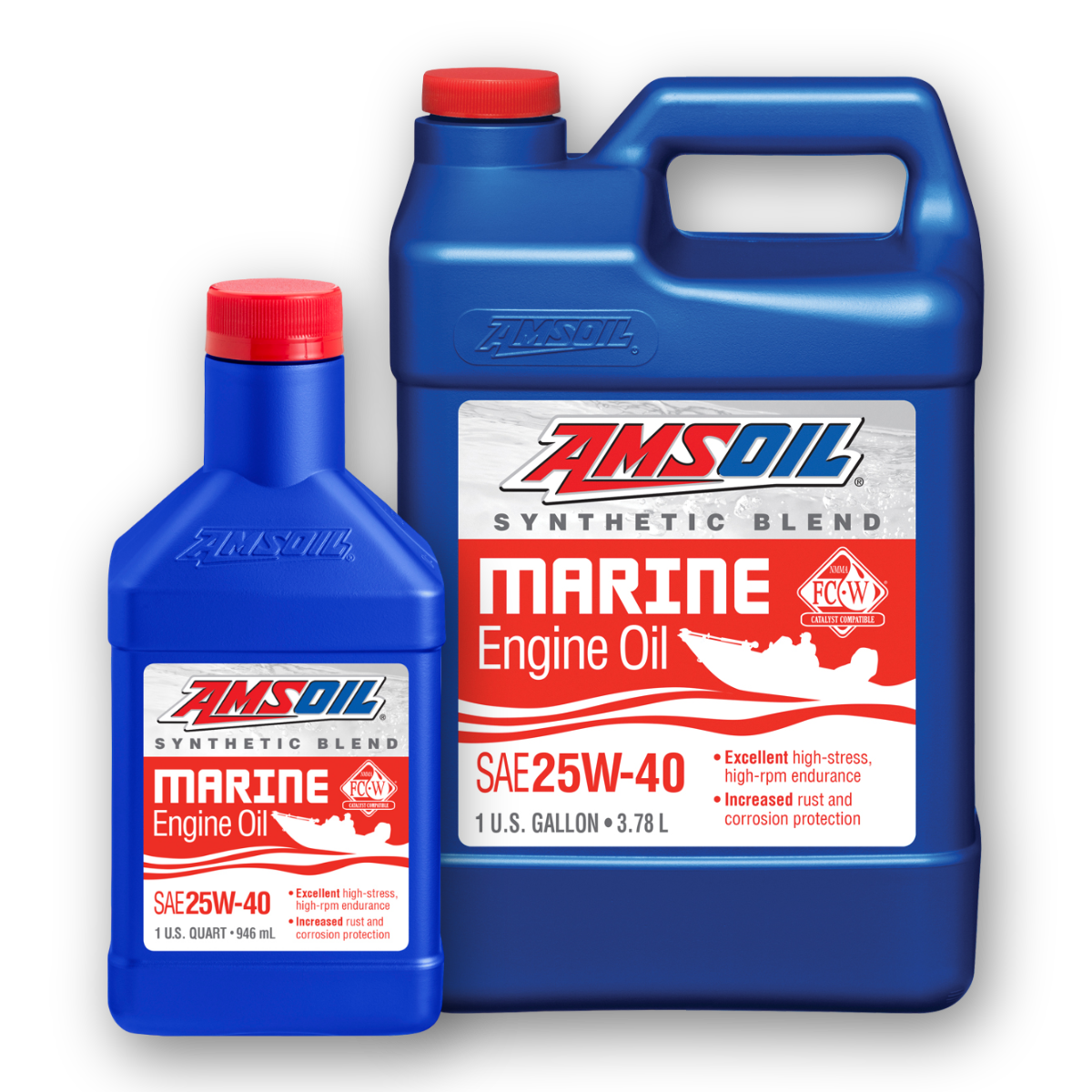
Excellent high-stress, high-rpm endurance. Increased rust and corrosion protection.
VIEW PRODUCT →Don't Forget Lower-Unit Lubrication
Engine oil is only one part of marine maintenance. Outboard and sterndrive gearcases require a separate gear lubricant to protect gears and bearings under load.
Always use the appropriate lubricant for the gearcase and follow the manufacturer's recommended service intervals, particularly where water contamination may be a concern.