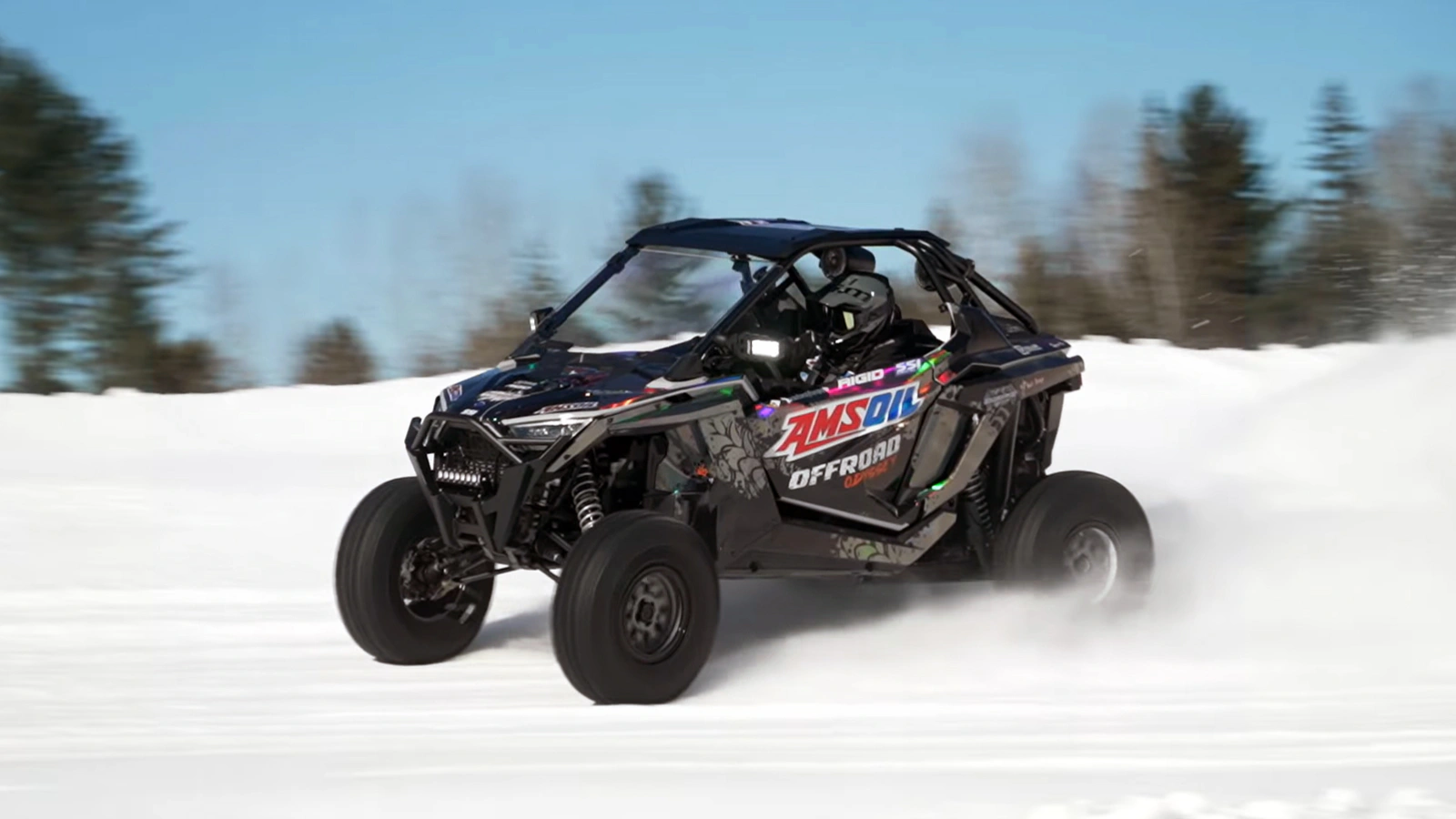
ATVs, UTVs and motorcycles often use similar engine technology, but the demands placed on their lubricants can be very different. While motorcycles are commonly associated with high engine speeds and road use, ATVs and UTVs may spend hours operating at relatively low speeds while towing, carrying loads or navigating difficult terrain.
These differences can influence operating temperatures, mechanical loads and the type of lubricant required. However, choosing between motorcycle oil and ATV/UTV oil is not simply a matter of which vehicle works harder. Engine design, transmission arrangement, clutch type and manufacturer specifications are equally important.
What Makes ATV and UTV Engines Different?
ATV and UTV engines operate across a wide range of conditions, from recreational trail riding to agricultural and commercial work. A utility vehicle may spend extended periods climbing steep terrain, towing equipment or carrying heavy loads without the airflow associated with sustained road speeds.
These operating conditions can place considerable demands on engine cooling systems and lubricants. Engine oil must maintain a protective film between moving components while resisting oxidation, deposits and viscosity changes at elevated temperatures.
Motorcycles can experience equally demanding conditions, particularly in high-performance or off-road applications. The important difference is the combination of engine design, operating conditions and lubrication requirements rather than any assumption that one vehicle category is inherently more severe.
Engine Oil, Transmissions and Wet Clutches
One of the most important differences between powersports vehicles is how their engines, transmissions and clutches are lubricated.
Motorcycles with Shared Engine and Transmission Oil
Many motorcycles use a shared lubrication system in which the same oil circulates through the engine, gearbox and wet clutch. This requires a lubricant that can protect engine components, withstand the mechanical shearing action of transmission gears and provide suitable friction characteristics for the clutch.
For motorcycles requiring JASO MA or MA2 performance, the oil must meet the appropriate wet-clutch friction requirements. An engine oil that performs well in a conventional automotive application is not automatically suitable for a shared-sump motorcycle.
Learn more in our guide to JASO motorcycle oil standards.
ATVs and UTVs with Separate Drivetrains
Many modern ATVs and UTVs use separate lubrication systems for the engine and drivetrain. Depending on the vehicle, the transmission may use a belt-driven continuously variable transmission (CVT), a dedicated gearbox or another manufacturer-specific arrangement.
Where the engine oil does not lubricate a wet clutch or shared gearbox, it may not need the same friction characteristics as a JASO MA or MA2 motorcycle oil. Instead, the formulation can be tailored to the requirements of that particular engine and its operating environment.
However, not all ATVs and UTVs use separate lubrication systems. Some models share oil between the engine, transmission or clutch, making the manufacturer's specified lubricant requirements essential.
Why Heat Matters in ATV/UTV Engines
Heat is one of the major factors affecting lubricant performance. Sustained engine loads, difficult terrain, restricted airflow and high ambient temperatures can all increase the demands placed on an ATV or UTV's cooling and lubrication systems.
Elevated temperatures accelerate chemical reactions involved in oil oxidation. As a general engineering rule of thumb, oxidation reaction rates may approximately double with every 10°C increase in temperature, although the actual relationship depends on the lubricant formulation and operating conditions.
Oxidation can contribute to viscosity changes, deposit formation and the depletion of antioxidant additives. High-quality synthetic lubricants are formulated to resist these effects, but they are not immune to degradation and must still be serviced according to the appropriate maintenance schedule.
How AMSOIL Tests ATV/UTV Engine Oil
AMSOIL evaluates its powersports lubricants through controlled dynamometer testing, oil analysis and component inspections. These methods help engineers assess how lubricants respond to sustained operating loads and how their properties change during service.
Polaris RZR Pro XP: 50-Hour Dynamometer Test
In one test, AMSOIL operated a Polaris RZR Pro XP on a dynamometer for 50 hours using AMSOIL 0W-50 Synthetic ATV/UTV Motor Oil. Engine oil samples were collected at 10-hour intervals, allowing changes in viscosity, oxidation, nitration, fuel dilution and wear-metal concentrations to be monitored.
Over the test, the engine oil's measured viscosity at 100°C decreased from 19.02 cSt to 15.41 cSt, a reduction of approximately 19%. The largest change occurred during the first 10 hours. Meanwhile, the reported oxidation indicator remained effectively unchanged, and fuel dilution was recorded as 0%.
These results demonstrate why lubricant condition cannot be assessed using a single measurement. Viscosity, oxidation and wear-metal concentrations provide different information about the oil and its operating environment.
Polaris Ranger XD 1500: 6,000-Mile Endurance Test
AMSOIL also tested its powersports lubricants in a Polaris Ranger XD 1500 carrying more than 450 kg of ballast. The vehicle was instrumented and driven over a 3.5-mile mixed-terrain course to record representative operating loads.
The recorded load profiles were subsequently reproduced on a dynamometer for 6,000 miles (approximately 9,656 km) of simulated operation.
Importantly, the test followed the vehicle manufacturer's lubricant service intervals. Engine and differential fluids were changed at 2,000-mile intervals, while the STEELDRIVE CVT transmission fluid was tested over its specified 6,000-mile interval.
Following the endurance test, drivetrain components were disassembled for inspection. This approach combines repeatable operating conditions with physical examination of components after extended use.
Can You Use Motorcycle Oil in an ATV or UTV?
In some applications, yes. However, the correct choice depends on the vehicle manufacturer's lubricant specifications rather than the category printed on the bottle.
A motorcycle oil may be suitable for an ATV engine if it meets the required viscosity grade, performance specifications and clutch compatibility requirements. Conversely, an ATV/UTV-specific oil should not automatically be used in a motorcycle with a shared-sump wet clutch unless the necessary specifications are met.
Before selecting an oil, check:
- The manufacturer's recommended SAE viscosity grade.
- Required API, JASO or other applicable performance specifications.
- Whether the engine shares oil with the transmission or wet clutch.
- Any manufacturer-specific lubricant requirements.
- The prescribed service interval and severe-service maintenance recommendations.
Choosing the Right AMSOIL ATV/UTV Lubricant
AMSOIL offers synthetic lubricants developed for powersports applications, including dedicated ATV/UTV engine oils and drivetrain fluids.
Selecting the correct product requires more than matching the viscosity grade. Engine oils, gear lubricants and CVT fluids perform different functions and are not interchangeable simply because they are used in the same vehicle.
Always confirm compatibility with the vehicle manufacturer's specifications and recommended service requirements.
The Bottom Line
ATV/UTV oil and motorcycle oil share many fundamental requirements, including wear protection, thermal stability and resistance to deposits. Their differences arise primarily from engine architecture, clutch and transmission design, operating conditions and the specifications they are formulated to meet.
A dedicated ATV/UTV lubricant can be an appropriate choice where its formulation matches the vehicle's requirements, but motorcycle oil is not automatically unsuitable, nor is ATV/UTV oil universally interchangeable with motorcycle oil.
The best approach is to identify the correct lubricant specification for each component and follow the manufacturer's recommended maintenance schedule.