
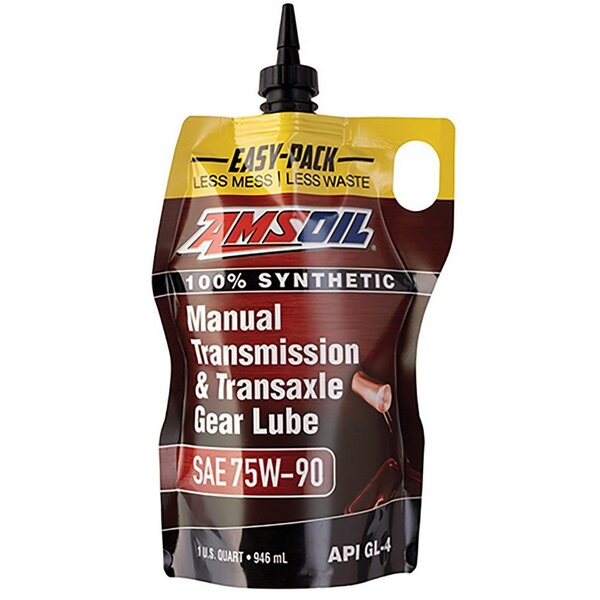
API GL-4 vs GL-5 Gear Oil: What's the Difference?
When choosing an engine oil, a newer performance specification will often supersede an older one. Gear oils are different. Seeing API GL-5 on a bottle does not mean it is simply a newer or better version of API GL-4, and it should not automatically be substituted into a manual transmission that specifies GL-4.
GL-4 and GL-5 describe different gear-lubricant performance requirements. The correct choice depends on the component being lubricated, its gear design, materials, synchroniser requirements and the specification called for by the vehicle or equipment manufacturer.
This distinction is particularly important for older manual transmissions and transaxles, where using an inappropriate gear lubricant can affect synchroniser operation and shift quality.
Quick Answer: GL-4 vs GL-5
| API GL-4 | API GL-5 |
|---|---|
| Commonly specified for manual transmissions and transaxles requiring moderate extreme-pressure performance | Designed for more severe gear-loading conditions, particularly hypoid final drives and differentials |
| Frequently associated with synchronised manual transmissions | Frequently associated with differentials and hypoid gear sets |
| Friction characteristics can be important to synchroniser operation | Higher extreme-pressure performance does not automatically make the lubricant suitable for a GL-4 synchronised transmission |
| Use where GL-4 is specified | Use where GL-5 is specified |
What Does API GL Mean?
The API GL classifications are performance categories used for automotive gear lubricants. The classifications distinguish lubricants intended for different combinations of gear design, load and operating severity.
One of the most common misconceptions is that the number represents a simple progression in quality:
GL-5 is a higher number than GL-4, therefore GL-5 must be better.
That is not how the classifications should be interpreted.
A GL-5 lubricant is designed to provide the extreme-pressure performance required by applications such as heavily loaded hypoid gears. A GL-4 lubricant is designed around a different level and type of gear-oil performance and is commonly specified for synchronised manual transmissions and transaxles.
The question is therefore not “which specification is better?” but “which specification does this component require?”
What Is API GL-4?
API GL-4 gear oils are intended for gear applications requiring moderate extreme-pressure protection and are particularly familiar in manual transmissions and transaxles.
Inside a manual transmission, the lubricant has several jobs. It must protect gears and bearings against wear, resist oxidation and viscosity loss, flow adequately at low temperatures and maintain an appropriate lubricant film at operating temperature.
In a synchronised transmission, however, the oil also interacts directly with the synchronisers.
This makes manual transmission lubricant selection more complicated than simply choosing the oil with the greatest possible extreme-pressure capability.
What Is API GL-5?
API GL-5 lubricants provide the high level of extreme-pressure performance required by severe gear applications, particularly hypoid gear sets commonly found in automotive differentials.
Hypoid gears operate with substantial sliding contact between the gear teeth in addition to rolling contact. This can create extremely high local loads and requires robust protection against scuffing and wear.
For that reason, GL-5 is an extremely important specification for differential and final-drive lubricants.
But the fact that GL-5 provides greater extreme-pressure capability does not mean that it should automatically replace a GL-4 lubricant in every component.
Why Isn't GL-5 Automatically Better Than GL-4?
A lubricant can provide excellent protection for a hypoid differential and still be the wrong lubricant for a particular synchronised manual transmission.
That's because the two components require the lubricant to perform different jobs.
A differential primarily requires strong gear and bearing protection under substantial loads. A synchronised manual transmission also relies on carefully controlled friction between synchroniser components to match rotational speeds during a gear change.
Changing the lubricant's friction characteristics can therefore change the way a manual transmission shifts, even when the lubricant provides excellent protection against gear wear.
More extreme-pressure protection is not automatically better if the lubricant no longer provides the characteristics required by the transmission.
What About Brass and Bronze “Yellow Metals”?
The GL-4 versus GL-5 discussion is often reduced to a warning that GL-5 gear oils contain sulphur-phosphorus extreme-pressure additives that attack brass and bronze components.
There is some history behind this concern, but the blanket statement that all GL-5 oils destroy yellow metals is an oversimplification.
Extreme-pressure additive chemistry has evolved considerably, and modern lubricants can be formulated to provide high levels of gear protection while controlling corrosive effects on copper-containing metals.
However, this does not mean that any modern GL-5 lubricant is automatically suitable for a GL-4 manual transmission.
Material compatibility is only part of the issue. Synchroniser friction performance, viscosity and the transmission manufacturer's lubricant requirements still matter.
Why Do Synchronisers Care About Gear Oil?
A synchronised manual gearbox presents an unusual lubrication problem. The oil needs to be slippery enough to protect gears and bearings, but the synchronisers still need enough controlled friction to do their job.
During a gear change, the synchroniser uses friction to bring components rotating at different speeds together. Once their speeds are matched closely enough, the next gear can engage smoothly.
That means the lubricant has to balance several competing requirements:
- protect gears and bearings against wear;
- provide the required extreme-pressure protection;
- maintain the correct viscosity;
- protect transmission materials; and
- still allow the synchronisers to generate the friction they need.
This is why simply reaching for the gear oil with the highest GL number can be the wrong approach.
A differential wants excellent protection between heavily loaded gear teeth. A synchronised gearbox needs gear protection and carefully controlled friction. The lubricant has to suit the component, not win a specification-number contest.
Can GL-5 Cause Poor Shifting?
An unsuitable lubricant can contribute to poor synchroniser performance, particularly where its friction characteristics differ from those required by the transmission.
Symptoms can include slow or difficult gear engagement, particularly during fast shifts or when the transmission is cold.
However, difficult shifting should not automatically be blamed on the lubricant. Worn synchronisers, clutch drag, linkage problems, incorrect adjustment and mechanical damage can produce similar symptoms.
If shift quality changes noticeably after changing transmission oil, checking that the correct lubricant specification and viscosity were used is a sensible first step.
Why GL-4 Still Matters
GL-4 remains particularly relevant to enthusiasts because many manual transmissions from the 1980s, 1990s and later specify a GL-4 lubricant.
These transmissions continue to operate in classic cars, Japanese performance vehicles, four-wheel drives, European vehicles and modified cars long after some original factory lubricants have disappeared from dealership shelves.
The solution is not to assume that the closest modern GL-5 differential oil is an upgrade. It is to find a current lubricant designed to satisfy the transmission's actual requirements.
AMSOIL Synthetic Manual Transmission & Transaxle Gear Lube 75W-90
AMSOIL Synthetic Manual Transmission & Transaxle Gear Lube 75W-90 (MTG) provides a dedicated GL-4 manual transmission lubricant within the AMSOIL range.
This is an important distinction from AMSOIL SEVERE GEAR products, which are primarily GL-5 gear lubricants designed for differentials and other severe-service gear applications.
MTG is formulated specifically for manual transmissions and transaxles requiring a 75W-90 GL-4 lubricant.
Why Use a Dedicated Manual Transmission Oil?
AMSOIL MTG is formulated to combine gear and bearing protection with the friction characteristics required for synchroniser operation.
It is designed to resist thermal breakdown and maintain viscosity under demanding conditions while providing cold-temperature performance that supports shifting during warm-up.
Applications can include compatible manual transmissions and transaxles used for daily driving, towing, four-wheel driving and performance use where a 75W-90 GL-4 lubricant is specified.
Viscosity still matters: MTG should not be used simply because a transmission requires GL-4. The application must also be appropriate for a 75W-90 lubricant and the manufacturer's other fluid requirements.
MTG vs AMSOIL SEVERE GEAR
| AMSOIL MTG 75W-90 | AMSOIL SEVERE GEAR | |
|---|---|---|
| Primary Application | Manual transmissions and transaxles | Differentials and severe-service gear applications |
| API Category | GL-4 | GL-5 |
| Synchronised Transmission Focus | Yes | Not its primary purpose |
| Hypoid Differential Focus | No | Yes |
Both are high-quality synthetic gear lubricants. They simply perform different jobs.
Choosing between them should be based on the component and specification rather than assuming SEVERE GEAR is an upgrade because it carries the higher GL number.
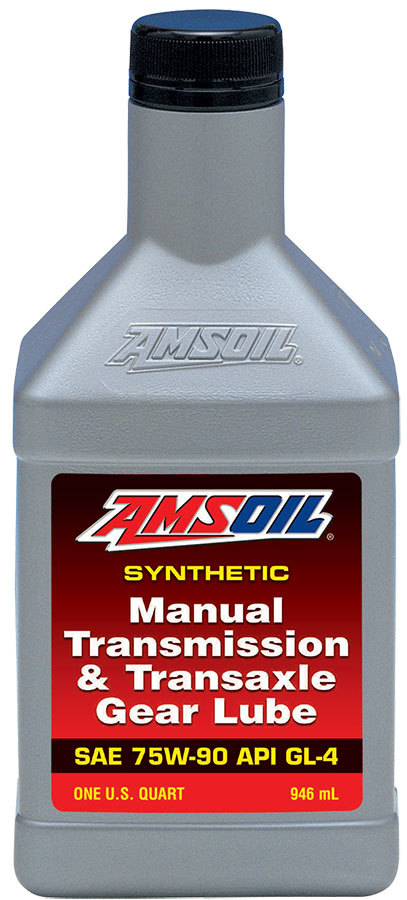
Protects against increased heat and pressure. Outstanding cold-flow properties. Protects brass synchronizers. Friction-modified. Excellent seal compatibility. Inhibits rust and corrosion. Long service life.
VIEW PRODUCT →What About Oils Rated GL-4 and GL-5?
Some modern gear lubricants carry claims relating to both GL-4 and GL-5 performance. That does not make every such lubricant the correct choice for every synchronised manual transmission.
The transmission manufacturer may require particular viscosity and friction characteristics beyond the broad API gear-oil classification.
If a transmission specifically requires a synchronised manual transmission lubricant, use a product recommended for that application rather than selecting fluid from the API classification alone.
How Do I Know Which Gear Oil My Car Needs?
Start with the vehicle manufacturer's lubricant requirement rather than the oil bottle.
Identify:
- the component being serviced;
- the required API or manufacturer specification;
- the required viscosity;
- whether the transmission is synchronised;
- and any manufacturer-specific lubricant requirements.
A gearbox calling for 75W-90 GL-4 and a differential calling for 75W-90 GL-5 may use oils carrying exactly the same SAE viscosity grade while requiring fundamentally different lubricant performance.
This is another example of why viscosity alone does not tell you what an oil was designed to do.
Find the Correct AMSOIL Gear Oil
Use the AMSOIL Vehicle Product Finder to identify the recommended transmission and differential lubricants for supported vehicles.
For applications requiring a 75W-90 GL-4 manual transmission lubricant, see AMSOIL Synthetic Manual Transmission & Transaxle Gear Lube 75W-90 (MTG).
For differentials and other applications requiring GL-5 performance, browse the AMSOIL Gear and Diff Oil range and select the lubricant according to the vehicle manufacturer's viscosity and performance requirements.
GL-4 vs GL-5: The Bottom Line
GL-5 is not simply “better GL-4”.
The two classifications represent different gear-lubricant performance requirements. GL-5's greater extreme-pressure capability makes it particularly important for heavily loaded hypoid gears, while GL-4 remains widely relevant to synchronised manual transmissions and transaxles.
The old warning that every GL-5 lubricant will immediately attack brass or bronze is too simplistic, but the conclusion remains sound: do not substitute lubricant specifications simply because one carries a higher number.
Use the specification, viscosity and lubricant type required by the component. For compatible 75W-90 GL-4 manual transmissions, AMSOIL MTG provides a dedicated synthetic option designed specifically for that job.