
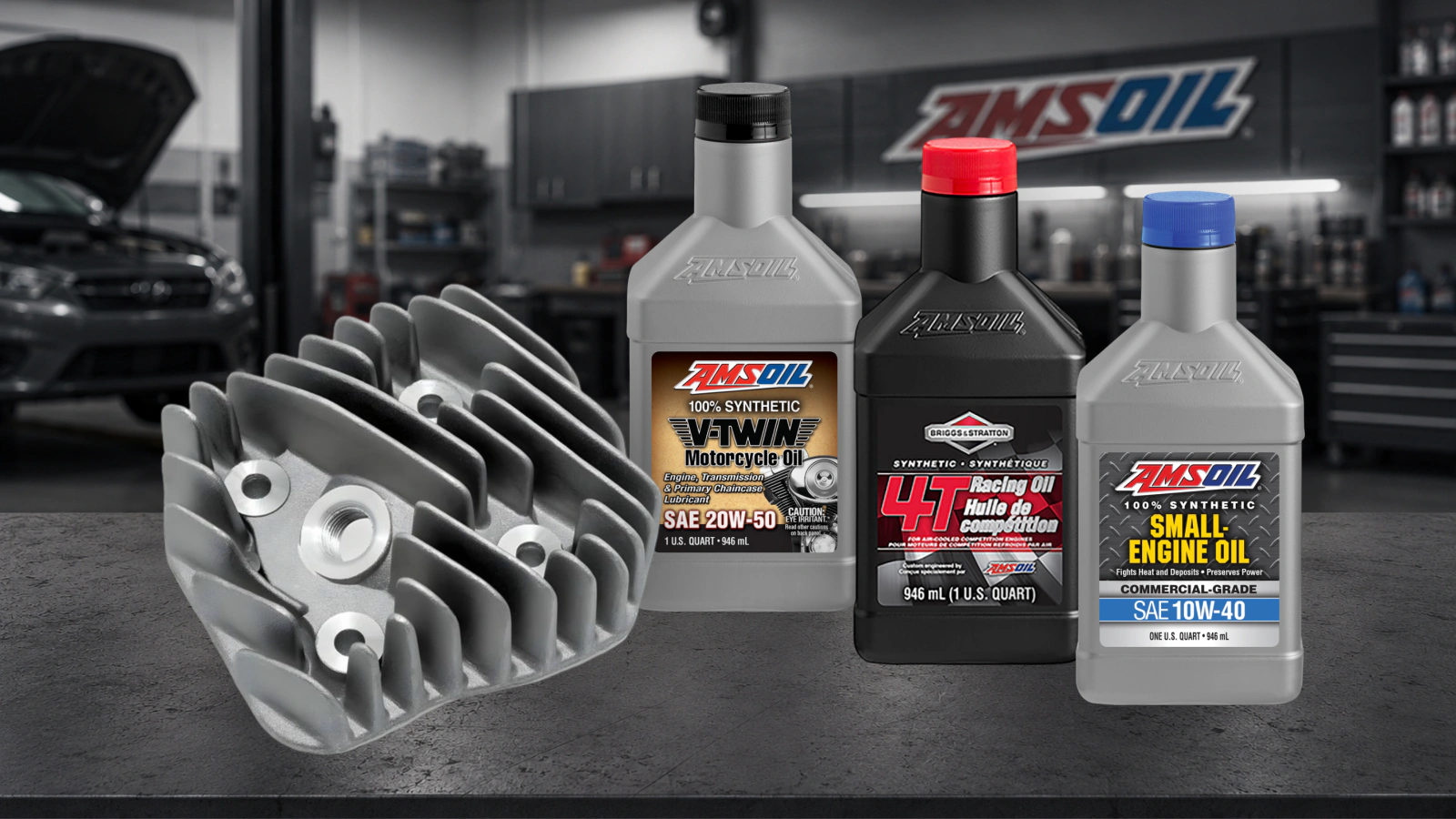
Air-cooled engines have powered everything from motorcycles and classic cars to lawn mowers, generators and racing karts. Although these applications vary considerably, they share one important characteristic: they rely on airflow rather than a conventional liquid-cooling system to remove much of the heat generated during operation.
Engine oil plays an important supporting role in managing this heat, protecting internal components and maintaining reliable operation under demanding conditions.
How Do Air-Cooled Engines Work?
Unlike liquid-cooled engines, which circulate coolant through passages in the engine and transfer heat to a radiator, air-cooled engines transfer heat directly to the surrounding air.
Most use cooling fins cast into the cylinder and cylinder head. These increase the surface area available for heat transfer, allowing moving air to carry heat away.
The source of that airflow depends on the application. Motorcycles commonly rely on airflow generated while riding, while lawn mowers, generators and other stationary equipment often use an engine-driven fan.
Some designs also incorporate oil coolers, creating an additional path for heat removal.
Why Operating Temperatures Vary
Air-cooled engines can experience considerable temperature variation depending on their design and operating conditions.
A motorcycle travelling at highway speeds may receive substantial airflow over its cylinders. The same motorcycle idling in traffic receives far less cooling air.
Similarly, a lawn mower operating under heavy load on a hot summer afternoon may face greater thermal demands than the same engine running lightly loaded in cooler weather.
Engine speed, load, ambient temperature, airflow and maintenance all influence operating temperatures.
This does not mean every air-cooled engine necessarily runs hotter than a liquid-cooled equivalent. However, temperature control can be more dependent on operating conditions, making appropriate lubrication particularly important.
The Role of Engine Oil
Engine oil does considerably more than reduce friction.
As oil circulates or is distributed throughout an engine, it absorbs heat from components including bearings, pistons and other internal surfaces. That heat is subsequently transferred to surrounding engine structures, the sump or an oil cooler where fitted.
Engine oil must also:
- Maintain a protective lubricating film between moving components.
- Resist oxidation and degradation at elevated temperatures.
- Help control deposits, varnish and sludge.
- Protect against wear and corrosion.
- Maintain appropriate viscosity throughout its operating temperature range.
These functions are important in every engine, but become particularly relevant when temperatures fluctuate significantly.
Why Oil Viscosity Matters
Viscosity describes an oil's resistance to flow.
An oil must flow readily enough to reach critical components while maintaining sufficient film strength under operating conditions.
Oil that becomes excessively thin at high temperatures may provide inadequate protection in a particular application. Conversely, using oil that is unnecessarily thick can increase pumping resistance and interfere with lubrication, particularly during cold starts.
The correct viscosity depends on engine design, operating temperatures and manufacturer recommendations.
A thicker oil is not automatically better for an air-cooled engine.
Modern synthetic formulations can provide improved resistance to oxidation and viscosity breakdown, but the oil must still meet the requirements of the specific engine.
Different Engines, Different Requirements
Air-Cooled V-Twin Motorcycles
Large-displacement V-Twin motorcycles can experience demanding operating conditions, particularly during extended idling, hot-weather riding and heavy-load operation.
AMSOIL V-Twin Synthetic Motorcycle Oil is formulated for motorcycle applications requiring its specified viscosity and performance characteristics.
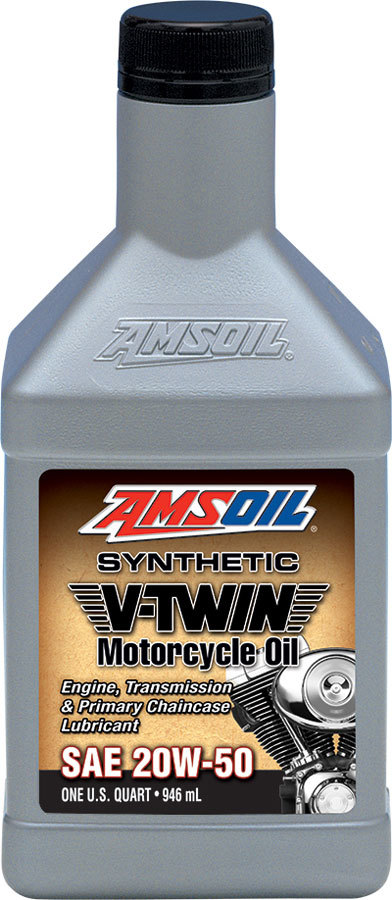
Resists viscosity breakdown 6X better than Harley-Davidson SYN3 for improved protection against compensator and transmission gear wear. Resists extreme heat to help keep engines clean and efficient. Reduces wear and deposits for maximum engine compression
VIEW PRODUCT →Four-Stroke Racing Engines
Small competition engines used in karting and other motorsport applications can operate at sustained high speeds and loads.
These conditions place considerable demands on an oil's ability to resist heat, foaming and viscosity loss.
Briggs & Stratton Synthetic 4T Racing Oil, developed with AMSOIL, is an example of a lubricant formulated specifically for demanding four-stroke racing applications.
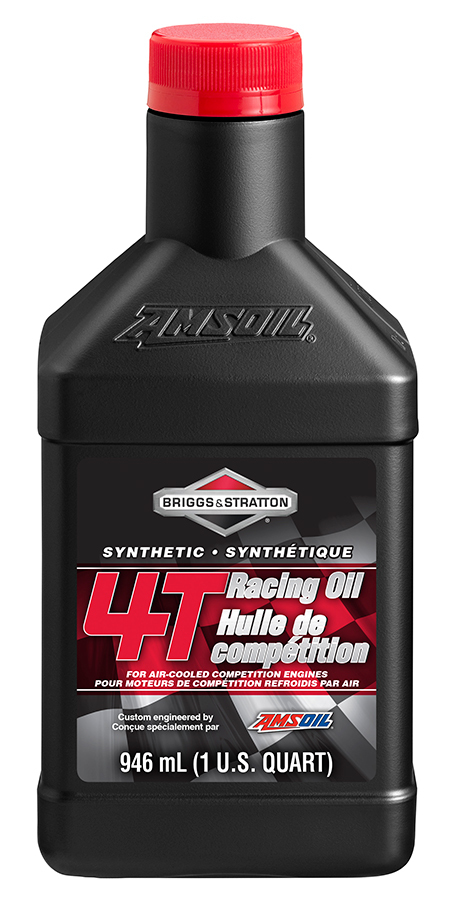
Purpose-built synthetic racing oil for high-rpm, air-cooled four-stroke competition engines used in karting, junior drag, quarter midget and other motorsport applications.
VIEW PRODUCT →Lawn Mowers and Outdoor Equipment
Air-cooled engines are also common in lawn mowers, generators, pressure washers and other outdoor power equipment.
Unlike competition engines, these applications may prioritise durability, deposit control, corrosion protection and reliable operation over extended service periods.
AMSOIL Synthetic Small-Engine Oils are designed for compatible equipment applications and offer protection against demanding operating conditions.
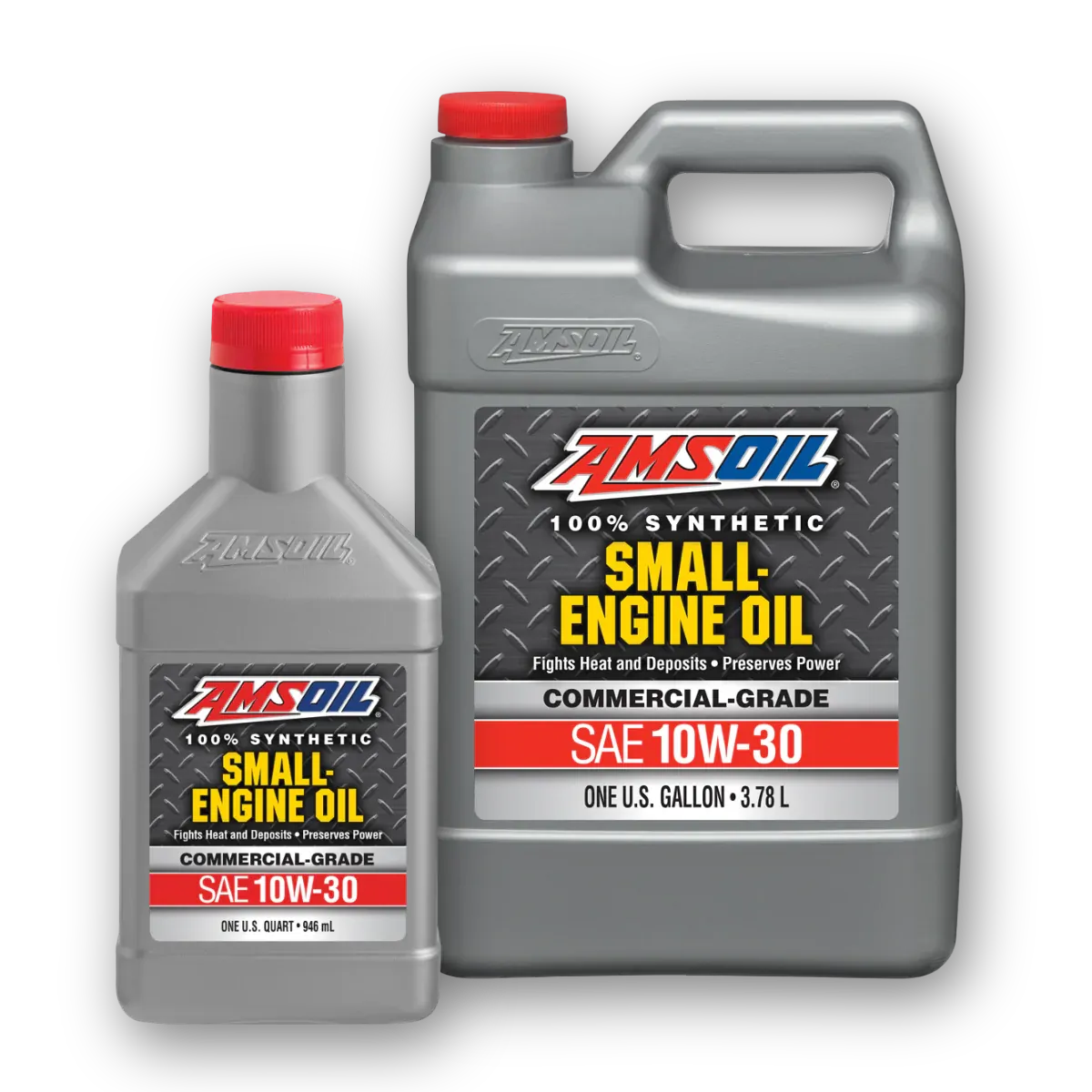
Protects up to 200 hours. Helps extend engine life. Rust-inhibited. Maximizes engine power. Helps cut maintenance costs.
VIEW PRODUCT →Choosing the Right Oil
The most important consideration is the engine manufacturer's lubrication requirements.
Engine design, lubrication system, operating environment, oil viscosity and service intervals all influence the appropriate choice.
An oil developed for a racing kart is not automatically suitable for a lawn mower, just as an oil intended for a large V-Twin motorcycle may not be appropriate for a small utility engine.
Understanding how an engine manages heat helps explain why the correct lubricant matters — and why selecting oil by viscosity alone does not tell the whole story.




