Differential oil is easy to forget. Unlike engine oil, it is not usually associated with a dashboard reminder or a service interval that every vehicle owner knows by heart. Yet the gears and bearings inside a differential operate under extremely high loads, relying on a relatively small quantity of lubricant to separate metal surfaces, control heat and protect against wear.
So, how often should differential oil be changed? There is no single interval that applies to every vehicle. The correct starting point is always the vehicle manufacturer's service schedule, but the way the vehicle is used can have a major influence on how quickly the oil deteriorates. Towing, off-road driving, high temperatures, motorsport and water contamination can all justify more frequent inspection or servicing.
What Does Differential Oil Do?
A differential allows driven wheels to rotate at different speeds while still transmitting power through the axle. This is essential when a vehicle turns, because the outside wheel travels further than the inside wheel.
Inside the differential, heavily loaded gears and bearings operate under pressures far greater than those typically encountered in many other lubricated components. Differential oil, commonly referred to as gear oil, forms a protective film between these surfaces while also helping control friction, heat, corrosion and wear.
Many automotive differentials use hypoid gear sets, where the contact between the ring and pinion gears involves substantial sliding as well as rolling motion. This creates particularly demanding lubrication conditions and is one reason differential oils commonly require extreme-pressure additive protection.
How Often Should Differential Oil Be Changed?
The manufacturer's recommended service interval should always be the starting point. Depending on the vehicle, differential design and intended use, the specified interval can vary considerably. Some manufacturers provide separate schedules for normal and severe operating conditions, while others may specify inspection intervals rather than a fixed replacement period.
This means two otherwise identical vehicles may reasonably require different servicing depending on how they are used. A vehicle driven primarily on sealed roads at moderate loads may be relatively easy on its differential oil, while another vehicle that regularly tows, travels off-road or operates under sustained high loads may place much greater stress on the lubricant.
Check the service schedule for your particular vehicle and pay close attention to any separate severe-service requirements.
What Is Severe Service?
Severe service does not necessarily mean abuse. Many perfectly normal vehicle uses can substantially increase differential temperature and load.
Common examples include towing caravans or trailers, carrying heavy loads, steep hill driving, repeated hard acceleration, commercial use, off-road driving, motorsport and operation in high ambient temperatures. AMSOIL identifies these types of conditions as severe-duty applications for its SEVERE GEAR synthetic gear oils.
Under higher loads, gear contact pressures increase and more heat is generated. The lubricant must continue maintaining an adequate protective film despite the additional mechanical and thermal stress.
Why Heat Matters
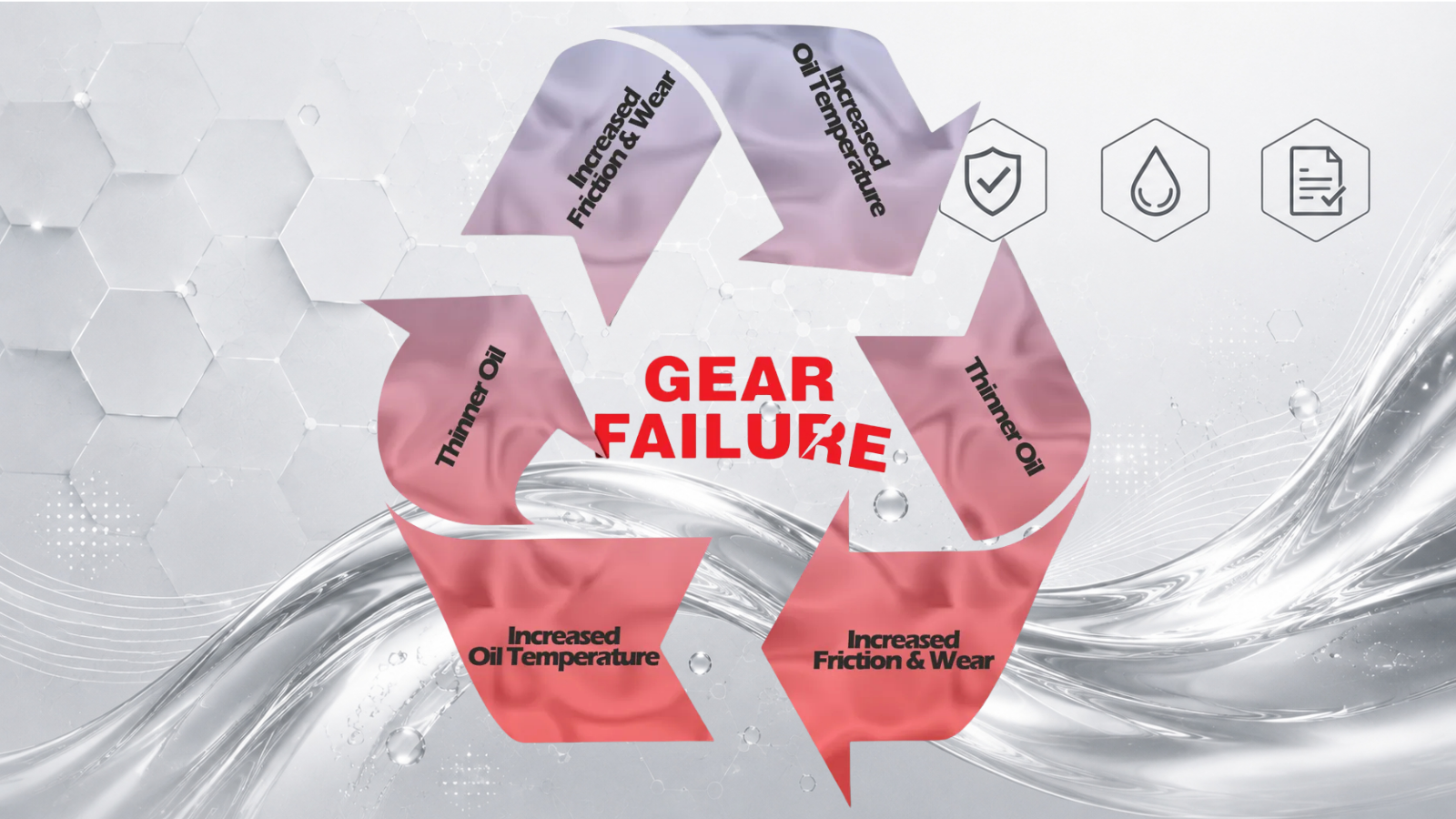
Gear oil becomes less viscous as its temperature rises. At the same time, heavily loaded gears require a strong lubricant film to prevent direct metal-to-metal contact.
If excessive heat or lubricant degradation weakens that protective film, friction can increase. Increased friction creates additional heat, which can further reduce lubricant effectiveness. This escalating cycle is sometimes referred to as thermal runaway.
If allowed to continue, thermal runaway can accelerate lubricant deterioration and increase the risk of wear, scoring, pitting and damage to gears and bearings. AMSOIL specifically formulates SEVERE GEAR to help control this process in high-load applications.
Towing and Heavy Loads
Towing is one of the most common reasons a differential experiences severe service. The additional vehicle mass increases the torque transmitted through the driveline, while long climbs, highway towing and hot Australian conditions can further increase operating temperature.
A four-wheel-drive towing a caravan through summer conditions may therefore place substantially greater demands on its differential oil than the same vehicle being used primarily for unloaded commuting.
Where a manufacturer publishes both normal and severe service intervals, vehicles that regularly tow or carry heavy loads should be serviced according to the schedule appropriate to their actual use.
Off-Road Driving and Water Crossings
Off-road vehicles present another important consideration. Mud, dust, steep terrain, low-speed high-load operation and water crossings can all create conditions that are considerably harder on differential components and lubricants than ordinary road use.
Water contamination deserves particular attention. Differentials normally breathe as their internal temperature changes, and depending on the breather arrangement and depth of a water crossing, contamination can potentially occur.
Water compromises the lubricant's ability to protect gears and bearings and may contribute to corrosion. AMSOIL specifically advises that extended drain intervals should not be used where water contamination occurs and recommends checking and servicing the gear oil frequently where water contamination is possible.
A differential inspection can be cheap insurance. Do not assume the oil is suitable for continued extended service if water contamination may have occurred.
Performance and Motorsport Use
Performance vehicles can also subject differential oil to severe conditions even if they never tow or travel off-road. High engine torque, repeated hard acceleration, track use and elevated differential temperatures can place significant loads on gears and bearings.
For vehicles used in motorsport, drift, drag racing, circuit work or other competition environments, differential oil condition may need to be monitored far more frequently than the normal road-service schedule suggests.
Vehicle modifications can also change operating conditions. Increased engine output, altered final-drive ratios, upgraded limited-slip differentials and sustained competition use can all affect the demands placed on the lubricant.
Front Differential vs Rear Differential
Four-wheel-drive and all-wheel-drive vehicles may contain both front and rear differentials, but that does not automatically mean both require identical oils, quantities or service procedures.
The front and rear assemblies may use different differential designs, viscosities or limited-slip systems. In some vehicles one axle may also experience substantially greater load than the other during normal operation.
Each differential should therefore be treated as a separate component. Check the manufacturer's specification for the correct lubricant and capacity for both the front and rear axle rather than assuming one recommendation applies to both.
Limited-Slip Differentials
Some limited-slip differentials use clutch packs or other friction-sensitive mechanisms that require particular lubricant characteristics. Using an unsuitable gear oil can contribute to chatter, binding or poor limited-slip operation.
AMSOIL SEVERE GEAR contains friction modifiers and is compatible with most limited-slip differentials. AMSOIL advises that additional friction modifier is generally not required, although AMSOIL Slip Lock Differential Additive may be used in applications where additional friction modification is necessary or where differential chatter occurs.
Always follow the differential manufacturer's requirements, particularly with electronically controlled, torque-vectoring or specialised limited-slip systems.
Can You Just Use Thicker Gear Oil?
No. A higher viscosity number does not automatically mean better protection.
If a vehicle specifies SAE 75W-90, switching to SAE 75W-140 simply because the vehicle is used heavily is not necessarily appropriate. The differential was designed around particular lubricant characteristics, and changing viscosity can affect lubrication, efficiency and component operation.
AMSOIL specifically advises that SAE 75W-140 should not normally be substituted where SAE 75W-90 is specified. The correct viscosity and required performance specification should always be determined before choosing the product.
Signs Differential Oil May Need Attention
Routine servicing is preferable to waiting for symptoms, but there are situations where the differential should be inspected regardless of the normal service interval.
- After suspected water contamination or deep water crossings.
- After sustained towing or unusually severe operation.
- If an oil leak has reduced the differential fluid level.
- If the oil appears contaminated, burnt or contains excessive metallic material.
- If the differential develops abnormal whining, rumbling or chatter.
- After differential repairs, modifications or component replacement where specified by the installer.
Noise should not automatically be treated as an oil problem. Mechanical wear, bearing damage, incorrect gear setup and other faults can produce similar symptoms and may require diagnosis.
Choosing the Correct Differential Oil
Selecting differential oil starts with the specification required by the vehicle or differential manufacturer. Important factors can include SAE viscosity grade, API gear-oil classification, manufacturer requirements and compatibility with any limited-slip system.
Do not select gear oil based purely on viscosity or assume that a thicker lubricant provides better protection. The correct lubricant is the one suited to the design and operating requirements of the differential.
AMSOIL offers a range of synthetic gear and differential oils covering common automotive viscosities and severe-duty applications.
AMSOIL SEVERE GEAR
AMSOIL SEVERE GEAR Synthetic Extreme-Pressure Gear Lube is designed for heavily loaded driveline applications and severe operating conditions. Its synthetic formulation is engineered to maintain protective viscosity, reduce friction and heat, resist wear and help control thermal runaway.
The range includes several viscosity grades, including SAE 75W-85, 75W-90, 75W-110, 75W-140 and 80W-90, allowing the appropriate product to be selected according to the application's requirements.
The Bottom Line
There is no single differential oil change interval that suits every vehicle. Start with the manufacturer's service schedule, then consider how the vehicle is actually used.
Towing, heavy loads, off-road use, high temperatures, motorsport and water contamination can all increase the demands placed on differential oil and may justify more frequent inspection or servicing.
Most importantly, use the correct viscosity and specification for the differential. A high-quality synthetic gear oil can provide excellent protection in severe service, but it should never be used as a substitute for selecting the lubricant the component was designed to use.